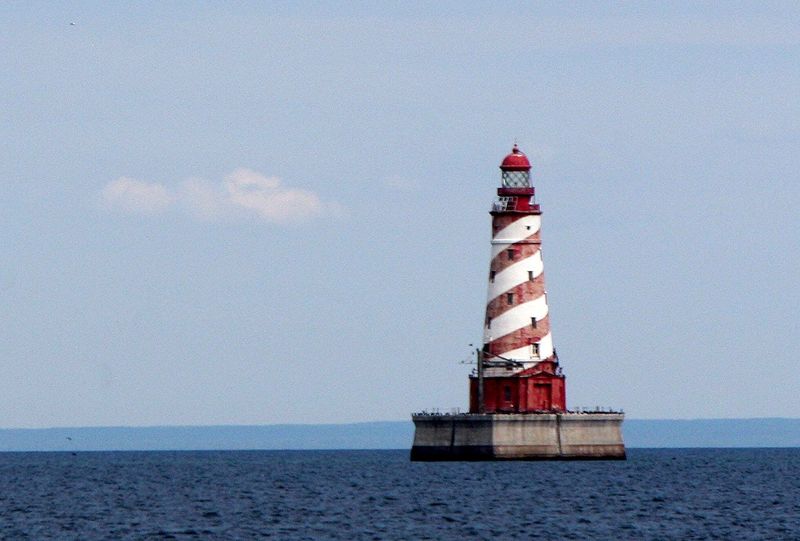
Lake Michigan is Michigan’s summer destination, its sand-covered shoreline home to stunning sunsets, plentiful beaches and popular vacation towns.
From South Haven to Manistee and everywhere in between, you can tour historic lighthouses, enjoy a swim in the lake’s crystal blue waters or, if you’re feeling adventurous, take a boat or jet ski ride on the water. Farther north, Sleeping Bear Dunes National Lakeshore offers impressive sand dunes and beaches along 35 miles of the lake’s coast.

“Lake Michigan is a true treasure. Standing on the shores of Lake Michigan — with its bright blue waves, fresh breeze, and varied shorelines — it is hard to believe that you are looking at a lake and not an ocean,” Great Lakes Guide says.
Here’s what to know about Lake Michigan.
How warm does Lake Michigan get?
Temperatures climb in the spring and summer months, reaching peak temperatures in the late summer and early fall, according to GLISA, a collaborative between Michigan State University and University of Michigan supported by NOAA.
Seatemperature.org says the average temperature in the central area of Lake Michigan is 40.5 degrees Fahrenheit in May. It rises to an average of 52 in June and 67 in July before topping out at about 70 degrees in August. In February and March, lake temperatures average in the upper 30s, but it gets cold enough to nearly freeze over some years.
When is it warm enough to swim in Lake Michigan?
Swimming is typically comfortable in lake waters at about 70 degrees, Swimoutlet.com says.
Your body can enter “cold shock” in water between 50 and 60 degrees, the National Weather Service says. The dangerous condition brings a sudden spike in heart rate and blood pressure, accompanied by involuntary gasping, rapid breathing or hyperventilating in the first two to three minutes, and immediate panic, fear or stress.
The weather service warns prolonged exposure to cold lake water can trigger hypothermia and loss of muscle control in your arms, legs, hands and feet. These dangers from cold water exposure can be fatal.
How deep is Lake Michigan?
Lake Michigan has an average depth of about 279 feet, and a maximum depth of 925 feet, according to the Great Lakes Commission.
How wide is Lake Michigan? How long?
Lake Michigan is about 118 miles wide as its widest point, the Great Lakes Commission says. Lake Michigan’s maximum length is 307 miles, according to Michigan Sea Grant.
What is the origin of the name Lake Michigan?
The name Lake Michigan draws its roots from the Indigenous name, Michigami.
Where is Lake Michigan?
Lake Michigan borders Michigan’s Lower Peninsula to the east, Indiana to the south, Illinois and Wisconsin to the west and Michigan’s Upper Peninsula to the north. It is the only Great Lake fully within the United States.
What is Sleeping Bear Dunes National Lakeshore?
Sleeping Bear Dunes National Lakeshore, a popular tourist destination, lies along 35 miles of the eastern shoreline of Lake Michigan in west Michigan northwest of Traverse City. The national lakeshore offers sand dunes, beaches, islands, camping, forests, inland lakes, a lighthouse and more. The tallest dune is 450 feet.
“The park was established primarily for its outstanding natural features, including forests, beaches, dune formations, and ancient glacial phenomena. Sleeping Bear Dunes National Lakeshore also contains many cultural features including an 1871 lighthouse, three former Life-Saving Service/Coast Guard Stations and an extensive historic farm district,” Pure Michigan says.
How many lighthouses are on Lake Michigan?
Lake Michigan boasts more than 100 lighthouses, including dozens in Michigan, the West Michigan Tourist Association said.
How many shipwrecks are there in Lake Michigan?
The lake is the scene of hundreds of shipwrecks. The lake has five designated underwater preserves in Michigan waters, and others in Wisconsin and Indiana.
Underwater preserves in Lake Michigan include the Grand Traverse Bay Underwater Preserve, the Manitou Passage Underwater Preserve, the Southwest Michigan Underwater Preserve, the Straits of Mackinac Shipwreck Preserve, the West Michigan Underwater Preserve, the Wisconsin Shipwreck Coast National Marine Sanctuary and the JD Marshall Nature Preserve in Indiana.
You can cross the lake by ferry
The S.S. Badger, the last coal-fired ship on the lakes, makes daily crossings from Ludington, Michigan, to Manitowoc, Wisconsin, throughout the summer months.
The ship’s season kicks off May 15 this year with a weekend celebration in both cities.
Farther south, the Lake Express ferry travels from Muskegon to Milwaukee in 2.5 hours. The ferry began its 2026 season on May 1.
Contact Jenna Prestininzi: jprestininzi@freepress.com.
This article originally appeared on Detroit Free Press: How wide is Lake Michigan? 10 things you might not know
Reporting by Jenna Prestininzi, USA TODAY NETWORK / Detroit Free Press
USA TODAY Network via Reuters Connect