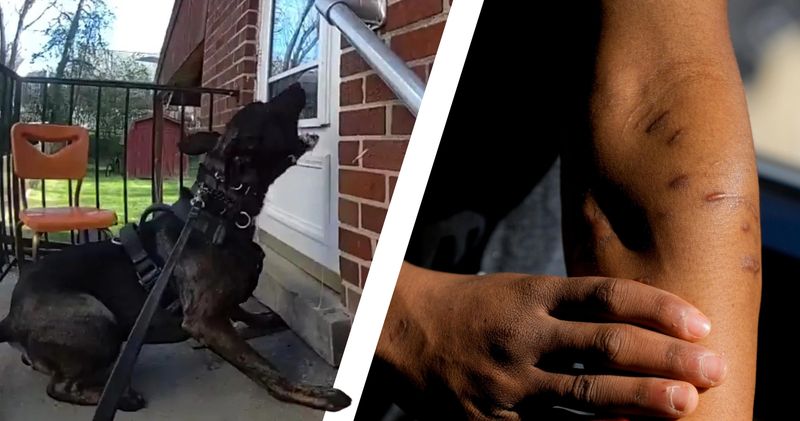
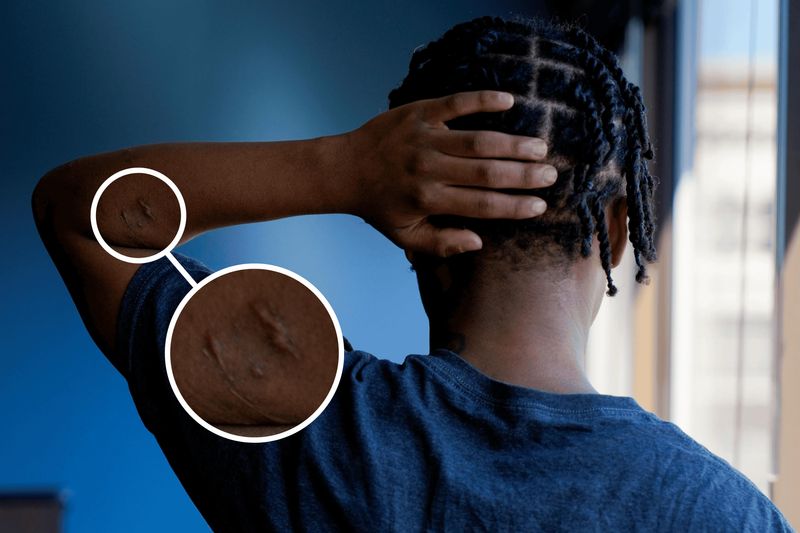
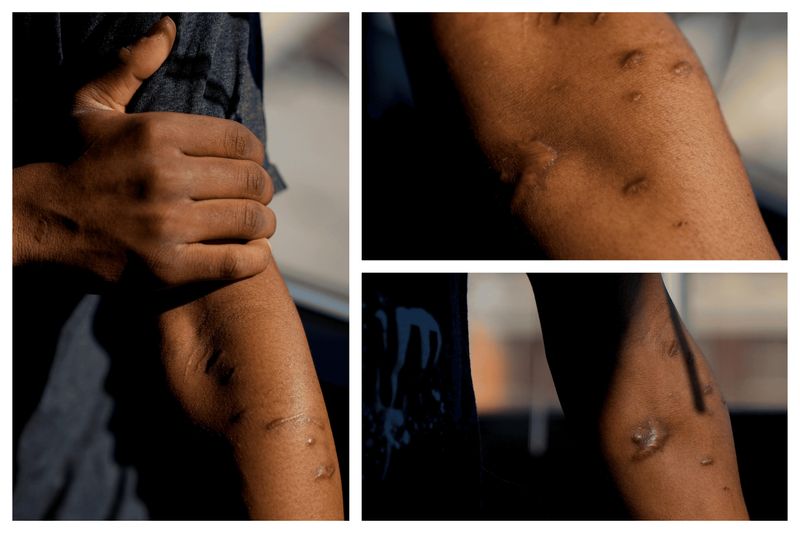
A police dog was released into a Cincinnati home last spring and bit a 16‑year‑old boy who was asleep in his bed, sending him to the hospital for a week and raising questions about when officers decide to deploy dogs.

The boy was being sought on a warrant for an alleged electronic monitoring violation that occurred about two weeks earlier, a violation his attorney said is typically addressed at a court hearing.
“There was no reason for them to come to my house with that magnitude,” the teen’s mother said.
His family and attorney say the decision to release a dog inside the home was excessive, while police say officers followed department policy and acted on safety concerns, pointing to a social media image of the teen holding a gun. The case has renewed scrutiny of how Cincinnati police use dogs, how canine bites are monitored and whether oversight has kept pace with modern policing standards.
The teen, whom The Enquirer will refer to as Richard, said he was asleep in his bed when officers arrived at his Westwood home. His attorney, Ali Archual, said such warrants are typically addressed at a defendant’s next court appearance, which for Richard was scheduled for the following day.
At that hearing, both the monitoring violation and the underlying felony theft charge were dismissed at the prosecutor’s request. Archual said she was given no reason.
Despite that, Richard was charged with obstruction of official business because police said he refused to come out of the house.
“They charged him for resisting while they are harming him,” Richard’s mother said.
How often do Cincinnati’s police dogs bite?
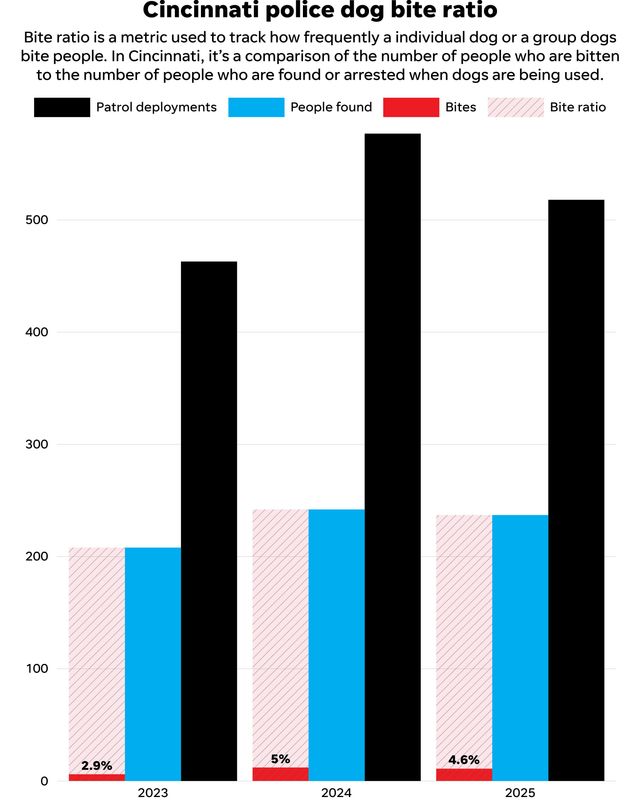
City records show that Cincinnati police dogs bit 11 people in 2025. But how many bites are considered too many?
In Cincinnati, police use a metric called bite ratio, the percentage of people found by police dogs who end up with bites. But there is no single way to track how frequently dogs are biting. Departments using different methods and different definitions. Cincinnati’s own formula has even changed over the years.
The Cincinnati Police Department reported a 4.6% bite ratio in 2025. In 2024, the ratio was 5% with 12 bites. In 2023, it was just under 3% with six bites.
Many departments aim to have a bite ratio below 20%, a benchmark set by Department of Justice guidelines. When Cincinnati police were operating under a federal consent decree after the 2001 civil unrest, the bite ratio compared the number of dog bites to the number of canine “apprehensions,” which had a narrow definition. But today, the department counts the number of “people found.” That could result in the bite ratio appearing lower than it would have under the old definition.
Assistant Chief Lt. Col. Matthew Hammer said under the older system a high bite ratio triggered an investigation, but since there so few bites today, every single bite is thoroughly investigated.
Robert Eden is the president of Eden Police Canine Consulting and Training. He also owns Kats, which stands for K9 Activity Tracking System, which is used by about 2,000 police departments worldwide. He said there is a wide variation for how departments track police dogs.
“When it comes down to it, it’s a judgment call,” Eden said. “Every department has its own policy. Every situation is different.”
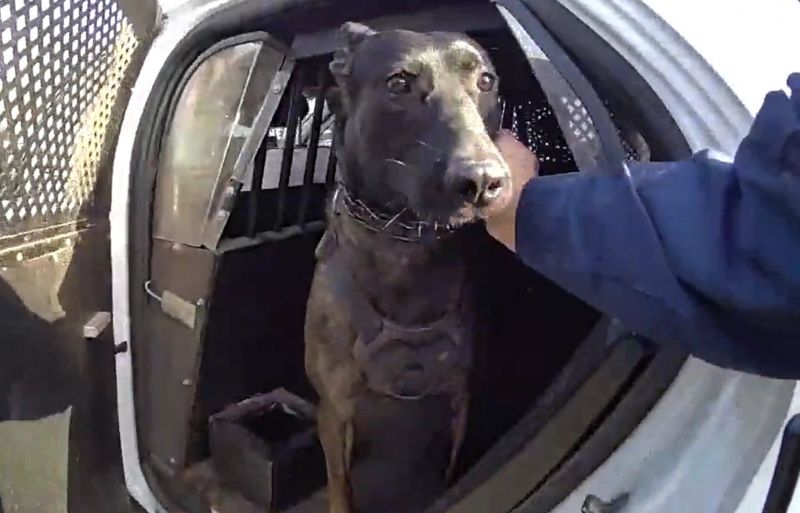
Records obtained by The Enquirer show that Remus, the dog that bit Richard, had not bitten anyone else while on the job in Cincinnati. Remus has been used during warrant servicing but is rarely sent inside homes.
Why was Remus sent in, family asks
Richard’s family questions why officers surrounded their house and released a dog inside, even after his mother told police over the phone she would be home within minutes.
She arrived before her son was taken away. A trail of blood led from a bedroom to her son. She said Richard told her he had been bitten.
Richard’s attorney, Archual, said that while police had the legal right to arrest him and had permission from his mother to enter, the response was unnecessary. Richard had never been charged with a gun crime, the underlying felony theft case was already in court, and the monitoring violation was typically handled at a hearing. His mother was 12 minutes away.
It is unclear whether officers at the scene understood the warrant was for a monitoring violation. Body camera footage shows one officer referring to it as a grand theft auto warrant.
Police union defends use of dog
A police review found Officer Branden Mentz’s use of Remus was within department policy, which states “reducing the risk of injuring an innocent citizen is of paramount importance and should always be weighed against the benefit of deploying a canine team.”
Police union president Ken Kober defended the use of the dog, saying investigators had seen a recent social media image of Richard in a stolen car holding a gun and that he had previously hidden from officers at the home.
He said dogs are primarily used in searches. “Why would you want a policeman with a gun to come into your house?” Kober asked.
Kober, a former canine handler, said Cincinnati’s policy is restrictive and dog bites have declined.
Officer Don Meece, who leads the canine unit of about 14 dogs, said dogs undergo months of training. He said while dogs were used as a force tool in the past, they now primarily assists officers as locating tools.
“Not only are the dogs saving the lives of civilians and police officers, they are saving the lives of felons,” Meece said. He said dogs can deter people from escalating situations to the point that deadly force might be necessary.
What happened that day
According to court records, Richard, 16 at the time, was charged with stealing a car in January 2024 and released on electronic monitoring. After a monitoring violation in late March, police went to arrest him on April 8. His mother, who was at work, told them where he was and headed home. She said someone would let them in.
“I just wanted everything to be safe and peaceful,” she said.
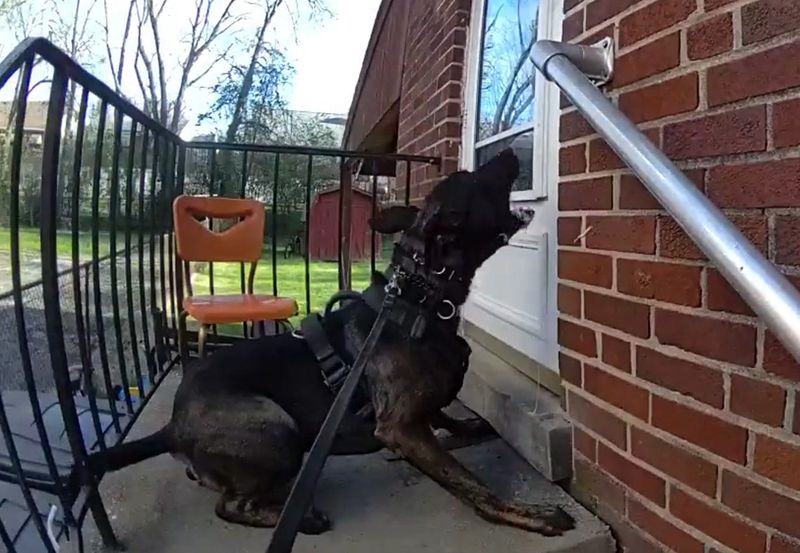
Body camera footage shows officers surrounding the home and repeatedly calling for people to come out. Several of Richard’s siblings did. Sgt. Greg Ventre was at the scene and gave permission for Remus to be “deployed.” He took Remus to the door. After warnings, Mentz released Remus inside.
City officials blurred the body camera footage that was initially released to Richard’s attorney. Unredacted footage was later made available to Archual and Richard’s family but cannot be viewed by anyone else due to a court order.
The audio of Mentz’s body camera was not redacted. Within minutes of Remus being released, screams are heard as the dog latched onto Richard’s arm.
Mentz ordered the teen to get down and put his hands behind his back. “I can’t,” Richard said. “I’m trying.”
“It feels like my arm is fixing to fall off,” he told officers.
“He got you good,” Mentz said. “You should have surrendered when we were announcing.”
Richard replied, “Sir, I swear to God, I was asleep.”
“Nobody’s sleeping through that,” Mentz replied.
Infection leads to weeklong hospitalization
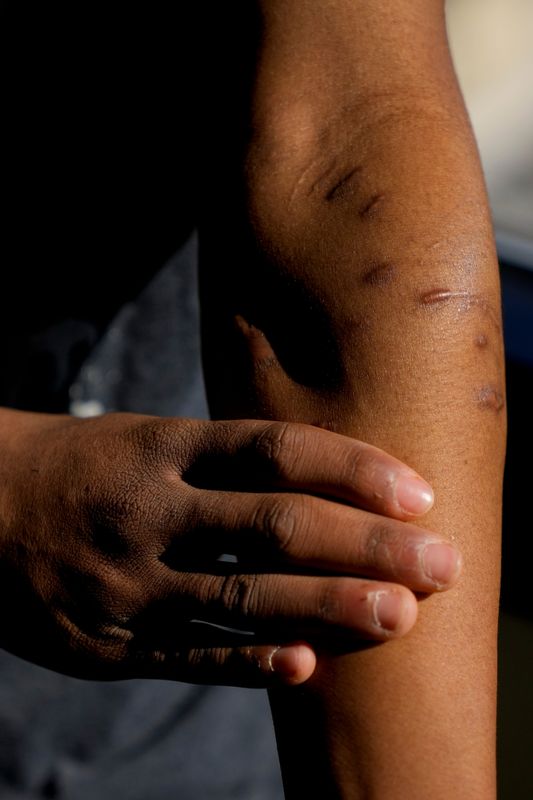
Richard was held at the Hamilton County Youth Center on the obstruction charge, but his stay was cut short when his bite wound became infected. He was transferred to Cincinnati Children’s, underwent surgery and spent a week in the hospital.
Prosecutors dismissed the obstruction charge in late September. Additional theft charges filed over the summer were also dropped after his electronic monitoring showed he was not in the same area where the theft occurred, his attorney said.
Richard’s family plans to file a complaint with the Citizen Complaint Authority, which independently investigates complaints against police and publishes its findings.
Richard said he wants officers to be held accountable. His mother said the incident has changed her son’s trust in police.
“We can’t call anyone else if we’re down and if we’re in need of help. The very same people that we trust, he doesn’t.”
This article originally appeared on Cincinnati Enquirer: CPD dog bite hospitalized teen. Family wants answers, accountability
Reporting by Cameron Knight, Cincinnati Enquirer / Cincinnati Enquirer
USA TODAY Network via Reuters Connect