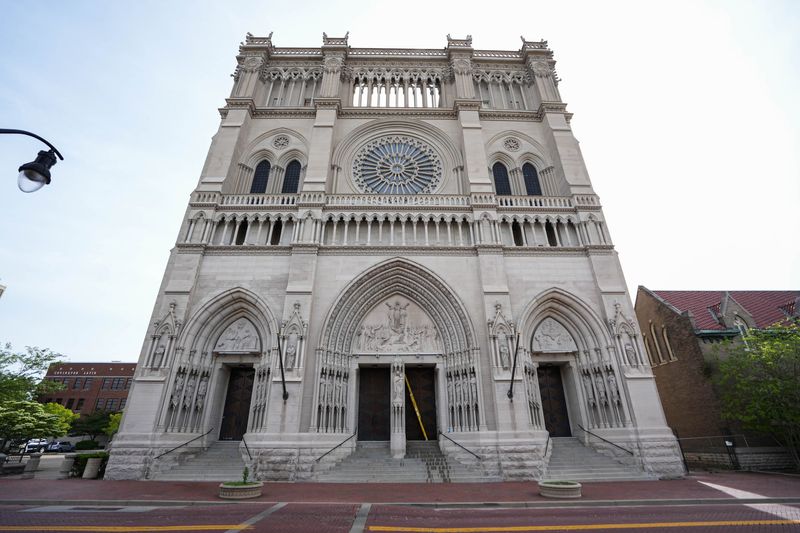
High atop what’s known as Northern Kentucky’s Notre-Dame are 58 new terra cotta gargoyles and chimeras watching over the city.
The Cathedral Basilica of The Assumption just completed a third major restoration in its 125 years of serving Covington. Parishioners of the cathedral and the Diocese of Covington funded the $8 million restoration that focused solely on the outside of the cathedral. But there was much more to this than just the remaking of the grotesques, the fanciful animal forms gracing the exterior of the church building.

While a renovation modernizes a building, a restoration preserves its historical significance.
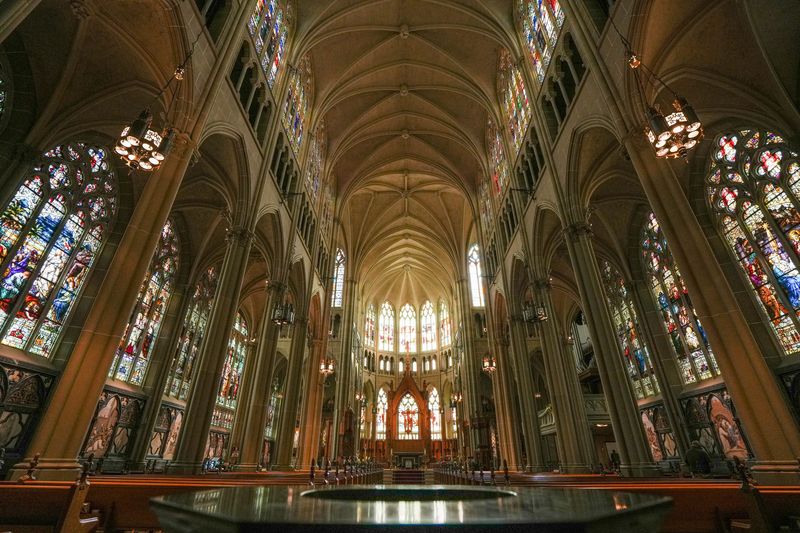
The cathedral basilica’s 1945 restoration was also its first and last renovation as the federal government placed the cathedral on the National Register of Historic Places in 1973. After gaining a spot on the registry, all work must retain a building’s history and cultural significance. The cathedral’s second major restoration was in 2001, cleaning the inside and the outside of the building.
Rev. Ryan Maher, rector of the cathedral, found a large chunk of concrete on the main sidewalk of the church in 2018. He said it was concerning, to say the least.
With that discovery, church leadership brought in three experts from architecture firm SHP to assess the gargoyles and grotesques decorating the cathedral’s exterior.
When SHP Project Manager Brandi Ash was on the cathedral’s roof, she realized that replacing the gothic statues would only be one part of the job.
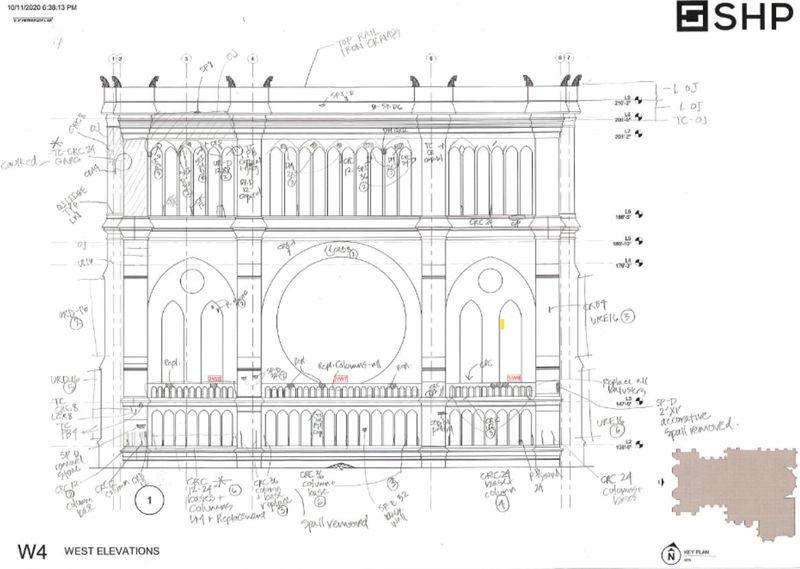
First, she needed architectural drawings of the iconic building. But the cathedral had none. With the help of 3D Laser Scanning company Truescan, the SHP team was able to create those drawings.
After drawing the church to scale, Ash said the team spent eight hours a day for a week in a basket suspended from a 250-foot crane.
The team documented every joint, crack, and pit and used that information to create the project’s budget.
The building was in good condition, but the decorative stones and ornamental elements showed signs of extensive and dangerous damage that would only get worse, Ash said.
Much of the damage was caused by the fact that when construction began in 1894, it was common to use steel pins with iron. Over time, iron expands and contracts depending on the temperature, damaging the stone around it, Ash said.
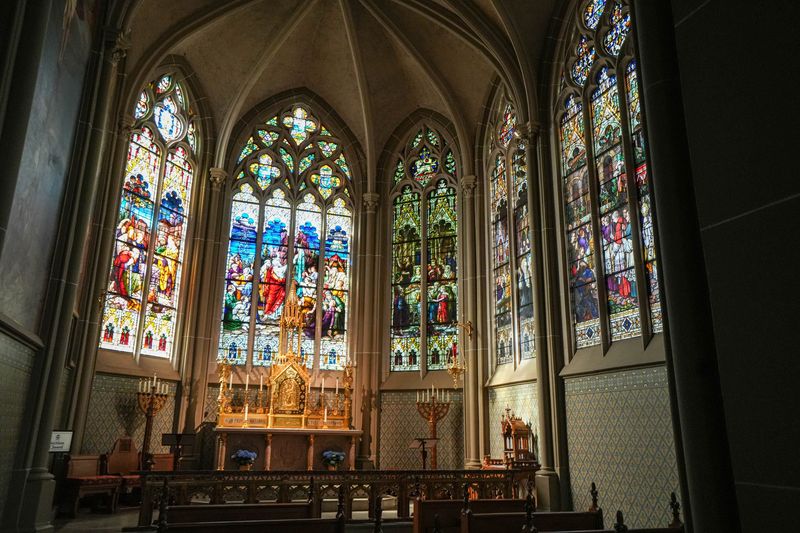
The budget included the cost of all materials, cleaning the staining and replacing damaged stones, grotesques, delicate moldings, columns and arches, and the repair of the framing that supports the cathedral’s 82 stained-glass windows.
Custom carved limestone from Bedford, Indiana makes up most of the original facade. To replace the damaged stone, Ash sourced the limestone from the same quarry it was taken when Bishop Camillus Maes first built the cathedral.
To remake the aging grotesques, Ash turned to Boston Valley Terra Cotta in New York. They gave her a full factory tour, she said.
The terra cotta process was something Ash had never done. She’s ecstatic she got to be a part of something so historical.
“I like to take care of things; I like to take care of people. It made me feel good to take care of something that meant so much to people,” Ash said.
After the 1,800 hours the SHP team put into the building condition assessment, preparing bid documents, and field time, the “100-year project” as Maher called it, was complete.
Maher hopes this project’s extensive scope means that the next restoration won’t be for a long time and that future generations will be able to visit the sacred space to experience the lord’s peace, he said.
“Things are never about just us,” Maher said, “We can get closed in on ourselves when we think that way.”
Maes was Covington’s third bishop from 1885 to 1915. It was his dream to build the cathedral. Maes dedicated the cathedral for use in 1901. His vision was for the cathedral to stand as a monument to God’s love, Maher said.
“I feel blessed, I feel gratitude,” Maher said. “It’s a privilege to be the people who continue preserving and maintaining this cathedral.”
This article originally appeared on Cincinnati Enquirer: Covington’s cathedral basilica gets third restoration in 125 years
Reporting by Gillian Stawiszynski, Cincinnati Enquirer / Cincinnati Enquirer
USA TODAY Network via Reuters Connect