Recurring blizzards, endless rain, ice storms, tornado warnings — lest we forget as gardeners, there are an awful lot of things that are beyond our control.
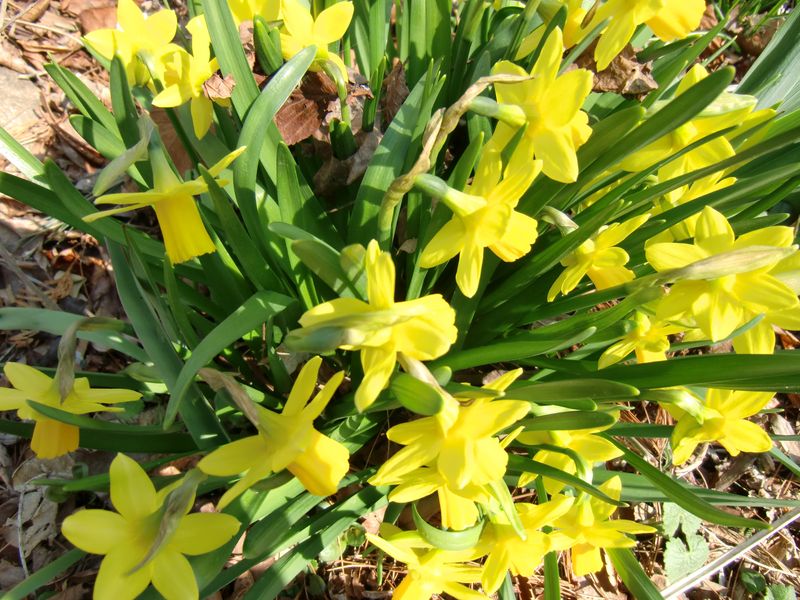
Michiganders had their share so far this spring, including a weekend that clocked high 60s one day and 49 degrees the next. And yet somehow through all the meteorological chaos, a friend posted a wistful photo of several tiny daffodils blooming amid the mud.

The British Romantic poet William Wordsworth wasn’t the only writer to conjure up the image of a crowd of golden daffodils “tossing their heads in spritely dance” on a hillside (“I Wandered Lonely as a Cloud”, 1804). The Teaching Couple website singles out no less than 35 poems, from Haiku to limericks in which the daffodil is celebrated as a symbol of hope and renewal. The website Discoverpoetry.com has compiled a list of 60.
From a practical point of view, gardeners can’t go wrong investing in one or many of the varieties of this early spring bloomer. Both deer and squirrels, both of which do the most damage to my own garden, are not fond of daffodil bulbs compared to tulips in particular. But early pollinators love daffodils and rely on them for nutrients at a time relatively few plants are flowering in the garden.
Aesthetically, daffodils come in a wide variety of colors, from yellow, gold and orange to whites and even pinks. Their central trumpets and surrounding petal-like sepals make a spectacular impression even from a distance.
For all their showiness, daffodils are low maintenance and will “naturalize” or spread robustly in a bed given half a chance. Daffodils will tolerate relatively moist soil as long as they don’t become water-logged, can thrive in full sun as well as light shade under a tree. They can do well in everything from pots to lawns.
While the sprawling cluster of daffodil leaves may look a bit unruly once the flowers themselves are past their prime, gardeners need to content themselves with deadheading the flower stalks and let the leaves alone to dry up on their own. Bulb strength depends upon the plant’s ability to absorb sunlight even after the leaves have begun to yellow. While some ambitious gardeners may choose to “braid” the leaves, experts advise just letting them alone for the six weeks it takes for the leaves to dry up. At that point, deadheading (or mowing if the plants are in a lawn) is finally in order. An application of bone meal at that point also will help the bulbs continue to get ready for another season.
“To look at thee unlocks a warmer clime,” the American Romantic poet James Russell Lowell wrote in his famous poem about daffodils. After the harsh and prolonged winter behind us, that celebration of the daffodil as a harbinger of spring is certainly most appropriate.
This article originally appeared on The Petoskey News-Review: Time in a Garden: Hope blooms as a daffodil
Reporting by Mary Agria, The Petoskey News-Review / The Petoskey News-Review
USA TODAY Network via Reuters Connect