Voters overwhelmingly supported President Trump’s picks for the Indiana Senate.
Seven primary challengers to Senate Republican incumbents received his endorsement, and at least five won. Those incumbents opposed Trump’s push for mid-cycle congressional redistricting. Trump allies spent millions to defeat them.

The biggest question now is what that money will buy.
Rodric Bray will lose his leadership position
President Pro Tempore Rodric Bray was Trump’s top target because of his opposition to redistricting. While he was not on the primary ballot, enough Trump-endorsed primary challengers won to oust him from his leadership position.
While it’s difficult to guess which senators would support Bray in a caucus, the 19 votes in favor of redistricting in December can serve as a decent proxy.
The successful Trump-endorsed primary challengers are almost guaranteed to vote against Bray, bringing that number closer to 26.
That assumes every successful Trump-endorsed primary challenger wins their general election. That’s not a guarantee, as Indiana Senate District 1 is historically competitive.
If senators vote to oust Bray from his leadership position, they will likely replace him with Sen. Chris Garten, R-Charlestown. Garten is the second in command among Senate Republicans and the highest profile supporter of redistricting. The earliest they could do so is likely after the November election.
Garten, unlike his colleague Sen. Liz Brown, did not publicly criticize his colleagues for their votes against redistricting and has remained mostly behind the scenes during the primary campaign season.
As a result, he maintained his leadership position and stands to gain support from both pro-redistricting and anti-redistricting senators.
That said, it likely won’t be that easy. Several pro-redistricting senators have longstanding loyalty to Bray outside of the redistricting issue and may be unwilling to vote him out of leadership.
U.S. Sen. Jim Banks has called for Bray to step down. While that seems unlikely, Garten would immediately become acting Senate President Pro Tempore if Bray exits.
The Indiana Senate will give redistricting another shot
U.S. Rep. Marlin Stutzman suggested the General Assembly would likely revisit the issue of redistricting at some point after the primaries were over.
This would likely have to come after Bray is ousted, as Bray has significant control over what bills even get a hearing.
If senators vote the same way as they did in December, with the extra votes in favor, redistricting would just barely pass. If the vote is tied, Lt. Gov. Micah Beckwith could still cast a tie-breaking vote in favor of redistricting.
Legislators would likely use the same map, although it would probably be more effective to have someone who is actually from Indiana draw it. That would avoid some of the criticisms by legislators including Sen. Greg Goode, R-Terre Haute.
Goode opposed redistricting in part because of how the proposed map split his district. He won his primary challenge against Trump-endorsed Brenda Wilson.
The Indiana Senate will cut property taxes
Cutting property taxes has long been part of Gov. Mike Braun’s agenda. His proposal in 2025 was largely butchered by both legislative chambers. The product was universally hated.
He endorsed pro-redistricting primary challengers and donated $500,000 to support them. That’s likely part of what prompted many Republican primary challengers to criticize property taxes during their campaigns.
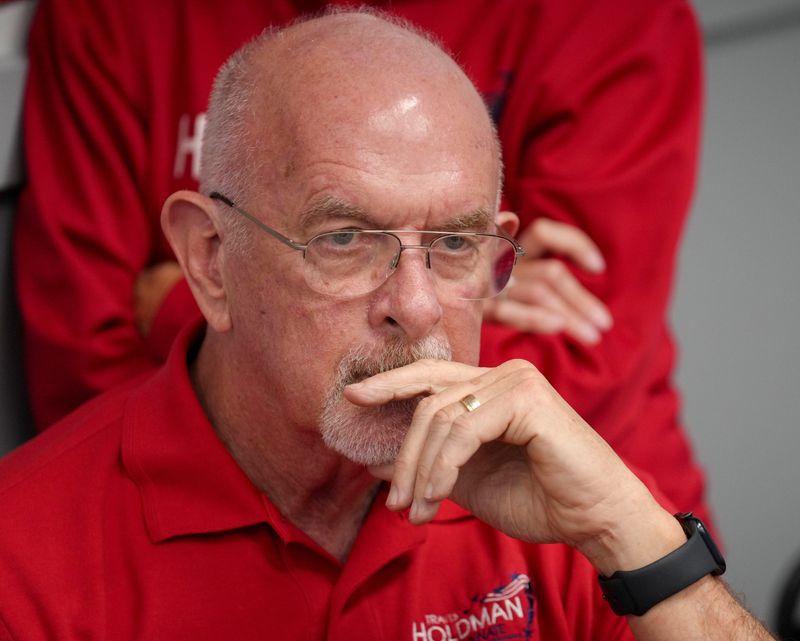
Blake Fiechter, who defeated Sen. Travis Holdman, the author of the property tax cut bill, suggested he will try to eliminate property taxes for seniors. He has also criticized recent tax cuts focused on businesses.
If that is successful, legislators will likely attempt to eliminate property taxes for homestead properties next. A compromise bill would probably look more like Braun’s original property tax cut proposal in 2025.
Senators will oppose utility companies, solar farms and data centers
Braun has been a vocal critic of utility monopolies and rising energy costs. Several successful primary challengers focused on the issue as well.
Trevor De Vries, who defeated Sen. Dan Dernulc, R-Highland, has called for “energy choice,” joining other legislators pushing to dismantle Indiana’s investor-owned utility monopolies.
That would give independent energy producers greater freedom to sell directly to consumers. This is similar to how Ohio’s utility grid operates.
Successful primary challengers also pushed back against solar farms.
Solar farms are a controversial issue at the conservative grassroots level. The Indiana General Assembly was relatively critical of them already. With the added opposition from primary victors, that trend will likely continue.
Successful primary challengers also pushed back against data centers, including De Vries and Fiechter.
Medical marijuana could be legalized
Braun has lately advocated for changing Indiana’s marijuana laws.
Bray, on the other hand, has long been a stalwart opponent of marijuana legalization in the Indiana Senate. He also appoints committee chairs. In 2026, Sens. Rodney Pol, D-Chesterton, and Kyle Walker, R-Lawrence, filed a marijuana legalization bill that did not get a hearing by Sen. Brian Buchanan, R-Lebanon, chair of the Senate Committee on Commerce and Technology.
If Garten is elected Senate president pro tempore, it seems like a bill to legalize medical marijuana could have a slightly better chance at passing the Senate. That said, Garten has approached the issue cautiously in the past.
The incredible shift in the balance of power in the Senate is likely to have major legislative consequences. It won’t mean anything, though, if senators don’t first oust Bray as leader of the Senate.
Contact Jacob Stewart at 317-444-4683 or jacob.stewart@indystar.com. Follow him on X, Instagram, Facebook and TikTok.
This article originally appeared on Indianapolis Star: Trump’s Senate wins mean redistricting is back in, Bray is out | Opinion
Reporting by Jacob Stewart, Indianapolis Star / Indianapolis Star
USA TODAY Network via Reuters Connect