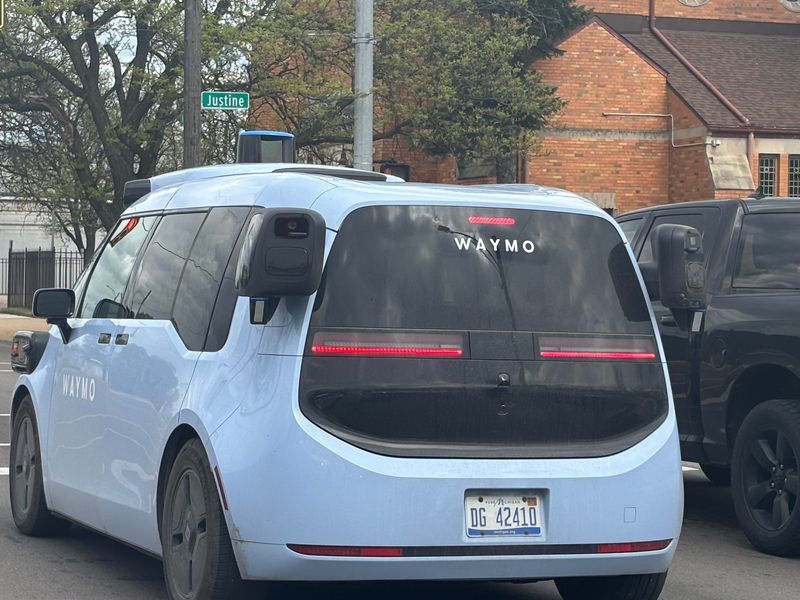
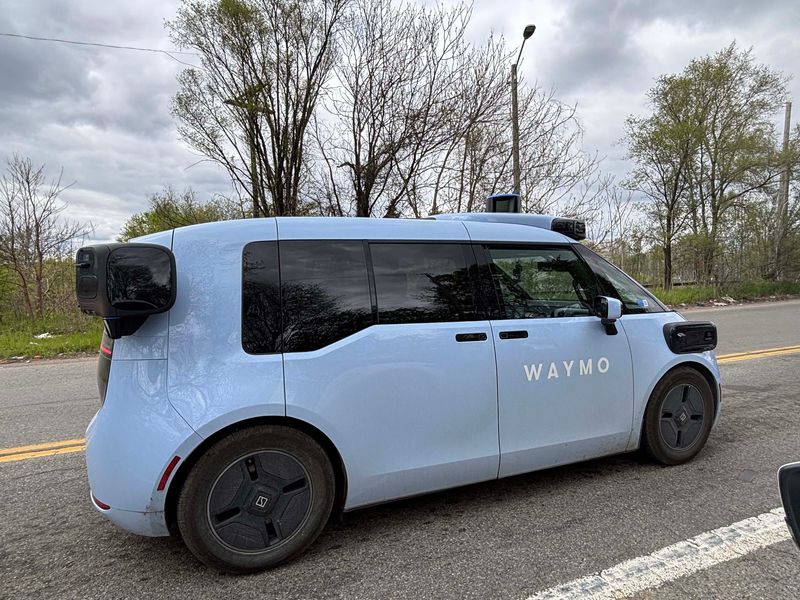
Waymo LLC, Alphabet Inc.’s autonomous ride-sharing brand, plans to expand its service to Detroit later this year. But a recent vehicle sighting by The Detroit News suggests the Motor City fleet will include Waymo’s latest vehicle: a China-sourced minivan.
Called the Waymo Ojai, the electric minivan shares the so-called SEA-M architecture platform with the Zeekr C1Me and RT vehicles built by Chinese automaker Geely. Named for a California city north of Los Angeles, Ojai will join Waymo’s familiar fleet of Jaguar I-Pace EVs. Politicians on the right and left want to bar Chinese vehicles from the rich U.S. market, but they’re already plying the streets of Detroit and other cities thanks to Waymo’s autonomous ride-sharing tests.

The Ojai rollout will likely take place across the country in cities including San Francisco, Los Angeles and Austin, as well as Motown. A date when Detroit passengers can hail rides from the Waymo app is uncertain as the company works out regulatory details with local officials and tests cars on streets.
“Waymo is in the final stages of validation of both the Ojai using the latest sixth-generation Waymo Driver system,” said Telemetry Vice President of Market Research Sam Abuelsamid, adding that there are between 10-20 Waymo test vehicles on Detroit roads currently. “Ojais are all over the place, probably running around 15 cities around the country right now.”
Waymo did not immediately respond Monday to a request for comment from The Detroit News.
The China-sourced Zeekr platforms have been imported from China as so-called “glider” chassis. Waymo pays a tariff on those imports, but it is not affected by U.S. regulations restricting the import of Chinese cars because they are not sold to retail customers.
The Zeekr sighting comes amid mounting China anxiety spawning federal legislation to bar Chinese-made vehicles from the United States, with arguments for doing so that include protecting national security and the domestic auto industry.
The imported Zeekr chassis — along with the Georgia-made Hyundai Ioniq 5s — is then shipped to Waymo’s Phoenix facility, where it is outfitted with the autonomous hardware and software. Significant to the sixth-gen system is the addition of physical heaters and wipers to operate in challenging, four-season environments like Detroit.
Bernice Bonner, a 46-year-old Westland resident, said she feels mixed about Waymo’s use of the Chinese-sourced vehicles.
“There’s so many things that are foreign these days,” she said after snapping a few photos of a parked Waymo vehicle in Detroit last month. “But I do hope they find a way to bring the jobs here.”
Still, she questioned the benefit of bringing more manufacturing to the United States with the increased use of robots. She raised a similar concern about the broader self-driving taxi industry.
“Lyft and Uber got rid of the cab drivers,” she said. “So a lot of people are supplementing income these days with Lyft and Uber, and these (robotaxis) are going to take away their jobs eventually.”
Ojai’s sixth-generation autonomous system includes 13 cameras, six radars and four lidars (visible on the outside of the vehicle). Lidar, according to the federal National Oceanic and Atmospheric Administration, “is a remote sensing method that uses a pulsed laser to measure” varied distances.
Ojai marks a utilitarian turn back to a minivan-focused fleet after Waymo retired its original, plug-in hybrid Chrysler Pacifica fleet in 2023 to go all-electric. Since then, battery-powered Jaguar I-Pace hatchbacks have become popular, driverless alternatives to human-driven Uber and Lyft in sunshine states.
Waymo operates a fleet of 1,500 Jaguars across all locations, but the Austria-sourced models are out of production. The Detroit News has ridden extensive miles in Waymo vehicles in Arizona and California since the company deployed its fleets.
Details on the roomier Ojai’s seating are not available, but it appears to seat four with ample legroom in the rear seats compared to the Jaguar SUV. The I-Pace seats three passengers (with the driver’s seat empty as the steering wheel spins and the vehicle drives itself).
Waymo is also outfitting a new fleet of Georgia-made Hyundai Ioniq 5 EVs with its sixth-gen autonomous stack. Significantly, both the Zeekr and Hyundai sit on 800-volt electric platforms compared to the Jaguar’s 400-volt system, allowing for faster charging times as Waymo ramps up its fleet. In addition to Detroit, Waymo is testing in Portland, Denver, Nashville, Chicago and Miami as it expands its service this year. Waymo is reportedly hoping to have 3,500 driverless vehicles on the road by the end of this year
“Even with the tariffs, the reduction in cost of this Chinese-made vehicle — and the cost reduction to the version-six driver system — still makes the Ojai a significantly cheaper vehicle to produce than the Jaguars they’re running today,” analyst Abuelsamid said.
The Silicon Valley-based company is in a race with Tesla Inc.’s Robotaxi system, which uses a camera-based autonomous system judged to be significantly cheaper than Waymo’s more complex lidar system. Safety is a priority as the systems are approved for urban use — and so is cost, as the competitors scale up their fleets. The transition to Zeekr’s platform brings big savings to Waymo.
“Sometime this year, Waymo will be done with the last-gen Jaguars, and they will just keep running until they reach end of life, or are retired,” Abuelsamid said. “By which time, they’ll have both the Ojai and Hyundai coming out in significantly larger volumes for their fleet. It wouldn’t surprise me, at some point, to see the Ojais produced at the Volvo factory near Charleston.”
Geely also owns Volvo and the Polestar EV line (the latter has imported vehicles from China as well) and makes the vehicles in small volumes at its South Carolina facility.
“That’s just 45,000 in sales, so (Geely) has a ton of extra capacity there,” Abuelamid said of the facility, which is able to build 150,000 vehicles a year. “They could easily add Ojai, help them avoid tariffs, and bring the cost down even more.”
Waymo’s ramp-up in Detroit and other cities comes as the state Department of Motor Vehicles in California (home of the country’s largest autonomous fleets) has imposed new rules on robotaxis, including authority for police to ticket them.
Waymos have been involved in awkward traffic incidents, such as when they shut down during a San Francisco power outage last year and blocked traffic. In another instance, San Bruno, California, police pulled over a Waymo vehicle for making an illegal U-turn.
“Since there was no human driver,” the department said in a statement, “a ticket couldn’t be issued.”
Henry Payne is auto critic for The Detroit News. Find him at hpayne@detroitnews.com or @HenryEPayne.
Staff Writer Summer Ballentine contributed.
This article originally appeared on The Detroit News: Spotted in Detroit: Chinese-made minivan could ferry Waymo riders here
Reporting by Henry Payne, The Detroit News / The Detroit News
USA TODAY Network via Reuters Connect