Tom Izzo long ago cemented his legacy as one of the great college basketball coaches of all-time.
The model of stability he established for Michigan State basketball is the bedrock of his and the Spartans’ success during his 31 seasons. Even with the winds of change around him accelerating into a hurricane that swept away many of his peers, including Mike Krzyzewski, Roy Williams, Jay Wright and other legends.

Yet Izzo persists, attempting to adapt amid the gales of rules that shift seemingly hourly while standing stubbornly against the way the NCAA has allowed the sport he has devoted the majority of his 71 years on earth to erode in the past five years.
First came the coronavirus pandemic. Then came NIL and unlimited transfers, along with lawsuit after lawsuit blurring the lines of who is actually eligible to play college sports. And now, the governing body is on the precipice of changing the hallmark of Izzo’s consistency.
The NCAA Tournament itself.
The recently reported plan to expand March Madness from 68 to 76 teams is yet another attempted money grab by an organization trying to figure out how to continue to pay everyone – administrators, coaches and now athletes – more and more while attempting to cling to a dilapidated structure in which state-funded universities have become increasingly reliant on private money and investments to operate with the same spending largesse and recklessness supported for decades on the taxpayers’ dime. All while continuing to serve under the guise of an educational endeavor.
Teaching and learning are things Izzo – a Northern Michigan alumnus who majored education – has emphasized for decades and things he says continue to vanish from college sports. That bothers him far more than players getting paid, something he has adapted to and embraced after spending the first 35-plus years of it being taboo, if not a cardinal sin, in his profession.
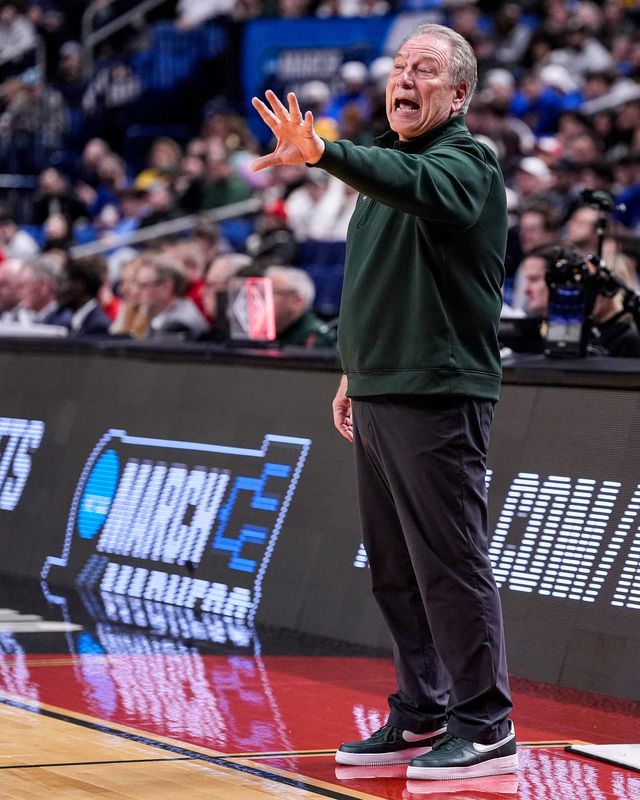
“Does it always help to have more money? Sure,” Izzo said on March 18 in Buffalo, New York, before the 2026 NCAA Tournament opened. “But if that’s the only thing that matters, I think there will be a lot more of the guys that left that will be leaving – including me – because that’s not what it’s all about.”
Izzo’s competitive side remains intact and sharp, and it’s about chasing championships. Even as March Madness has grown from 52 teams – in 1983, Izzo’s first season as a graduate assistant at MSU – to 64 to 68 and, now, quite likely 76 in 2027. In late February, when word of the plan began to go public, Izzo condemned the NCAA leadership while expressing “mixed feelings” on the proposed plan because there are 31 automatic qualifiers and 37 at-large berths into the tournament currently.
“They got a lot of other things to take care of before they worry about that, if you ask me,” he said Feb. 20.
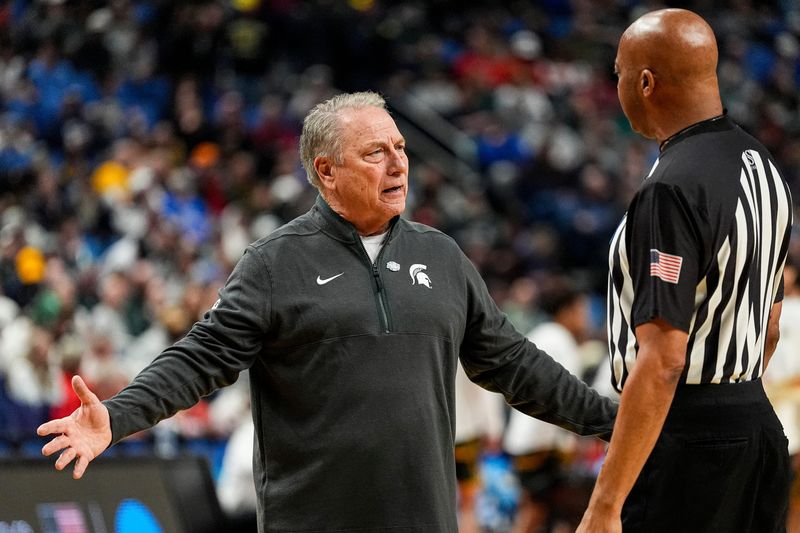
Izzo took over for Jud Heathcote in the fall of 1995 and made the NCAA Tournament for the first time (and got to his first Sweet 16) in 1998, his third season. He has been part of of the big dance every year since, including winning it all in 2000. The Spartans reached the second weekend again in March this year for the third straight season, extending Izzo’s streak of consecutive appearances to 27 – the longest active run in Division I and the most by any coach at one school in the history of the sport. Krzyzewski made it 24 straight times at Duke before missing the 2021 tourney (after it was canceled in 2020).
“If there’s one thing whenever I leave that I want to be known for, it’s consistency. Because there hasn’t been a lot of highs and lows, hasn’t been quite enough high-highs. But it’s consistent,” Izzo said in Buffalo. “So I go into each season thinking, ‘How can I get this team better by the end of the year?’ I want to win the [Big Ten], want to win the league tournament. But once you’ve been a national champ, once you’ve gone to the Final Fours, once you see how incredible moving on in March Madness is.
“There’s nothing like March Madness.”
The cancelation of the 2020 NCAAs remains the greatest what-if for Izzo, with his team led by Cassius Winston and Xavier Tillman having won a share of a third straight Big Ten regular-season title and entering the conference tourney as a favorite to reach the Final Four for the second straight year. No one will ever know if they could have delivered Izzo his elusive second national title that continues to be a driving force for him sticking around while other iconic coaches have retired.
That 2019 Final Four appearance with Winston and Tillman was the eighth and most recent for Izzo, who owns the most among active Division I coaches. It also was the last NCAA Tournament before NIL arrived and the NCAA opened the door to free and unlimited transfers that have turned college athletics into an annual auction house for talent acquisition far beyond the norms of pro sports free agency. It’s perpetual movement, even as the NCAA attempts to enact age-based eligibility requirements – dubbed “five in five.”
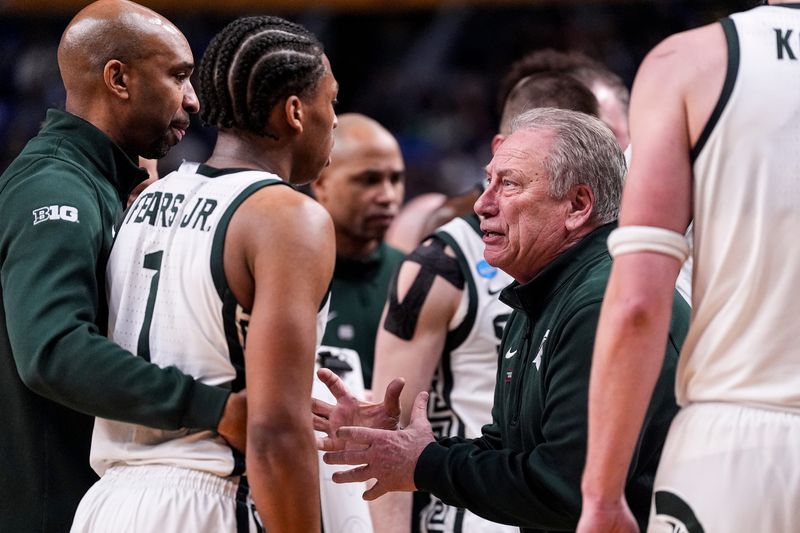
Izzo remains a constant, the rare coach who has stayed at one high-major program for nearly 45 years while progressing from graduate assistant to assistant to head coach. With the constant evolution of the rules, he said he no longer wants to be an arbiter pushing for reform on national committees, as he was for 20-plus years. Izzo is using that time to focus on his own players and, instead, has used his voice publicly to decry everyone from NCAA President Charlie Baker to street agents to lawyers for creating the quagmire and quicksand that has enveloped college sports.
Whether that slows or stops the chaos remains to be seen, but Izzo’s voice remains an influential one across college sports, not just basketball. But be sure of this, though: If the continual upheaval continues, there almost assuredly won’t be another Izzo after he’s done.
Contact Chris Solari: csolari@freepress.com. Follow him @chrissolari.
Subscribe to the “Spartan Speak” podcast for new episodes on Apple Podcasts, Spotify or anywhere you listen to podcasts.
This article originally appeared on Detroit Free Press: How do March Madness changes affect Tom Izzo legacy?
Reporting by Chris Solari, Detroit Free Press / Detroit Free Press
USA TODAY Network via Reuters Connect