U.S. Fish and Wildlife Service personnel are returning to Door County in early May to apply chemicals to a creek in the Town of Clay Banks and hopefully save thousands of pounds of fish in Lake Michigan.

The agency will apply lampricides to a short stretch of Bear Creek, which empties into the lake, that are meant to kill about 500 sea lamprey larvae that are burrowed in the creek bed before they can become grown lampreys that feed on and kill fish in the lake. The lampricides will be applied between Shiloh Road and Midway Road in a day sometime between May 5 and 14, depending on weather and stream conditions near the time of the treatment, and conducted in line with state permits.
It’s important and necessary because of the devastating effect juvenile sea lampreys can have on fish once the invasive lampreys, native to the Atlantic Ocean, migrate into the Great Lakes, not to mention the lakes’ commercial and sport fishing industries.
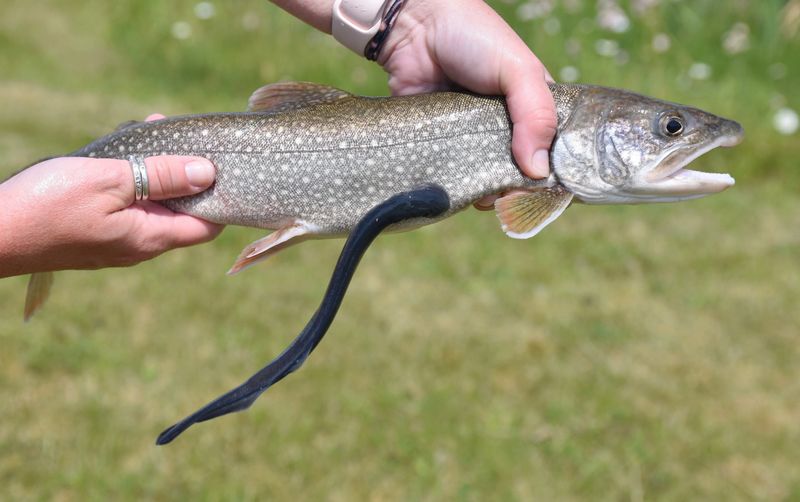
Each larva that survives to become a juvenile can kill up to 40 pounds of fish in its 12- to 18-month feeding period before they spawn and die, Shawn Nowicki, a unit supervisor fishery biologist with the Marquette (Michigan) Biological Station of Fish & Wildlife, said in a September 2024 interview with the Advocate. She also said at the time the 2-mile-long Bear Creek held “well over” 1,000 larvae that could wreak havoc on fish in Lake Michigan if they got into the lake, before a lampricide treatment that took place that month.
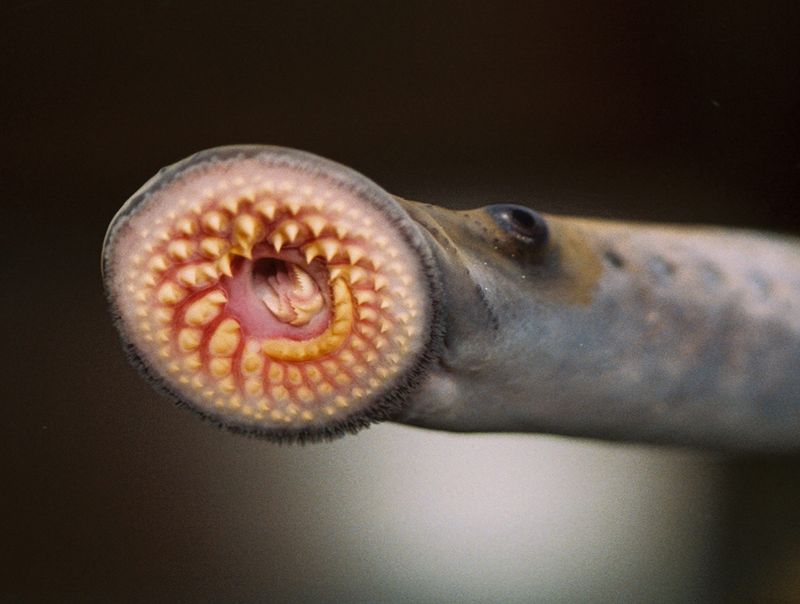
The juvenile lampreys kill fish by using the many teeth in their circular, suction cup-like mouths to latch onto the fish and feed on them. A fluid produced in the lamprey’s mouth prevents the fishes’ blood from clotting, and the fish often die from blood loss or later infection. Their prey includes popular large sport fish and fish for food in Lake Michigan, such as lake trout (and any trout or salmon species in the lake), lake sturgeons, whitefish, ciscoes, burbot and walleye.
Bear Creek was treated with lampricides for nine days in September 2024, but infested tributaries must be treated on a regular basis to control sea lamprey populations. Each spawning pair of sea lampreys produces up to 100,000 eggs, with larvae living for years in tributaries before transforming into parasites that migrate to the Great Lakes to prey on host fish.
In an email to Advocate this week, Nowicki said the creek was surveyed after the 2024 treatment in June 2025, and larvae were found upstream of Shiloh Road. She said that was not surprising because the 2024 treatment was conducted with low water levels and high pH and alkaline levels in the creek, so the minimum concentration of lethal chemicals in the lampricide wasn’t able to be used upstream of Shiloh Road. She said a little less than 500 larvae are estimated to now be in the creek.
In the September 2024 interview, Nowicki said Bear Creek, which flows through the Town of Clay Banks and empties into Lake Michigan about a mile north of LaSalle County Park, becomes infested with lamprey larvae irregularly but generally is a good habitat for them because the water is well-oxygenated and the creek bed has plant life and decaying matter to provide food.
Bear Creek was chosen for treatment now because of the number of larvae found in surveys, the short distance where the infestation is happening, and the low cost for treatment. And, because it’s spring, Nowicki said the lampricide possibly could kill any adult lamprey couples in the creek to spawn.
According to annual surveys conducted by Fish & Wildlife and Oceans Canada for the Great Lakes Fishery Commission, lamprey larvae were detected in Bear Creek in 2022, which led to the 2024 lampricide treatment. Prior to that, the last time larvae were detected in Bear Creek, and the last time it was treated for the larvae, was in 1975. Infested tributaries must be treated every three to five years to control sea lamprey populations.
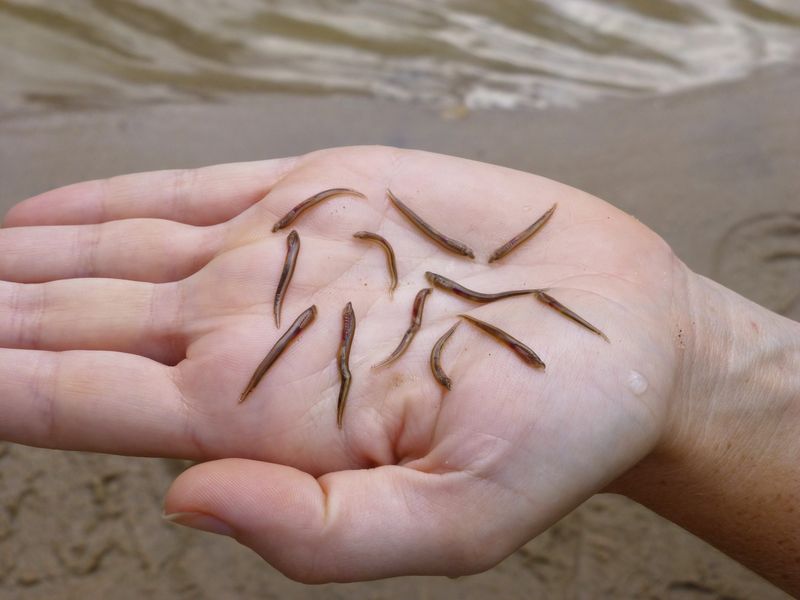
People won’t see the worm-like lamprey larvae just by looking into the creek because they burrow into the earth of the creek bed until they’re ready to head out to the lakes.
To detect the larvae, Fish & Wildlife personnel use an “electro-fisher,” an electricity-generating device with two rods that are stuck into the water, apart from each other to create an electrical field between them that stimulates the larvae to rise up and out from their burrows. Nets on the rods round up larvae that come out and an estimate is made of how many could be in the waterway based on the number caught.
The Fish & Wildlife Service conducts these sea lamprey larvae control efforts under contract from the Great Lakes Fishery Commission; Oceans Canada performs the same lampricide work on the Canadian side of the lakes. The commission began implementing chemical control of sea lampreys in 1958.
The lampricides used in the treatment, Lampricide and Bayluscide, are lethal to lamprey larvae but were found in a U.S. Environmental Protection Agency and Health Canada Pest Management Regulatory Agency review in 2003 to “pose no unreasonable risk” to humans and almost all other wildlife in that environment when used at the concentrations needed to kill larvae. The lampricide also biodegrades very rapidly.
However, the public is advised to be smart and minimize unnecessary exposure. While the lampricides are selectively toxic to sea lampreys, a few fish, insects and broadleaf plants are sensitive. People who harvest or keep bait fish or other organisms in water that’s being treated are advised to use an alternate water source, and agricultural irrigation must be suspended for 24 hours during and following treatment. And of course, people should not go into the creek or drink water from it during the project.
The lampricides are metered into the stream for about 12 hours and continually analyzed at sites along the creek to ensure correct concentrations are maintained as they carry downstream. Preparatory work before the application includes collecting data on stream water chemistry and discharge and conducting onsite toxicity tests and stream flow studies, the latter using dyes that cause the water to appear red or green. Personnel administering the lampricides are trained and certified by regulatory agencies for aquatic pesticide applications.
For more information, call the Fish & Wildlife Service Marquette Biological Station at 906-226-6571 or visit fws.gov/invasive-sea-lamprey or the Great Lakes Fishery Commission’s webpage on sea lampreys at glfc.org/sea-lamprey.php.
Contact Christopher Clough at 920-562-8900 or cclough@usatodayco.com.
MORE: Door County folk school announces schedule for weekend guided hikes of its campus
MORE: Sturgeon Bay drawbridges to each close for a day for maintenance
FOR MORE DOOR COUNTY NEWS: Check out our website
This story was updated to add new information.
This article originally appeared on Green Bay Press-Gazette: Door County creek to be treated again to kill sea lamprey larvae
Reporting by Christopher Clough, Green Bay Press-Gazette / Green Bay Press-Gazette
USA TODAY Network via Reuters Connect