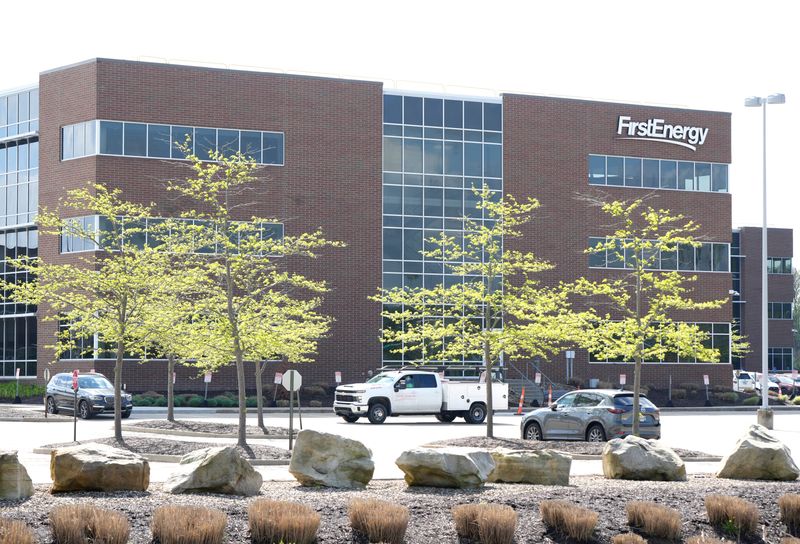
FirstEnergy is preparing to propose a new residential rate structure that could take effect as soon as 2027. And customers can expect to pay more if state regulators approve the plan.
The Akron-based utility announced plans to file a three-year rate plan – or “TYRP” – with the Public Utilities Commission of Ohio next month.

“The plan that we’re filing really has a simple goal, and that’s more reliable power,” FirstEnergy spokeswoman Jennifer Young said.
Seeking to file the proposed rate plan May 22, FirstEnergy said in a news release that it aims to strengthen the electric system through upgrades and provide “customers a clearer view of what work is planned and how it affects bills.”
What is a three-year rate plan?
After Gov. Mike DeWine signed House Bill 15 into law last year, electric distribution utilities – such as FirstEnergy subsidiaries Ohio Edison, The Cleveland Electric Illuminating Co. and Toledo Edison – can set new rates using a three-year plan that outlines planned projects.
PUCO, Ohio’s top utility regulator, previously set electric rates based on costs that utilities already spent, the release said.
Under the TYRP structure, regulators will review plans and FirstEnergy will update them each year.
With FirstEnergy planning its investments over multiple years, the release said the utility expects the three-year rate plan to “help smooth rate changes and reduce sudden bill increases.”
“Our TYRP is about careful and balanced planning,” FirstEnergy Ohio President Torrence Hinton said in the release. “We’re focused on upgrading the electric system customers rely on every day, and we know affordability matters. Recent upgrades helped show what works best, and we’re building the three-year plan around the work that will make the biggest difference, keeping costs in check and clearly explaining what customers are paying for.”
By how much is FirstEnergy planning to increase rates?
Under FirstEnergy’s proposed three-year plan, rates on the distribution portion of customers’ bills would increase one time each year.
Ohio Edison customers using 1,000 kilowatt-hours per month would pay an average 2.2% annual increase, which comes out to about $4.26 more per month.
In reality, Ohio Edison customers could see a smaller bill increase than $4.26 because residential customers tend to use less than 1,000 kWh of electricity per month. Average residential electricity use in Ohio was 846 kWh per month in 2024, according to an October report from the U.S. Energy Information Administration.
Customers of The Illuminating Co. using that same amount of electricity would each year pay more – about 2.6%, or $5.15, more per month. Toledo Edison customers using 1,000 kWh per month would each year pay about 2.8%, or $5.30, per month.
If the PUCO were to approve the plan next summer, new rates could take effect for a year-long period covering parts of 2027 and 2028, then increase for another year-long period covering parts of 2028 and 2029 and then increase again for another year-long period covering parts of 2029 and 2030, Young said.
What type of work is FirstEnergy planning?
FirstEnergy plans to upgrade neighborhood wires, poles and equipment, as well as improve its facilities and incorporate technology to assist with operating the utility’s system and respond more quickly, including during extreme weather. This work could cost about $800 million annually, the release said.
The utility also plans to spend about $83 million each year to conduct more tree trimming near power lines.
Weather-related factors, including damage that’s not necessarily caused during major storms, keep the utility busy with maintenance and replacement work.
“There’s been an increase in rainfall,” Young said, “which means softer ground. You have more trees and things falling.”
FirstEnergy will also continue assistance programs and add new supports for low-income customers to help them with their bills; continue a program helping income-eligible customers increase their energy efficiency and save on bills; and work with commercial and industrial customers to reduce electricity use during high-demand periods.
Patrick Williams covers growth and development for the Akron Beacon Journal. He can be reached by email at pwilliams@gannett.com or on X @pwilliamsOH. Sign up for the Beacon Journal’s business and consumer newsletter, “What’s The Deal?”
This article originally appeared on Akron Beacon Journal: FirstEnergy seeks to launch 3-year rate increase plan in 2027
Reporting by Patrick Williams, Akron Beacon Journal / Akron Beacon Journal
USA TODAY Network via Reuters Connect