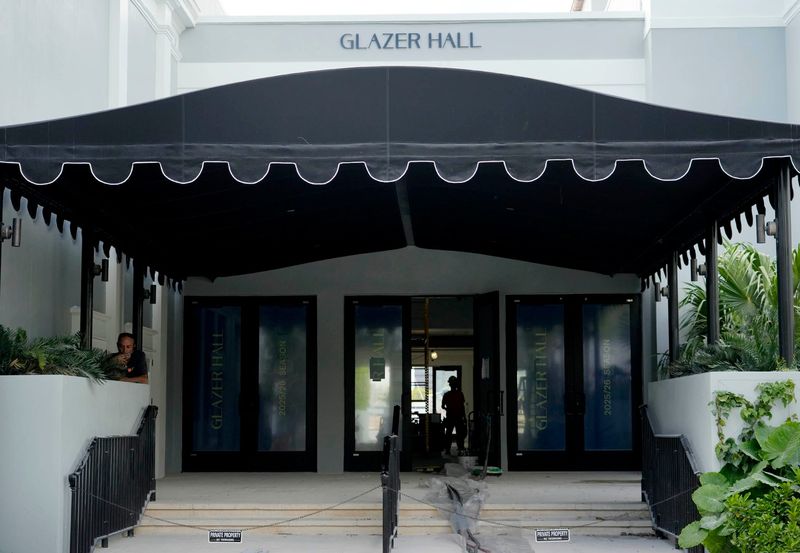
Palm Beach has taken a step toward loosening restrictions on storefront signage after the Town Council gave its initial approval to allowing limited business-identification signs to be displayed on the lower skirt, or valance, of an awning.
During their most recent development review meeting at Town Hall, council members unanimously advanced an ordinance that would replace the existing restriction on awning signage with a waiver process administered through the town’s design review boards.

The measure follows favorable recommendations from the town’s Architectural Commission and Landmarks Preservation Commission. Both reviewed the proposal in March and supported streamlining the approval process while maintaining design oversight. The boards did not vote on the ordinance but provided feedback to Town Hall staff.
The council heard the ordinance’s first reading on April 15, and the measure could get final approval early as May 13.
Friederike Mittner, the town’s design and preservation manager, said the change is intended to simplify the approval process while maintaining design oversight along commercial corridors.
Under the proposed rules, signage would be limited to one line of text identifying the business, with lettering no taller than 7 inches and covering no more than 25% of the awning’s length. A business could have only one street-front awning sign, and the signage would have to be confined to the first floor. The allowable sign area would count toward the total amount of signage permitted for each business.
“We’re updating the rules so businesses can request awning signage through design review rather than a formal variance, while maintaining oversight to ensure compatibility with the building and streetscape,” Mittner told the landmarks board in March.
Under the ordinance, awning-valance signage would be reviewed through a waiver process by the applicable design board, which could approve, condition or deny requests. Decisions would be placed on the town council consent agenda for final action.
The standards would require signage to be visually compatible with the building and surrounding environment, painted or sewn directly onto the awning, and limited to 25% of the awning length. Signage could not contribute to visual overcrowding and must comply with existing business identification sign limits under the town code.
Town staff said the change is intended to streamline the approval process while preserving design standards along commercial corridors, including Worth Avenue.
Jodie Wagner is a journalist at the Palm Beach Daily News, part of the USA TODAY Florida Network. You can reach her at jwagner@pbdailynews.com.
This article originally appeared on Palm Beach Daily News: Palm Beach Town Council backs changes to awning signage rules
Reporting by Jodie Wagner, Palm Beach Daily News / Palm Beach Daily News
USA TODAY Network via Reuters Connect