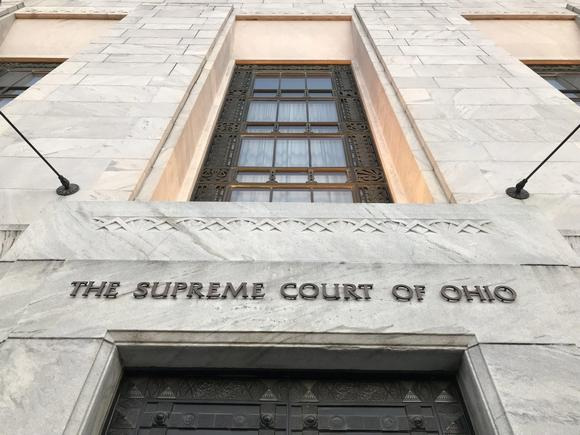
The Ohio Supreme Court has overturned a state appeals court, finding that a woman’s multiple misdemeanor convictions should not be hidden from the public.
The Supreme Court said the 1st District Court of Appeals, which covers Hamilton County, made several errors, including improperly substituting its own judgement for that of the judge who handled the woman’s request.

That judge, Hamilton County Municipal Judge Josh Berkowitz, found that the woman had presented no evidence of rehabilitation and that her interest in pursuing employment without having to disclose her past convictions did not outweigh the “government interest in protecting the public’s ‘need to know.’”
Berkowitz said the woman’s profession − she was a licensed parenting counselor − involved a position of trust, and both her clients and her employer had a right to know about the convictions.
“It was not unreasonable for the trial court to conclude that (the woman) had not been rehabilitated to its satisfaction,” the opinion, authored by Justice Joe Deters, said. “Or that the governmental interest in allowing the records of her convictions to remain public outweighed her interest in having the records sealed.”
Woman sought job at Justice Center
The woman applied in 2023 to have her convictions sealed after not being able to get a job at the Hamilton County Justice Center.
She had been convicted of seven misdemeanor charges between 2012 and 2016, including resisting arrest and obstructing police.
The Supreme Court’s opinion noted that a 2014 attempted theft conviction involved taking an envelope containing $700 from someone at a gas station. The woman was sentenced to probation but later violated the conditions of her probation and was jailed.
After Berkowitz denied the woman’s request to seal her convictions, she appealed. The 1st District Court of Appeals found that she did offer evidence of rehabilitation. It also questioned how Berkowitz could conclude that the government’s interests outweighed the woman’s when prosecutors did not object to her sealing request.
The appellate court reversed Berkowitz’s ruling.
5 justices join Deters’ opinion
The Supreme Court said that an appellate court can only reverse a trial court’s decision if it finds it was “unreasonable, arbitrary or unconscionable.”
It said the 1st District had imposed restrictions on the trial court that do not appear in Ohio’s sealing law.
“An appellate court is not free to substitute its judgment for that of the trial judge,” the opinion said.
Five justices joined Deters’ opinion. Justice Jennifer Brunner issued a separate opinion, concurring in part and dissenting in part.
This article originally appeared on Cincinnati Enquirer: Ohio Supreme Court says woman’s convictions should not be sealed
Reporting by Kevin Grasha, Cincinnati Enquirer / Cincinnati Enquirer
USA TODAY Network via Reuters Connect