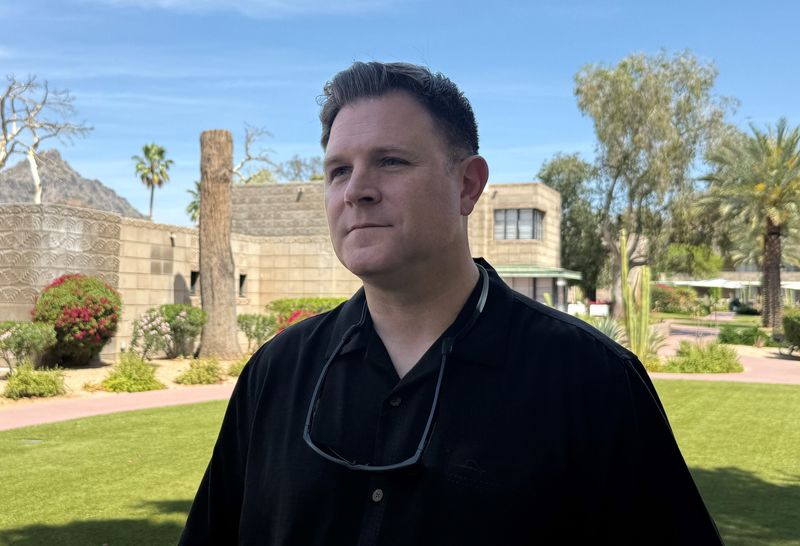
GREEN BAY – If the ultimate barometer for a successful draft pick is whether the player sticks around for a second NFL contract, Brian Gutekunst’s sweet spot is easy to find.
The Green Bay Packers general manager can pull diamonds out of the middle rounds. His success in the first round has been shaky.

Not that he sees it that way.
“Probably a lot of it,” Gutekunst said, “is the expectation you guys [outside the draft room] put on those guys at the top. It’s probably a little bit more than anything.”
Gutekunst said his expectation for any pick is whether they help his team win, a generalized formula perhaps known only to him. Let’s narrow that. Because how long a player contributes to winning should also factor.
When Gutekunst began his reign over the Packers roster, including his role overseeing the draft, his first-round picks did not miss. Gutekunst selected cornerback Jaire Alexander, edge rusher Rashan Gary and quarterback Jordan Love with the Packers’ first pick in his first three drafts. Though their tenures in Green Bay reached sudden, disappointing ends, Alexander and Gary received second contracts and at least one Pro Bowl selection. Love became the franchise quarterback, succeeding Aaron Rodgers.
Of the three eligible first-round picks Gutekunst has drafted since Love, none have signed a second contract. Only Devonte Wyatt, the 28th overall selection in 2022, remains with the team. He’ll play this fall on the fifth-year option afforded because of his first-round selection, something 2021 first-round cornerback Eric Stokes and 2022 first-round linebacker Quay Walker did not do.
The Packers re-signed four other Gutekunst draft picks to second contracts: offensive lineman Elgton Jenkins (2019 second round), linebacker Isaiah McDuffie (2021 sixth round), receiver Christian Watson (2022 second round) and right tackle Zach Tom (2022 second round). In the Packers’ draft class from 2023, which will enter free agency next offseason, second-round receiver Jayden Reed and third-round tight end Tucker Kraft figure most likely to sign an extension. Lukas Van Ness, the first-round pick from that class, enters the fall with his future uncertain.
Peek ahead to the 2024 class, second-round linebacker Edgerrin Cooper, second-round defensive back Javon Bullard and fourth-round safety Evan Williams have emerged as the gems of that draft. Jordan Morgan, the first-round pick, faces a critical third season as a full-time left tackle after two years of musical chairs on the offensive line.
Notice the trend?
“I do think,” Gutekunst said, “sometimes two guys who were equal in production and equal in their careers, if one was drafted in the first round and one was drafted in the fourth round, there’s a different level of – they both had good careers – but there’s a different level of how it’s looked at outside of here.”
It’s silly to think first-round picks should carry the same weight as fourth-round picks. The NFL draft is one of the most meritocratic processes in a business built on meritocracy. There’s a reason first-round picks are cherished like gold – or, in the Packers’ case, currency to add a generational talent like Micah Parsons – and fourth-round picks are mostly forgotten.
But if a general manager is as capable of finding success in the fourth round as he is in the first, as Gutekunst has been over his first eight drafts, it’s not the worst thing to be without a pick in the opening round.
Sure, Gutekunst would prefer picking among the first 32 selections April 23, when the 2026 draft begins in Pittsburgh. Not that he regrets the trade that removed his first-round pick in this and next year’s drafts. “The player we got with that pick,” Gutekunst said, “I’m good with.” But this draft still has potential to be impactful because Gutekunst still has his sweet spot in the middle rounds. For him, the difference between first- and fourth-round production has been minimal.
“All these guys are starting their NFL careers,” Gutekunst said. “If they can come in and they help the Green Bay Packers, whether it’s on special teams, whether that’s on offense or defense while they’re here, I feel really good about that. I think putting individual expectations on these guys, because the opportunities they receive can be completely different, depending on their team, depending on what’s in front of them.
“To me, it’s a team game, and if they’re helping the team win and chasing what we’re trying to chase, I feel really good about that.”
Gutekunst, who will have a draft unlike any other in his tenure, is prepared to sit and wait through the opening round. The Packers aren’t scheduled to pick until No. 52 overall in the second round. With eight picks in this draft, Gutekunst knows he’s unlikely to have ammunition to break into Round 1.
That reality hasn’t changed the Packers’ pre-draft process, Gutekunst said. Since the fall, when he knew the Packers were unlikely to have a presence in the 2026 first round, Gutekunst has operated like business as normal. He plans to discuss the opening round with scouts and coach Matt LaFleur as it unfolds, helping align the team for the draft’s second day. The first-round intel acquired over the past several months also will help the Packers’ pro scouting side stay informed on the talent infusion entering the league.
From there, Gutekunst will wait. And he’ll hope his middle-round success continues another year.
“It’s always hard watching good players come off the board,” Gutekunst said. “Particularly ones, obviously we get to know these guys very well, and when you see them get selected, it’s tough no matter where you’re picking. If we end up waiting 51 picks before we pick, that will be a long time. Hopefully I have the patience and discipline to do that.”
This article originally appeared on Packers News: Packers still can have impactful NFL draft without first-round pick
Reporting by Ryan Wood, Green Bay Press-Gazette / Packers News
USA TODAY Network via Reuters Connect