Several Lubbock City Council seats are up for election on the May 2 municipal ballot. One of those seats oversees several well-established neighborhoods like Tech Terrace, Maxie Park, Bowie among others.
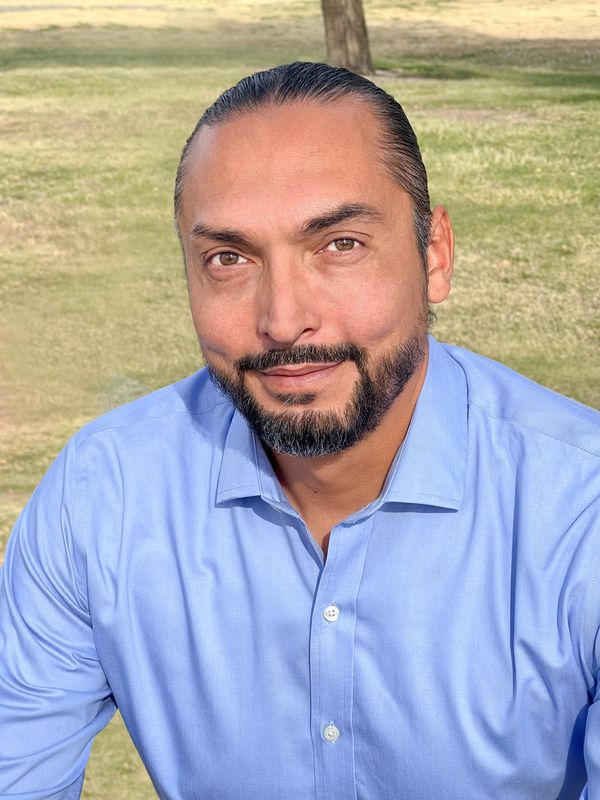
Adam Hernandez is one of three candidates for the District 3 council seat. He is an entrepreneur, web developer and local activist, serving as communications director for Lubbock Compact.

In an effort to get to know the candidates in this race, the Avalanche-Journal sent out a questionnaire to all of the candidates to learn their platforms and priorities.
Here are Hernandez’s answers to the questionnaire, as early voting is from April 20 – April 28. Election Day is May 2.
Q: The hyperscale data center proposal for northeast Lubbock was rejected by Planning and Zoning and then withdrawn. The developer plans to resubmit. Lubbock already has the highest per-capita water use of any major Texas metro and depends on the Ogallala Aquifer. What criteria should the city require before approving a project of this scale, and should the city require mandatory water and energy consumption disclosure from data center operators?
A: The city should not allow any AI data centers to be built in Lubbock without first being able to tell citizens how much water it will be using, and that they will not be next to residential neighborhoods. This would be a full-blown gas plant that would power the AI data center. That plant would release more nitrous oxide every year than all of the traffic of Lubbock combined. These data centers also don’t have to tell anyone how much water they’re using which means the city can’t plan properly for the future. While we’re being told that these centers won’t use a lot of water, nobody has shown proof or data for that. It seems to me if it is what they say, and it doesn’t use a lot of water, they would be more than willing to show the public the data that proves that. Because we don’t have answers to these very important questions, and the risks involved for the city, I cannot support an AI data center being built in Lubbock.
Q: LEDA’s CEO said the project would bring significant tax revenue and jobs. Critics, including some District 3 residents, say the same land could generate more long-term revenue under its current residential and commercial zoning — and that northeast Lubbock has historically absorbed more than its share of industrial development. How do you weigh the economic upside against the concerns of the residents nearest the site?
A: The statements and the numbers about the economic impact of this data center have been misleading, and any economic benefits do not outweigh the risks. To begin with, these data centers get massive tax discounts. The site in Abilene, for example, which is almost identical to what this one would be, received an 85% tax abatement. This is because they get discounts by state law, and then LEDA adds their own discount on top of that. School districts wouldn’t see much of the money either due to recapture laws. In terms of job creation, after the initial construction where people are mostly hired from outside of Lubbock, the actual jobs that would be here permanently are only about 300 jobs. The cities that have allowed these data centers to be built based on the argument that it would be beneficial to their economy have now come to regret that decision. I don’t want Lubbock to be the next one.
Q: The city, like other governing entities, is facing budget constraints, and recently, the city dissolved impact fees. Last year the city also saw shortfalls in sales tax collections and lost dollars from LCAD. Given that the 2026 budget already required a tax rate higher than the no-new-revenue level just to maintain current services and the growing size and population of the city, are you for or against raising the tax rate? Explain your reasoning.
A: One of the jobs of the City Council is to be good stewards of taxpayer money and to balance the budget in a way that provides the services that citizens pay for. I am not for a no-new revenue rate because it goes directly against that duty. It takes money to run a city and to provide city services, so it doesn’t make sense to take in less money while costs are rising over time. That’s how things get neglected and start costing more money over time and creating more debt. That doesn’t mean I can say I’m just for arbitrarily raising the tax rate, either. It simply means that I believe that we should look at the budget every year in a sober way and make the best decisions that we can for the citizens.
Q: Lubbock’s crime rate has dropped, but staffing hasn’t kept pace with population growth, and both Lubbock Police and Lubbock Fire Rescue have raised concerns about competitive pay for recruitment and retention. The FY2026 budget funded raise pools equivalent to roughly 4% for both departments. How many additional sworn officers and firefighters does Lubbock need, and how will you pay for them without raising taxes — or would you raise the tax rate for this reason?
A: When we get rid of things like impact fees, and put a no-new revenue rate in place, you will continue to run into these types of issues. But since the current council has gotten rid of impact fees, and has implemented a new revenue rate twice, then the only thing to look at if we want to raise more money for this purpose is the tax rate. The only way I would be behind raising the tax rate for this purpose, is if we put it on a ballot for the citizens to vote on, and they approved it.
Q: The First Friday Art Trail generates tourism, foot traffic, and economic activity downtown — exactly what Hotel Occupancy Tax funding is designed to support. In 2024, the council cut that funding over content concerns, then restored it with new restrictions requiring grantees to avoid issues of a divisive or controversial nature. Who at the city defines “controversial,” and is that standard enforceable without becoming viewpoint-based censorship of taxpayer-supported speech?
A: Nobody on the City Council defines what is controversial in this context. I was completely against the decision to take the funding away from First Friday Art Trail, and the reasoning behind the decision. Not only did it break with City rules about how these grants are vetted, approved, and dispersed, it’s also unconstitutional. In addition to these facts, it’s also not a wise decision for our economy.
Q: Mayor Mark McBrayer has made the Civic Center renovation a signature priority with potential components of a public-private partnership. Public-private partnerships in Lubbock have a mixed record, with some projects stalled and others completed only after being scaled back. Do you support this project as currently envisioned, and where do you see the greatest financial risk to Lubbock taxpayers if any of those private funding sources underperform?
A: I need more information about who all is involved, who benefits and how, and the exact plans before I can respond to that question. I am, however, against tearing down the Mahon Library in any scenario, which the Mayor has mentioned before.
Q: Outgoing Councilman David Glasheen identified dangerous dogs as a major quality-of-life concern for District 3 and the city. What is a major quality of life concern you see for your district and the city, and how will you measure your success in addressing the issue?
A: This issue has been something I’ve advocated for for many years and have a comprehensive plan for. Animal services is one of my highest priorities. This has been a problem in Lubbock for far too long and nothing has been done about it. I’m ready to change that. My other priorities with City Services are Code Enforcement and bulk item trash pick up. Another quality of life issue I want to address is the community centers, and how they are serving our senior citizens who use these centers regularly.
Q: Rental properties — particularly student rentals tied to Texas Tech — have steadily expanded southward into traditionally owner-occupied District 3 neighborhoods, raising concerns from longtime homeowners about property upkeep, code enforcement, parking, and neighborhood character. What is your position on how the city should balance property rights for landlords and students with the concerns of established homeowners in your district?
A: While the city can’t control who does what with their own properties, the parts of this that the city can control are Code Enforcement and what gets built where. In terms of what gets built where, I have a public track record of advocating for developments that fit within the characters of neighborhoods. On the other issues, this is why Code Enforcement is such a high priority for me. We have to figure out ways to strengthen our Code Enforcement so that the laws we already have on the books are enforced properly.
Q: District 3 is home to some of Lubbock’s most established neighborhoods — Tech Terrace, the Maxey Park area, and the corridors around Coronado and Monterey high schools. These areas have aging streets, alleys, water and sewer lines that are decades old, and infrastructure needs that don’t always fit neatly into a road bond package. How do you ensure your district gets its fair share of the city’s maintenance and capital budgets when the headlines and bond dollars tend to follow new construction in southwest Lubbock?
A: Since I began my advocacy work in 2020, this is one of the issues that I’ve advocated for the most. Over that time, I have been able to successfully advocate for complete rebuilds of roads in aging neighborhoods and projects included in road bonds. I remain committed to that mission. While it’s great that our city is growing in the south and west, there are other areas like District 3 that also exist. I believe that every time there’s a road bond, there should be a project in every single district, not just all the projects going into two or three districts. I will also be working to bring back impact fees, because they were made for addressing this exact issue.
Q: If elected, what is one issue you would make priority number one for city resources to address in District 3, and how would you work with the other council members to pass your agenda for the district while supporting their agendas for their respective districts?
A: My highest priority once I get into office is addressing the animal services issue. Working with the other council members on this issue, and getting their buy in, should not be too difficult because the animal services issue impacts every district, not just District 3. This is my highest priority because it’s a public safety issue. People are being attacked and their animals are being attacked, and nothing is being done about it. I think citizens in District 3 and the entire city deserve better than that.
Mateo Rosiles is a reporter for the Lubbock Avalanche-Journal and USA TODAY Network in Texas. Got a news tip for him? Email him: mrosiles@usatodayco.com.
This article originally appeared on Lubbock Avalanche-Journal: Learn about Lubbock District 3 candidate Adam Hernandez’s platforms
Reporting by Mateo Rosiles, Lubbock Avalanche-Journal / Lubbock Avalanche-Journal
USA TODAY Network via Reuters Connect