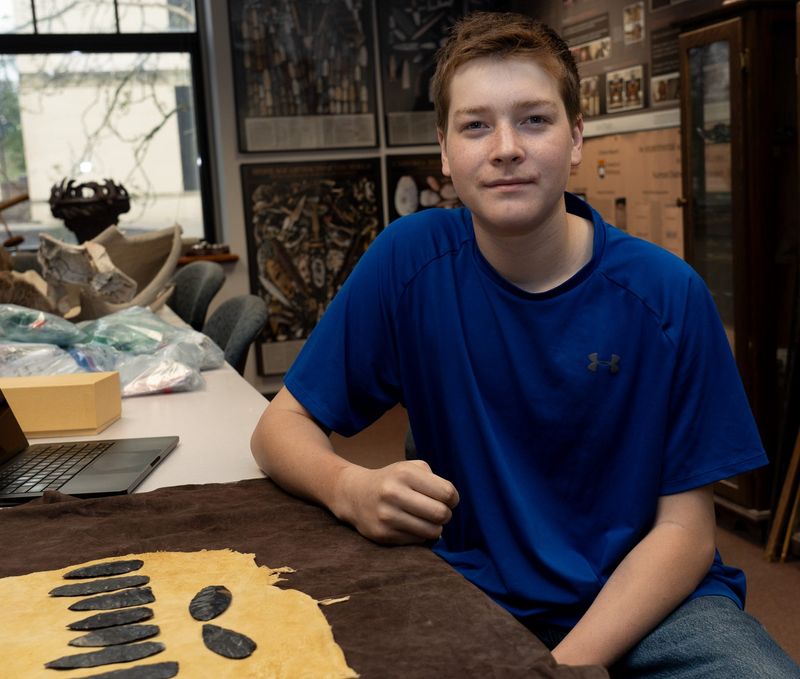
Five years after he found what turned out to be 2,000-year-old stone tools while on a day trip with his family, a Norton teenager was at Kent State University to celebrate his find.
Dr. Metin Eren of Kent State’s Department of Experimental Archaeology said his team has spent years studying the artifacts, and the team’s research suggests that they may be linked to the Adena culture. The native North American culture was one of the first to cultivate plants while also hunting and gathering.

Because the artifacts appear never to have been used, Eren said the team suspects the tools may have been buried as a ritual, perhaps as an offering to the Earth or a deity.
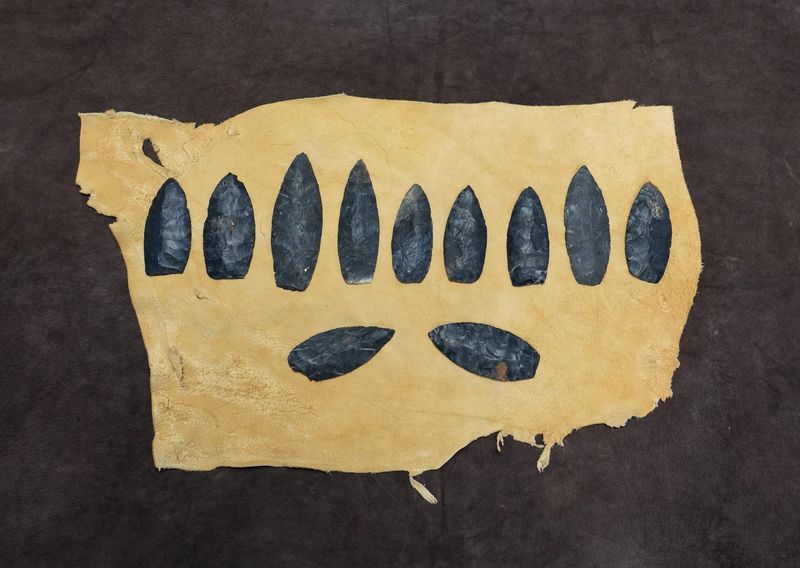
The Joshua Cache, a collection of 11 stone tools, is celebrated in an article submitted for publication in the Journal of Archaeological Science. The cache will have a permanent home in the Cleveland Museum of Natural History.
The cache is named for Joshua Fetter, now 17, of Norton. The boy was 11 when he found the stones while exploring near an Airbnb in Sugarcreek where his family was staying.
Exploring in Sugarcreek
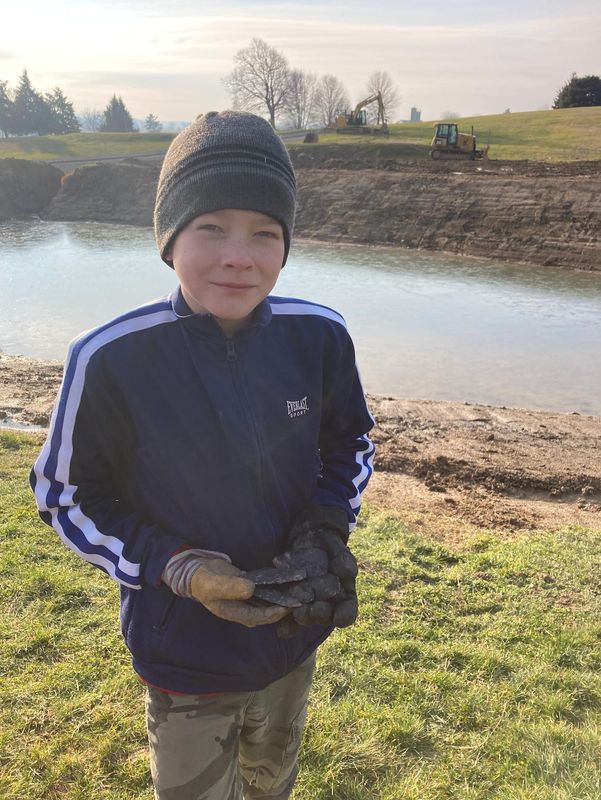
Joshua said he and his parents, Matthew and Suzanne Fetter, and his siblings were vacationing in the Amish country village in January 2021. Joshua, who loved the outdoors, decided to go exploring in a field near where they were staying, which was being excavated.
He said he noticed black points sticking up out of the ground. He said he would often pick up arrowheads while exploring the outdoors, but something about these seemed different. They were bigger – some as large as the palm of his hand, he recalled.
“They were really cool,” he said.
He started digging up the stones, and showed them to his parents. His dad said he initially discouraged his son from digging in the mud. “I said it’s not the day for it,” he said.
The family notified the owner of the property of the findings, and the owner told a family friend about the find. That family had a son who was a graduate student in the archaeology department at Kent State.
Archaeologists descended upon the area, and spent the next five years analyzing the findings.
Eren said the stones were in a circle about a foot and a half wide. Other stones were buried a short distance away. The boy initially found nine stones, but there were 11 tools in all.
Joshua said a bulldozer that had been digging in the area barely missed the stones. The day after he saw them sticking out of the ground, rain washed away more of the dirt, exposing them further. Had the excavation efforts continued that day, the artifacts might have been lost forever.
‘First line of archaeology’
Eren said Joshua’s find is significant for two reasons beyond its ties to the Adena culture.
First, he said, it’s important that the tools were discovered by a child.
“We should encourage all of our kids to be explorers,” he said.
And, he said, it’s a reminder that most archaeological finds are discovered by the public, and not by scientists.
“The public is the first line of archaeology,” he said.
The “stone tool bifaces” were analyzed with a microscope. Because of the elaborate markings, the tools appear to have never been used. That, Eren said, suggests that they may have been buried for some kind of ritual purpose, although little is known about the spiritual beliefs of the Adena people.
“There was a lot of work put into these,” he said. “Why would they put so much work into them and not use them?”
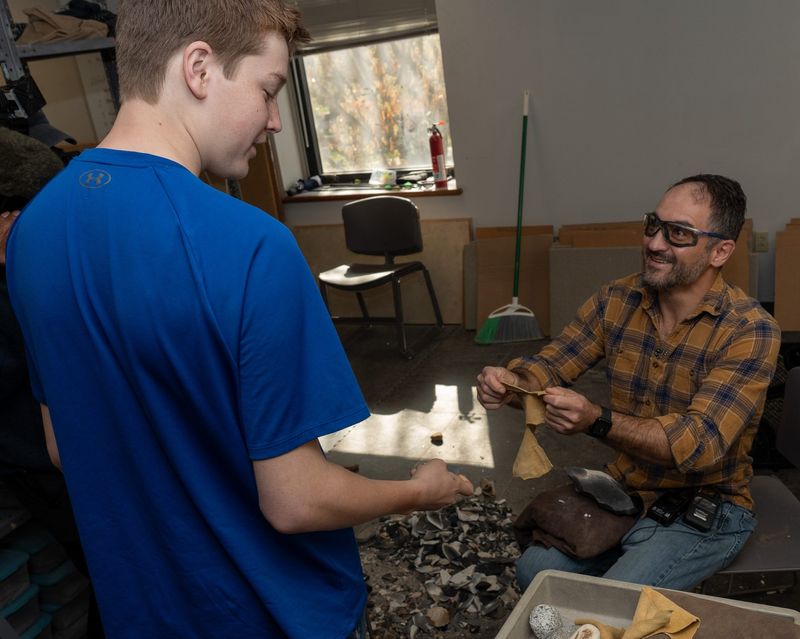
Eren is a “flint knapper,” and re-creates the stone tools in his lab to discover their properties. During the family’s visit to the lab, he had Joshua and his siblings use a freshly cut piece of flint to cut leather to demonstrate its sharpness. The team also has found that creating the tools has musical tones, and may be the root of the love of music among modern people.
He said scientists always have to accept that they may never know everything, and their job is to make a contribution for future scientists who may discover more.
“The goal is to move the football of discovery a few yards down the field,” he said.
Reporter Diane Smith can be reached at dsmith@recordpub.com.
This article originally appeared on Akron Beacon Journal: Norton teen’s find of 2,000-year-old tools celebrated at Kent State
Reporting by Diane Smith, Akron Beacon Journal / Akron Beacon Journal
USA TODAY Network via Reuters Connect