There’s a fight in Grand Rapids. The city’s financial watchdog raised concerns about spending at city hall. The response? The officials, whose spending he reviews, gutted his office.
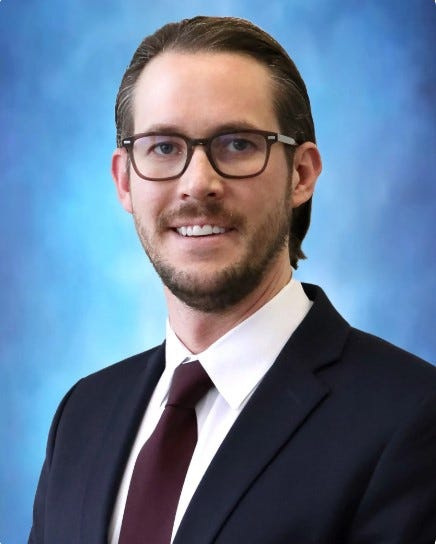
Grand Rapids Comptroller Max Frantz is now suing to protect his office’s independence, staff and budget. This case, no matter the outcome, will influence how cities across Michigan manage their finances.

Grand Rapids voters elected Max Frantz as comptroller in 2022. The comptroller is an independent office responsible for tracking city spending, approving payments and auditing the books.
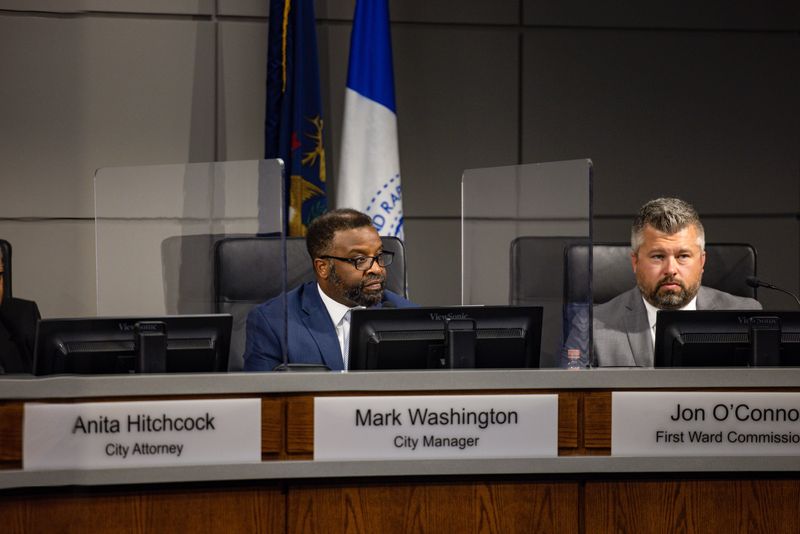
Frantz’s fight began in August 2024 when he flagged a pattern of questionable spending by City Manager Mark Washington. Frantz cites several examples in his lawsuit: $500 for event tickets, $323 at a local bistro and an $822 restaurant bill. He also questioned whether the city should pay personal vehicle allowances to executive staff. After an investigation by Michigan State Police, the Kent County prosecutor decided not to bring a case.
Months later, in December 2024, the Grand Rapids City Commission adopted a proposal to downsize the comptroller’s office. The ordinance transferred core duties — issuing checks, accounting for city funds and preparing financial reports — to a new division. That new division isn’t independent. It ultimately reports to the city manager, the very official whose spending had been questioned.
The city commission chopped down the comptroller’s staff from 16 to three and cut his budget by nearly 80%.
Frantz calls these changes “alarming,” saying they shift independent financial oversight away from the city’s elected watchdog to an unelected city manager. (The city commission appoints the city manager to oversee day-to-day operations.)
Kent County Judge George Jay Quist recently rejected Frantz’s request for a preliminary injunction and declined to appoint special counsel. This means Frantz must pay his own lawyer.
I asked Frantz why he’s fighting this case. “Grand Rapids can and should remain a beacon of integrity in our state, but it requires taking a stand to do so when we’re presented with alarming changes like this,” he said.
Frantz sued the city, the city commission, City Manager Mark Washington and CFO Molly Clarin in December 2025. He argued that the restructuring violates the city charter and state law, and he asked a judge to transfer financial functions back to his office.
Grand Rapids officials have said the changes did not constitute retaliation because they were made for reasons of financial efficiency and were not motivated by malice. A city spokesman noted Frantz has continued to complete financial reviews.
The oath of office requires the comptroller to defend the financial safeguards that Grand Rapids voters approved, Frantz noted. The system is designed to protect the comptroller’s financial oversight. Voters have rejected efforts to weaken the comptroller’s independence at least three times in 1969, 1971 and 2012.
“Our city charter governs how public funds are managed in our city and prevents any one city official from holding unchecked or excessive powers,” Frantz said.
It is a bad precedent to sideline an independent watchdog. Gov. Gretchen Whitmer learned this in 2024 when she proposed cutting the Michigan Auditor General budget 28%. The blowback was swift and lawmakers refused to cut the auditor’s funding.
Financial controls exist for a reason. The Michigan Unemployment Insurance Agency turned off fraud detection and prevention controls during the Covid-19 lockdowns so it could expedite payments. The agency’s errors cost Michigan taxpayers billions of dollars.
Michigan has more than 2,800 local units of government, including counties, townships and school districts. They’ll all be watching this case. If city officials can muzzle the watchdog, they can erode financial safeguards. Taxpayers, ultimately, will be the losers. Michael J. Reitz is executive vice president of the Mackinac Center for Public Policy.
This article originally appeared on The Detroit News: Reitz: Who watches Grand
Rapids City Hall if the watchdog is muzzled?
Reporting by Michael Reitz / The Detroit News
USA TODAY Network via Reuters Connect