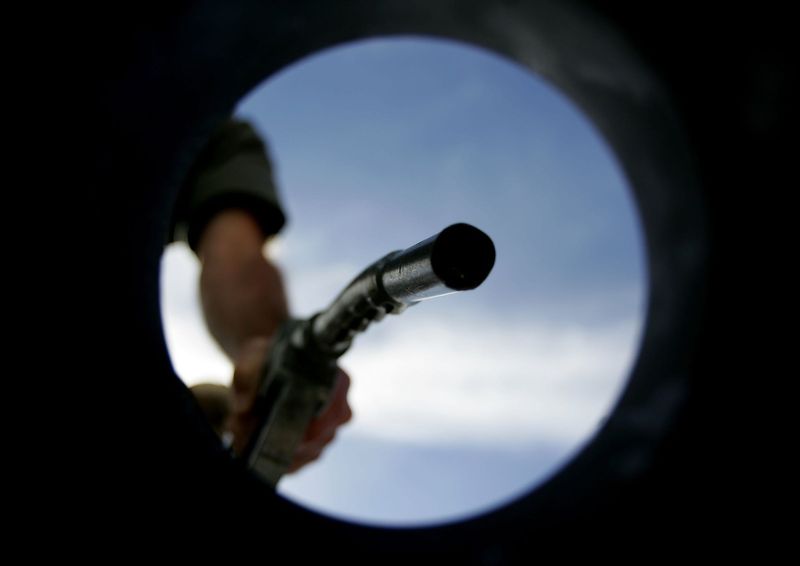
Customers at a metro Detroit Meijer gas station got an unexpected surprise recently when they learned regular fuel had been mixed with diesel.
It’s not clear how many vehicles might have been affected at the location in Clinton Township in Macomb County, but the retailer said it’s “reimbursing customers for vehicle damage caused by this issue.”

This type of problem isn’t unheard of, but it’s probably unsettling if you’ve ever worried about putting the wrong type of fuel in your tank.
It doesn’t, however, have to be a disaster.
First, the details.
How did gas and diesel get mixed at a Meijer station?
According to an email Monday, March 23, from Susan Nemes, a Meijer spokeswoman:
“Last week, our third-party fuel provider made an error at our Meijer Express fuel station at 40445 S. Groesbeck Highway, resulting in unleaded and diesel fuels being mixed. After recognizing this, we shut down our pumps and began contacting customers who may be impacted. Customers who purchased fuel from this Meijer Express station between Tuesday, March 17, at 6 a.m., and Thursday, March 19, at 1:00 p.m., and have concerns, should contact us at 616-791-5484.”
Nemes noted the company is reimbursing customers for damage and that no other Meijer Express stations were affected. She said the company is taking follow-up steps to prevent it from happening again. She didn’t say if there’s a limit on the reimbursement or how the issue was discovered.
What damage can the wrong fuel cause?
It has the potential to cause serious damage, but it doesn’t automatically mean you’ll have a major repair bill.
Sean Reisdorf, an automotive instructor at North Farmington High School in metro Detroit, said that if diesel fuel gets into a gas vehicle, it could damage the fuel pump, injectors, fuel filters and fuel sensors, just to name a few potential issues. Emissions equipment, such as a catalytic converter, could also be damaged.
The quantity of fuel involved can affect how serious the damage is. Reisdorf noted that the tendency of some people to stop at the gas station when they’re practically on empty means that if they fill up with the wrong type of fuel, the potential for serious damage goes up.
Symptoms of diesel in a gas engine
The fortunate thing is this problem tends to manifest fairly quickly. Reisdorf noted that mixing diesel in a gas engine or gas in a diesel engine would lead to complications “right away,” depending on the quantities involved. He said that’s the reason issues are caught early sometimes, such as when multiple vehicles have issues or even stall out shortly after filling up at the same service station.
According to AAA’s Adrienne Woodland, “diesel fuel is thicker than gasoline, so when it goes into a gas engine, it can cause rough running, stalling or the car not starting at all.”
What to do immediately if you used the wrong fuel
“The moment a driver notices sputtering, loss of power, or smoke after fueling, they should pull over safely and shut the engine off,” Woodland said. “Catching the mistake early can mean a simple fuel drain instead of a major repair.”
Reisdorf echoed that.
Yes, there could be damage but maybe not. The key is getting a vehicle into a garage and getting it checked.
“Let’s get the old stuff out and see how she runs,” he said.
It sounds like this type of thing isn’t that unusual. Is it?
Oftentimes, it’s someone making a mistake at the pump, not necessarily a mix-up by the service station or its vendor. According to AAA’s Woodland, “this mistake happens more often than people think, especially when drivers are distracted or using an unfamiliar vehicle. Taking a few extra seconds to double check the pump can save drivers a lot of time, stress and money later.”
But I always heard diesel nozzles were too big for gas vehicles?
That might be the case, but it’s best not to assume.
“To debunk another belief held by some consumers,” according to AAA, “fuel nozzle shapes and sizes are also not an accurate indicator of the type (of) fuel being dispensed. …. The best advice we can give you: Read the pump label. There are laws that require each type of fuel dispensed be clearly labeled.”
But Michigan, for instance, has no law or regulation requiring larger nozzles on diesel dispensers.
Fuel nozzle sizes do typically differ, however.
Here’s the usual breakdown, according to AAA:
Who regulates gas station pumps in Michigan?
In Michigan, that’s the Michigan Department of Agriculture and Rural Development. The department’s “Consumer Protection Division regulates the quantity and quality of motor fuels being offered for sale. Through inspections, device testing, investigations and sampling, MDARD’s staff ensure that consumers receive both the quantity of fuel purchased and that the motor fuel meets state standards,” according to an email from spokesman Nate Peeters.
Peeters noted that if a violation is discovered, the station is notified and enforcement action is undertaken. That can include a written warning, stop sale, fines, prosecution or potential license revocation. In the recent Meijer case, the department “conducted an onsite inspection of the Clinton Township Meijer gasoline station that included the collection of regular gasoline and diesel samples from the fuel pumps. MDARD will test the samples and take appropriate follow-up actions.”
Is there a way to report fuel pump problems to the state?
Peeters said anyone who suspects problems at the pump should call the department’s complaint hotline at (800) MDA-FUEL (800-632-3835). That number “is required to be posted on every motor fuel dispenser in the state.”
Eric D. Lawrence is the senior car culture reporter at the Detroit Free Press. Send your tips and suggestions about cool automotive stuff to elawrence@freepress.com. Become a subscriber. Submit a letter to the editor at freep.com/letters.
This article originally appeared on Detroit Free Press: Meijer reimbursing customers after gas, fuel mixup at Michigan station
Reporting by Eric D. Lawrence, Detroit Free Press / Detroit Free Press
USA TODAY Network via Reuters Connect