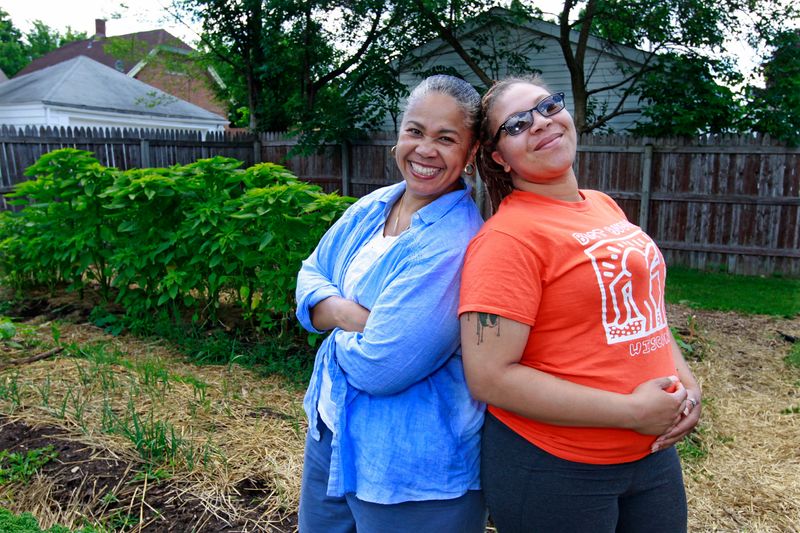
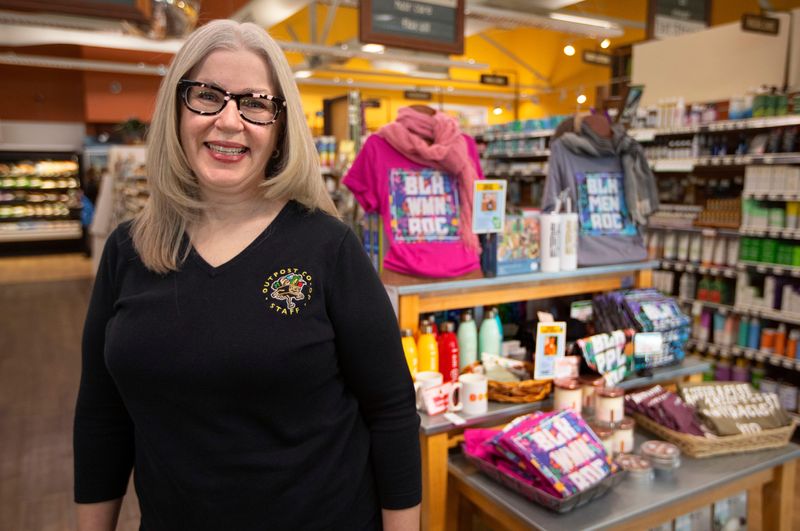
When Angela Moragne and her daughter’s homemade salsa business took off, the first store they knew they wanted to be in was Outpost Natural Foods.

“We definitely went after them,” said Moragne, founder of That Salsa Lady.
She started making salsa with her daughter, Stevey, after Moragne lost her job working at a nonprofit housing development organization in 2011. The idea for the business came from outside Moragne’s apartment window, which overlooked a “salsa garden” growing jalapenos, tomatoes, and cilantro — ingredients needed to make salsa. She noticed the vegetables would wither on the vine because few used them. Not wanting the food to go to waste, she started That Salsa Lady.
They first sold their salsa, made from sweet peppers blended with flavors from their homeland of Nigeria, at farmers markets.
As sales and the salsa’s popularity increased, the duo eyed bigger markets. Moragne wanted her product sold in a store that both valued fresh healthy foods and was as committed to the community as much as she is. She operates a micro-farm that grows the produce to make the salsa. It also doubles as a social enterprise teaching youth about entrepreneurship and life lessons. Outpost, a consumer-owned cooperative, shared that same philosophy, but it was the store’s commitment to diversity that sealed the deal for Moragne.
Outpost has a smaller footprint than most brand-name grocers, but Moragne said it has “a significantly larger amount of Black vendors” on its shelves. Other stores Moragne approached, wanted to alter their ingredients to increase shelf-life or made it difficult for them to get on their shelves.
“Outpost gets it,” she said. “We are not in this for money. We’re in this to make a difference. And we align ourselves with partners that have very similar missions — missions that we respect. So we approached them before we approached anybody else.”
That Salsa Lady brand has operated at Outpost Natural Foods since 2015, long before the murder of George Floyd by Minneapolis police stoked a wave of consciousness to support Black businesses.
From bookstores to restaurants and retail shops, consumers have vowed to shop Black. Now big-box retailers and grocery stores are stocking shelves with Black products and vendors.
Outpost has long had a mission of diversity and inclusion since its founding in 1970. It intensified efforts to carry more minority-owned products in the wake of Floyd’s death.
Since 2020, Outpost has identified more than 40 products made by people of color sold within its stores.
The co-op’s mission is to create healthy, diverse and sustainable communities, said Margaret Mittelstadt, Outpost’s director of community relations. That early approach, she added, led it to offer a variety of products reflective of the communities its four stores serve.
“We came to the realization after the murder of George Floyd that we have to do some soul searching ourselves and really examine what it means to be a healthy, diverse and sustainable community and what are we not doing and how do we change that,” Mittelstadt said.
That soul searching started with an internal look at what the co-op could do beyond hanging a Black Lives Matter sign in the window. Consultants conducted diversity training with its leadership. The company realized that effort must go beyond who sits on its board but what also is stocked on the store shelves.
Mittelstadt said she didn’t want the effort to be performative. The co-op realized it needed to do more to bring in diverse and local vendors of color to lift “up the entrepreneurial spirit.”
“We really explored what it meant to find those unique vendors of color that sell products that are awesome that we could bring into our stores and lift up those vendors,” Mittelstadt said.
Some of that exploration comes from local farmers and makers markets. During Black History Month, the store has brought in vendors from Sherman Phoenix to showcase its wares.
The co-op’s first inkling of local Black vendors’ potential came when it opened a makers market in 2016 at the co-op’s former store at North 17th Street and West North Avenue.
Outpost partnered with Venice Williams, of Kujichagulia Producers Cooperative, to bring in a dozen local artisans and food vendors, including TrueMan McGee of Funky Fresh Spring Rolls. The co-op started selling his products in January 2021. Recently he inked a deal with a pizza manufacturer to mass-produce his spring rolls.
“That’s what really opened up the gates for us to really understand all the wonderful vendors of color that we have in our community that we haven’t tapped as assertively as we could have been,” Mittelstadt said.
Since then, the co-op has brought in a number of local Black-owned businesses, including Blossom Candle Company, Pam McCreary of @ Peace Designs, and Alecia Miller of Soul Brew Kombucha.
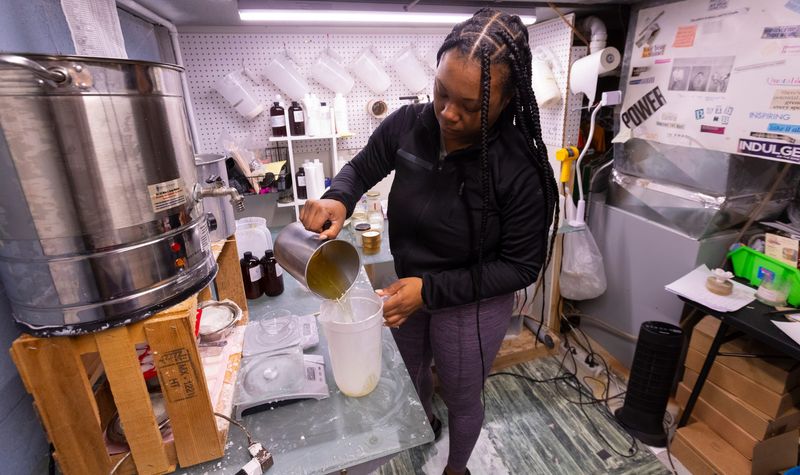
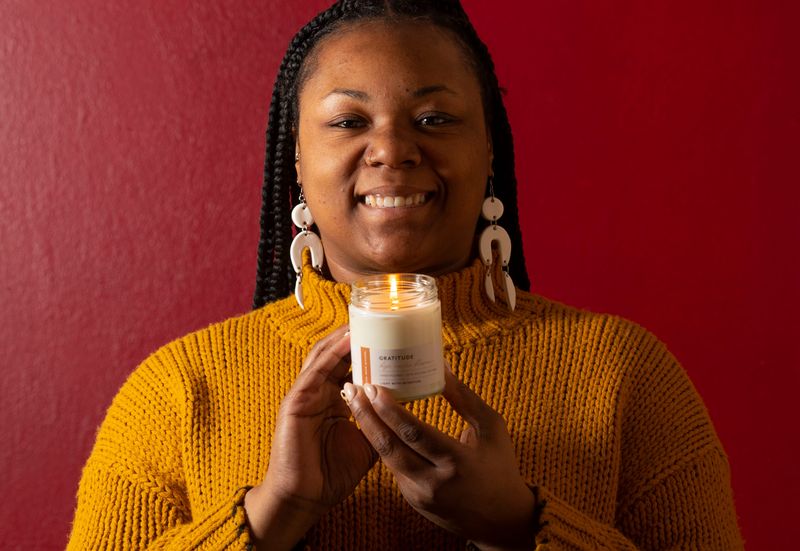
It was a social media post that led Outpost to Blossom Candle. Owner and Creator Shiquita Mann was featured in a video post recognizing Black women entrepreneurs during Black History last year. An official from Outpost reached out to Mann, and a month later her scented candles were in the store for women’s history month. Being in a retail store was on Mann’s “visioning board,” but she didn’t think it would happen this quickly.
“I already knew this was a goal of mine,” said Mann, who turned her candle-making hobby into a thriving business. “It was a moment of realization of what our brand stands for — whatever you speak, it shall be.”
Mann started making candles in 2015 after the birth of her daughter. It was her therapy for dealing with the jitters of being a new mom and rediscovering herself as a single woman after a recent breakup. She started Blossom Candle in 2019, selling them at farmers markets.
She wanted the business to help women grow and find their true being, thus the impetus behind the company’s titular name. She creates scents that evoke calm, positivity and relaxation. Her best-sellers are “Positivity and Protection,” a relaxing sage and chamomile scent and “Thoughts Become Things,” a masculine scent made from mahogany and coconut.
Her mindfulness candles are sold at all four Outpost locations.
She said being in Outpost has helped her develop as a business person. The experience also has taught her what it takes to run a business, especially maintaining and developing relationships.
“It has grown me personally as the owner,” Mann said. “We get a lot of recognition being in that store.”
She hopes that recognition will help grow her company into a lifestyle brand. Mann rarely shopped at the co-op before her products were on its shelves, but was surprised it had many people of color vendors. That’s a result, she said, of the co-op’s local focus.
“I feel like they are very community based with a lot of their vendors not just Black-owned. It is a community effort to be more diversified,” Mann said.
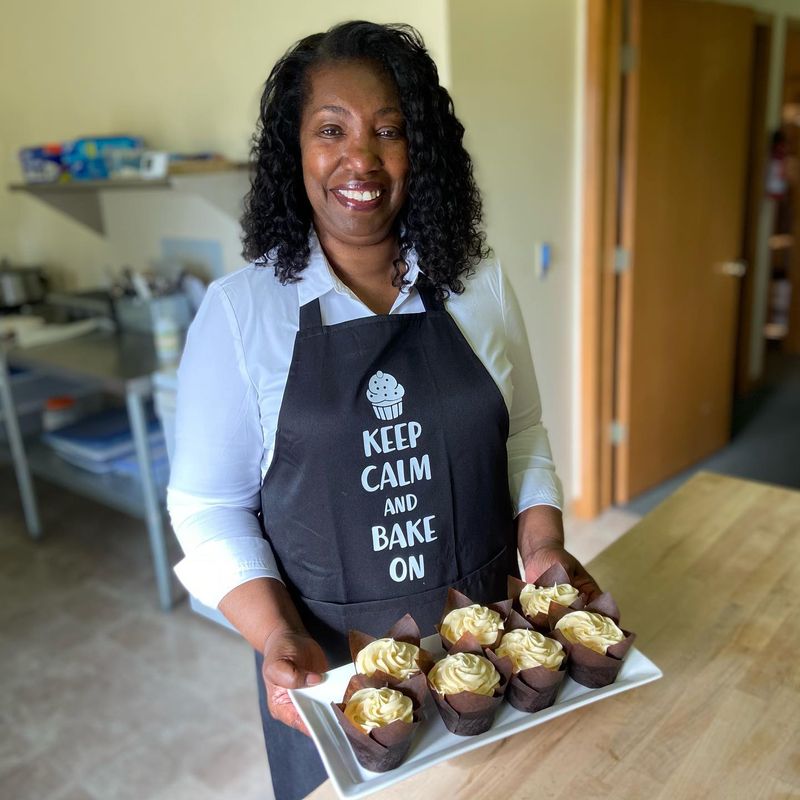
Susie Roberts’ gluten-free baking company is not new to Outpost, but as a business owner, she is new to them. Roberts bought KalyANa Organics in 2017 from its previous owner and inherited a relationship with the co-op.
Roberts got into gluten-free baking because her grandson was diagnosed with Autism spectrum disorder.
She learned gluten could affect children’s moods. And as with any grandmother, she wanted to bake her grandson treats.
“I wanted him to have the same goodies that my other grandkids had,” Roberts said.
Since purchasing the business, Roberts has expanded the brand’s products at the co-op. The store initially sold three of her package mixes. Today, it sells all seven of Roberts’ varieties, including her cake, cookies, brownies, and pancake mixes.
Outpost, she said, has been very open to carrying additional products including her baked banana chocolate chip muffins.
“I took them a few samples and they said this was good and now they are selling them in packages of two. I just walked in and sold it. It was that easy.”
She credits Outpost’s in-store marketing efforts in exposing her products to more customers. She’s been featured on its website, social media, and in its quarterly magazine.
“My products have been exposed to a lot more people with their promotions and it has increased my sales,” Roberts said.
Part of growing diverse vendors is sharing their stories, Mittelstadt said. The co-op creates a narrative around those vendors to not only generate buzz about the product but also to develop a connection between the product and shopper.
The idea is to convey there is “a really cool person behind the product.”
“Our local vendors are the ones that keep our product mix unique and diverse, and that’s where the magic really happens at Outpost,” Mittelstadt said.
The conversation around supplier diversity needs to happen, said Ruben Hopkins of the Wisconsin Black Chamber of Commerce.
“If those big box stores don’t know they need to be diverse in their thinking, then that market is going to go someplace else,” said Hopkins, the chamber’s chairman and CEO. “We spend our money in markets that care the same way we do. You ignore at your own peril. A lot of the large box stores will have to learn that.”
Outpost should be a model for other national grocery chains, Moragne said. The few big grocers in Black neighborhoods need to offer Black products on their shelves. Many Blacks and other people of color have to go out of their neighborhood to shop for healthy and nutritious food.
“Your vendors need to reflect your clientele,” Moragne said.
This article originally appeared on Milwaukee Journal Sentinel: Black food vendors and creatives find a home at Outpost Natural Foods Co-op
Reporting by La Risa R. Lynch, Milwaukee Journal Sentinel / Milwaukee Journal Sentinel
USA TODAY Network via Reuters Connect