Plans for a major walking and bicycling trail in Southwest Florida are one step closer to reality.
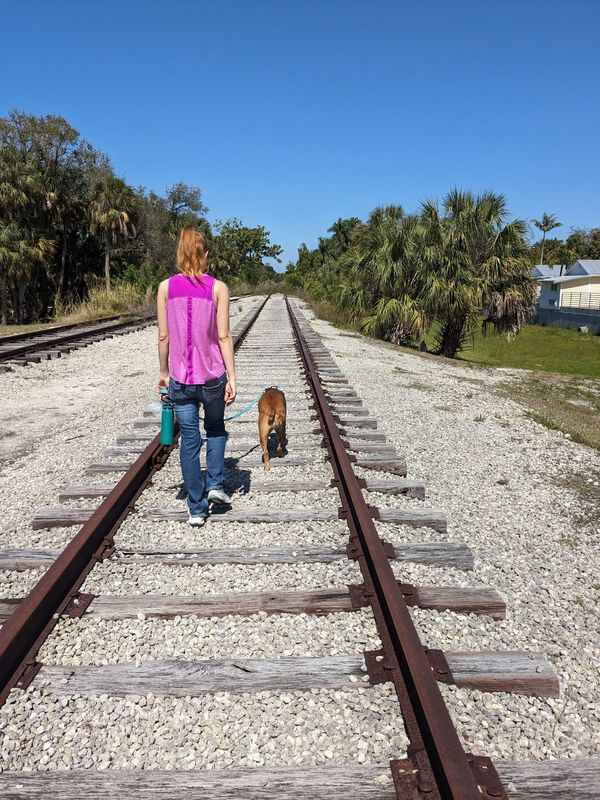
On March 10, Collier commissioners voted 4-1 in favor of finalizing the county’s purchase of about 24 acres — or about 1.5 miles of the Seminole Gulf Railway — to be included in the first phase of a new recreational trail.

Extending into Lee County, the trail, known as BERT (Bonita-Estero Rail Trail), has been years in the making.
After debate, Collier commissioners agreed to fund virtually all of the county’s land purchase with money from Conservation Collier, a voter-approved, taxpayer-funded program established in 2003 to acquire and preserve environmentally sensitive lands.
Some of the money for the county’s purchase — a little over $245,500 — would come from road impact fees for a necessary extension of Veterans Memorial Boulevard.
The contract with the nonprofit Trust for Public Land, which is brokering the land purchase from the Seminole Gulf Railway, will come back to the county commission for a final vote soon.
The cost to acquire the county’s part of the land: More than $11.6 million.
The first phase of the project is 11.4 miles, starting in North Naples, near Wiggins Pass Road, and running north through Bonita Springs and Estero.
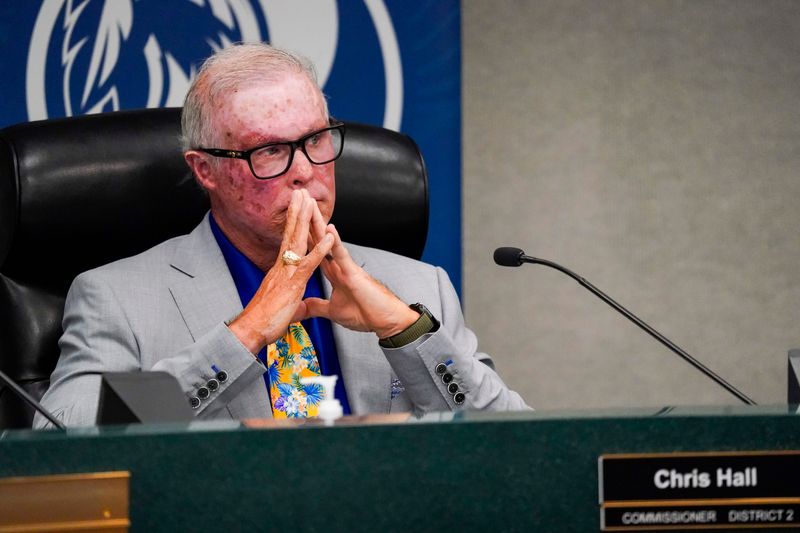
As a representative for North Naples, Collier Commissioner Chris Hall has served as a liaison for the project and has been involved in the negotiations for the land.
Other than the road impact fees, Hall recommended 100% of Collier’s funding come from Conservation Collier, saying the purchase would be of great public benefit, and that everyone he’d talked to about it in the community, including in church and on the tennis court, agreed it was a good use of the money generated by the program.
“I met with 250 people at a mobile home park right there in North Collier,” he said. “When I told them that we were going to use Conservation Collier funds to try to attain this trail and not use their general tax money, they applauded. They didn’t just think it was a great idea, they applauded.”
Commissioner Burt Saunders wanted to use Conservation Collier money only for segments of the land that run through or connect with county-owned property purchased through the long-standing program.
Saunders suggested the rest of the land for the trail could be funded with the county’s emergency reserves, and he pointed out that if there should be an emergency, such as a major hurricane, and there weren’t enough funds in those reserves to deal with it, money could be taken from elsewhere — even from Conservation Collier, if necessary.
“I think that we can take money from the reserves safely, knowing that we still have Conservation Collier funds available, it there truly is an emergency,” Saunders said.
He raised concerns that if Conservation Collier was used to purchase land not considered environmentally sensitive, and never reimbursed, it could open up a door to use the tax money generated by the program for other “general purposes.”
“I don’t want to see that happen,” Saunders said. “So, I’m concerned about the precedential value of this.”
To think the county would ever pay back Conservation Collier for any of the money used to acquire land for the trail is a “myth,” he said.
Several of the public speakers sided with Saunders, including Brad Cornell, the policy director for Audubon Western Everglades, and a few other environmentalists.
Cornell emphasized that the Conservation Collier Land Acquisition Advisory Committee had recommended limiting the program’s funding to a one-mile area in and around the Railhead Scrub Preserve. The county acquired that preserve through the conservation program in the early 2000s.
Additionally, Cornell stressed that one of the three largest segments of land for the trail in the county runs through industrial areas, and thus he argued it would be inappropriate to use Conservation Collier dollars to acquire it. He urged the county to fund that portion — valued at about $3.46 million — with other sources.
A majority of commissioners felt differently.
Commissioner Rick LoCastro said: “I think it’s about the mission and the purpose of this entire stretch.”
He, along with three other commissioners, expressed reservations about using emergency reserves as another source of funding.
“When we talk about using reserves, as soon as I hear that, the first thing I think of is the spreadsheet that we’ve shown at all our budget meetings, showing how many projects that we have that we have no money for,” LoCastro said.
Commissioner Bill McDaniel said he feared that if money got pulled from reserves, “something else might get slighted.”
He was the only one to vote against the motion. McDaniel wanted to add language that Conservation Collier would get paid back “if possible,” but Hall — as the motion maker — wouldn’t agree to it.
Hall said he’d be willing to have the conversation in the future, including extending Conservation Collier, but he’d stick by his motion.
Before the vote, Commissioner Dan Kowal, board chairman, said he was taken aback by Conservation Collier supporters who argued that only part of the project should be funded by the program. He felt the trail project, on the whole, was a perfect way to use those dollars.
He underscored that the program is not just about conservation and preservation, but about providing natural areas that people can visit, use and enjoy.
“I think this is an exact example of what Conservation Collier can do for its citizens, using their tax dollars in the right way,” Kowal said. “It gives them the opportunity to actually experience it.”
In board discussions, Saunders said he’d support finalizing the agreement even if his recommendation to tap other funding sources failed.
“I am 100% supportive of this acquisition,” he said.
He joked that he couldn’t vote against something named after him — referring to the trail acronym’s likeness to his first name, even if spelled differently.
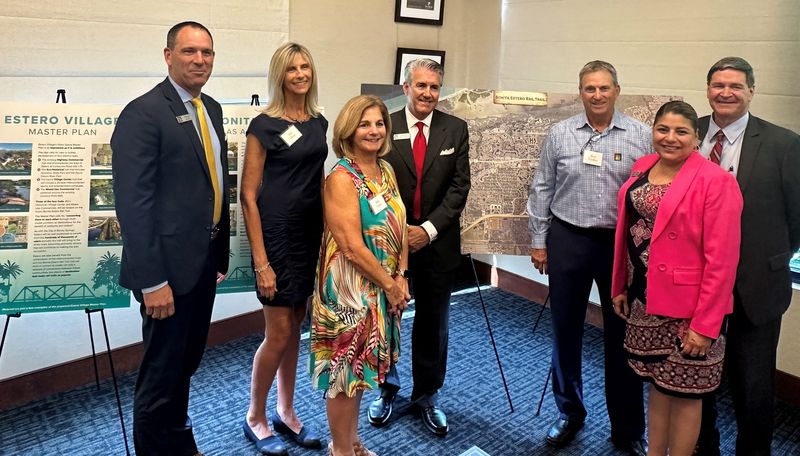
To move forward, the project will require money from Estero and Bonita Springs.
Estero’s village council authorized the purchase of its portion of the rail line on March 4, at a cost of nearly $19.8 million, with the money expected to come from a mix of sources. The village’s section would stretch about 4.1 miles.
Meanwhile, Bonita Springs is still working on an agreement for its segment of the rail. The city’s cost: $28.6 million for 5.8 miles.
Before Collier commissioners directed the county manager to finalize the county’s contract, Doug Hattaway, with the Trust for Public Land, said: “It is a momentous point, where we are today. This is a once-in-a-generation opportunity that will change all three of these communities for many generations to come.”
He continued: “Economic investment, new jobs, safe routes to school, to each other, to church, to shopping. It will also … enhance the environmental management and integrity of the corridor.”
Deb Orton, president of the Friends of Bonita Estero Rail Trail, a nonprofit pushing for the project, thanked Collier commissioners for their support and Hall for his leadership.
What many residents may not realize is that the project represents 180 acres of land in Lee and Collier counties, she said.
“We’re trying to activate that 180 acres with a trail,” Orton said. “But it brings you to rivers. It brings you to conservation areas.”
Last month, the Trust for Public Land and Seminole Gulf Railway announced a new agreement on turning the old train tracks into a paved recreational trail.
The deal will allow for the purchase of a little over 11 miles of abandoned railway for $60 million, $10 million less than under a previous agreement, which was set to expire this month. The trust wants to close on the sale by the end of October.
“It’s come from a really good idea to really looking like it’s going to happen,” Commissioner Hall commented at the county commission meeting. “And we’re excited about that.”
He shared that he recently visited a similar, larger trail in Sarasota County.
“The Legacy Trail that goes through there is something that this is going to turn into,” he said. “There was little businesses along there. There were people using it, biking, walking, running. I mean, it was crowded. It wasn’t just something that the trivial few used.”
The Trust for Public Land inked the land deal with the Seminole Gulf Railway for that trail too. The 18.5-mile paved multi-use recreational trail connects Sarasota to Venice.
Laura Layden is a business and government reporter. Reach her by email at laura.layden@naplesnews.com.
This article originally appeared on Marco Eagle: Collier chugs forward with rail-to-trail plan. Who is paying for it?
Reporting by Laura Layden, USA TODAY NETWORK – Florida / Marco Eagle
USA TODAY Network via Reuters Connect