NEW CITY — Marie has helped people living in a St. Dominic’s Family Services residence for 10 years. The direct support professional describes her relationship with the residents, who have a range of disabilities, as “family.” But the Rockland resident is in jeopardy of losing her Temporary Protected Status and having to return to Haiti.
The Trump administration unilaterally acted to end TPS for Haitians, some here for decades. But court challenges have, so far, delayed the implementation of removals. Meanwhile, there’s a push in Congress to legislatively extend TPS.

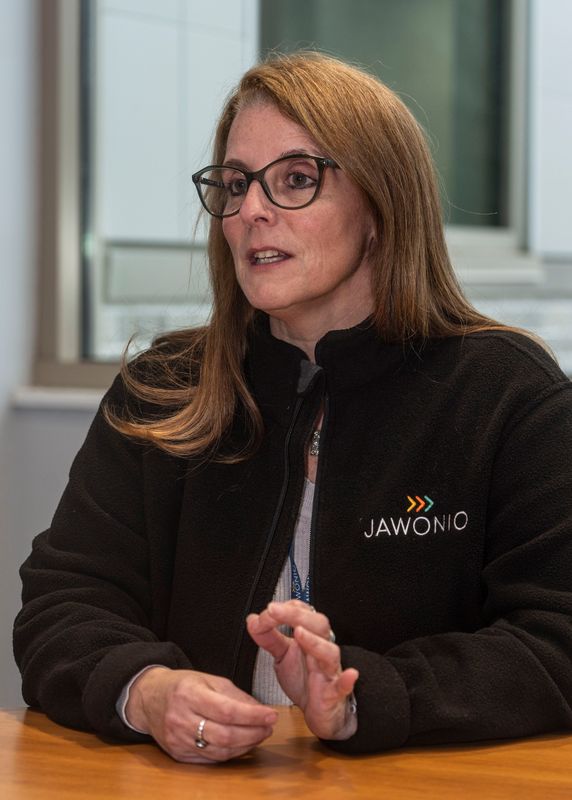
Marie, whose last name is being withheld because she fears repercussions, said she doesn’t know what she would do if TPS is yanked.
There’s only danger for her in Haiti, Marie said: Her family home and neighborhood were taken by gangs years ago; she would be a target for kidnapping and ransom; she has no close family left, and even if she did, they would have their own challenges and would be unlikely able to help her.
Carol St. John, St. Dominic’s Family Services chief program officer for residential programs, said Marie is just one of about 18 workers her nonprofit agency would lose if TPS for Haitians ended.
The losses would be repeated at agencies that provide lifespan services for people with disabilities in the Lower Hudson Valley and nationwide, local agency leaders said during a recent meeting at Jawonio in New City.
Agencies like St. Dominic’s and Jawonio already faces double-digit vacancy rates and high turnover.
“Besides the moral and ethical issue of deporting people to Haiti,” Jawonio CEO Randi Rios-Castro said, sending back scores of workers in the human care field would “exacerbate an already horrific workforce shortage.”
Some 330,000 Haitians with TPS status reside in the U.S.; about 40,000 are in New York. Many are employed in caregiver roles.
What is TPS and what’s at stake
TPS is granted by the U.S. Department of Homeland Security to foreign nationals already in the U.S. who cannot safely return home country due to extreme dangers.
The Trump administration had rescinded or attempted to rescind TPS for several nations, including Honduras, Venezuela, Afghanistan and Somalia.
The U.S. established TPS for Haiti after a 2010 earthquake devastated the Caribbean nation. Tens of thousands of Haitians fled here, and TPS gave those who were undocumented a legal pathway to stay and work and rebuild their lives.
People on TPS, like the direct support professionals, or DSPs, at Jawonio, Saint Dominic’s Family Services and other nonprofit agency providers, have work authorization and documentation.
“They’re here legally working, paying taxes,” Rios-Castro said.
If they lose TPS status, they lose that ability to work so agencies would automatically have to let them go.
“Some of them have worked with us for 20 years,” Rios-Castro said. “They are essentially family to the people they are supporting.”
Marie, during a recent interview at Jawonio, agreed. “The same way they need us, we need them too,” she said. “We provide care, safety, happiness.”
Rios-Castro said Jawonio would lose 27 DSPs if TPS ends. The agency has already been running at around a 20% vacancy rate for direct-care workers.
Agency leaders and workers like Marie worry about the disruption losing longtime DSPs would have for residents. “That’s their home for life,” St. John said.
Rios-Castro said agencies like Jawonio already struggle with high rates of staff turnover because the jobs are hard and the state-reimbursed pay is low. Residents, she said, “don’t like the revolving door.”
Marie agrees. “It’s gonna be terrible,” she said of her residents losing their longtime support. “Bringing in a new person is gonna be a challenge for them.”
The impact goes well beyond group home residences. Haitian immigrants across the U.S. are well-represented in healthcare fields, according to the Migration Policy Institute, with many filling support occupations such as nursing assistants, personal care aides, and home health aides.
The Jewish Telegraphic Agency reported in January that a group of residents at a Boca Raton, Florida, senior complex were so concerned about their aides’ fate if TPS was pulled, they came with a scheme to hide Haitian staff in their apartments.
Rios-Castro said that speaks to the moral concerns of sending people back to a country the U.S. State Department has had under a longstanding Level 4 “do not travel” advisory, citing widespread kidnapping, crime, terrorist activity, civil unrest and limited healthcare.
Rios-Castro and Marie said people who think people on TPS could just convert their immigration status misunderstand how complex and costly the U.S. immigration can be.
TPS is not an automatic pathway to a green card. Finding a way to stay in the U.S. — including seeking political asylum or family sponsorship — can take decades of paperwork and paying a lawyer and is only successful for a fraction of applicants.
What are courts and Congress doing
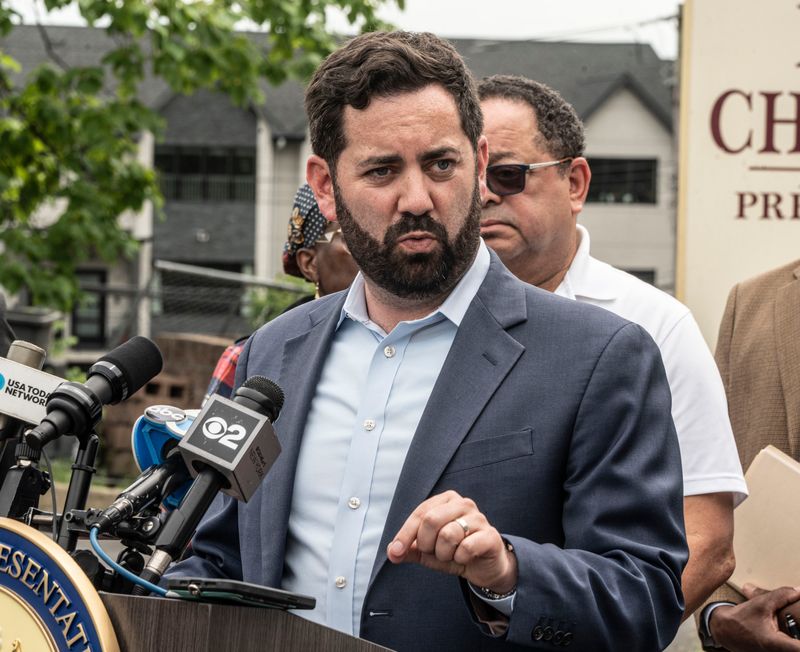
U.S. Rep. Mike Lawler on Wednesday, March 4, announced he had signed onto a colleague’s petition to force a vote on a bill he co-sponsored that would extend TPS for Haitians.
Lawler’s 17th District includes Spring Valley, home to one of the largest Haitian diasporas in the U.S.
“The situation in Haiti remains dire,” Lawler said in a statement announcing that he has signed a discharge petition designed to force a vote on H.R. 1689, which would require TPS designation for Haiti to continue. “There is no doubt that sending individuals back into that environment is dangerous.”
U.S. Rep. George Latimer, D-Rye, had previously signed the discharge petition.
Lawler’s office said the Republican has also told fellow Republican Trump and past U.S. Secretary of Homeland Security Kristi Noem in person that TPS cannot end for Haitians.
The original termination of TPS protections for Haitians was on Feb. 3.
But a federal judge ruled that TPS must stay active for Haitians until legal challenges resolve. There’s no telling how long that could take.
Meanwhile, New York Attorney General Letitia James and a coalition of state attorneys general have filed an amicus brief with the U.S. Court of Appeals for the District of Columbia in support of a lawsuit aiming to block termination of TPS for Haitians.
Haitian immigrant communities here have long felt a target of Trump’s going back to the 2024 presidential campaign, when candidate Trump and his team engaged in rhetoric that disparaged the Haitian community, including claims they were eating people’s pets.
Will the legal challenges, the political push and the healthcare concerns be enough to save TPS for Haitians?
“I live in hope,” Marie said. “We are coming here for a reason. We came here for a better life. We work, we pay our bills, we pay our taxes.”
St. John said the human care system, already struggling with worker shortages, could be pushed to the precipice by losing the Haitian TPS workforce.
St. Dominic’s operates with a near 28% vacancy rate for DSP workers. Haitian TPS holders are dedicated workers, and fill in the gaps left by those vacancies with extra shifts and extra care.
And for those who believe Americans would take these jobs, St. John said, that’s not been her experience as her agency constantly recruits.
“The government, they’re not seeing this,” St. John said. “Taking people on TPS out of this situation is going to be crazy.”
Coming up: Rally to keep care strong
The TPS challenge is just one federal policy that’s further straining agencies that aid people with disabilities and other healthcare service providers.
The recent introduction of to $100,000 fee on H-1B workers visas. Those permits help agencies staff trained positions like social workers and habilitation specialists. While the idea may be to foster jobs for U.S. citizens, Jawonio Chief Human Resources Officer Theresa Parker said, she has found new college grads aren’t interested in the work and pay these agencies can offer.
Changes to Medicaid guidelines have also threatened financial stability for agencies that provide mental health and other care and support.
On the state level, agencies continue to fight for an increase in wage reimbursements for DSPs, and are mid-push for the state Legislature to increase Gov. Kathy Hochul’s allocation for that in the upcoming state budget.
Agencies and the people they serve gather each year for “Rally in the Valley,” hosted by Jawonio in Rockland County. The advocacy day draws thousands of self-advocates, families and care providers, as well as politicians who come to hear what people need.
This year’s Rally in the Valley takes place at 11 a.m. Friday, March 13 at SUNY Rockland Community College Fieldhouse.
For more information: jawonio.org/2026-rally-in-the-valley-registration.
This article originally appeared on Rockland/Westchester Journal News: How end of Haitian TPS threatens care for people with disabilities
Reporting by Nancy Cutler, Rockland/Westchester Journal News / Rockland/Westchester Journal News
USA TODAY Network via Reuters Connect