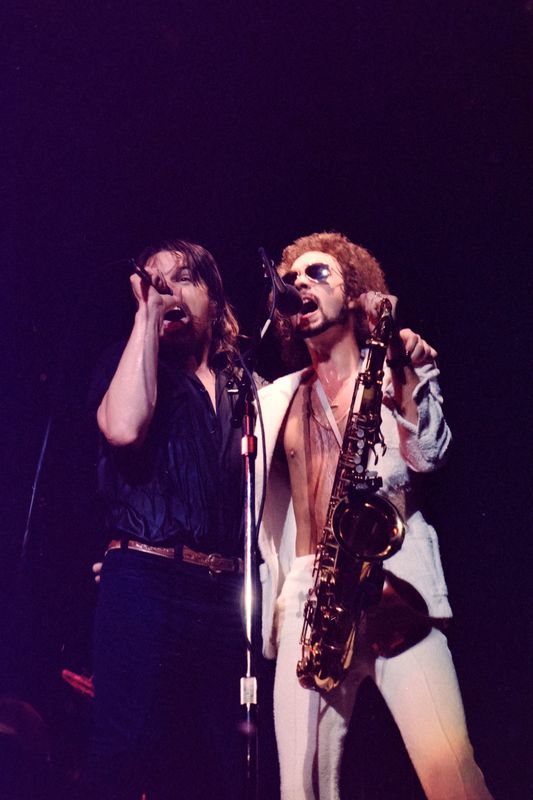
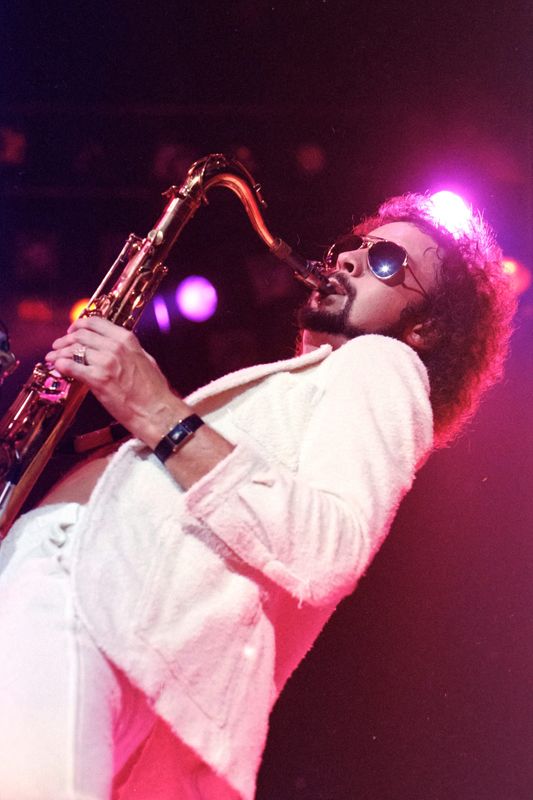
In the years following the 2020 death of Alto Reed, his family faced a daunting challenge.

As Bob Seger’s star saxophonist for nearly five decades, Reed accumulated a vast trove of musical instruments, rock memorabilia and touring mementos — enough to fill 17 storage units scattered across the country.
The much-loved Detroit musician, it turns out, had left an overwhelming stockpile of cool stuff.
“It was almost like a national treasure hunt to track down everything he had,” says his daughter Chelsea Radler.
Today, having filled their own homes with meaningful items marking their dad’s legacy — and donating others to institutions for posterity — Radler and her sister Victoria Reed are giving fans a chance to secure a piece of his history.
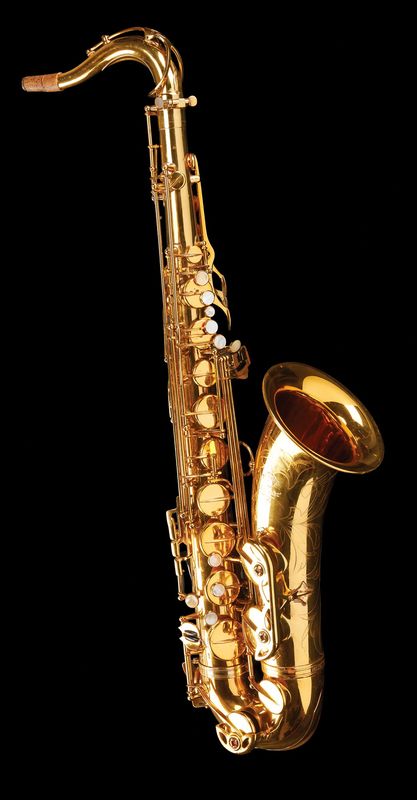
More than two dozen items from Reed’s collection, many of them signed by him and Seger, are now available in an online auction that will run through March 18. The offerings include vintage horns and guitars deployed by Reed during his decades with the Silver Bullet Band along with tambourines, tour apparel and backstage passes.
“Our houses are about as full of his instruments as they could possibly be,” says Radler. “We’ve run out of space.”
The instruments up for auction come with distinguished lineages — like the tenor sax played by Reed on album sessions for 1976’s “Night Moves” and 1980’s “Against the Wind,” or the baritone he used during Seger’s final tour, a sold-out run that crisscrossed North America in 2018 and 2019.
The sale is being administered by RR Auction, a longtime Boston auction house specializing in Americana and cultural artifacts.
Aiming to showcase instruments with colorful stories attached, the daughters singled out saxophones such as the Henri Selmer Mark VI played by Reed at 1976’s Michigan Jam rock festival, where a hot air balloon lofted him over the crowd for performances of “Let It Rock” and “Turn the Page.”
“There are standout moments that can be pinned down to a single sax,” says Victoria Reed. “And that’s definitely one of them.”
For the daughters, the auction follows a meticulous, emotional journey through their father’s life archives. They spent several years agonizing over the prospect of parting with beloved instruments via a public sale.
Ultimately, the sisters realized their charismatic, fan-friendly rock dad would have gotten a big kick out of it.
“His fan engagement was part of who he was,” says Radler. “It just felt like this was more (fitting) than keeping things in a storage unit or selling them to a music shop.”
Reed seems to have been a natural-born collector. His storage spaces were packed with keepsakes from his life as a touring musician — everything from receipts and hotel toiletries to long-distance family notes.
Several units housed items saved long ago by Reed’s mother, including his 1966 band sweater from Lake Shore High School in St. Clair Shores.
“He was really sentimental,” says Victoria. “And many of these things are signed by Seger, because he also had this vision of, ‘You know, maybe someday a fan is going to want this.’ ”
‘Our rock star’ departs
Fans were stunned in late 2020 when news broke that Reed had died after an unpublicized battle with colon cancer. He was just 72.
The long-tenured Silver Bullet Band member was “our rock star,” as Seger put it, loved by concert audiences for his dynamic showmanship and high-energy stage presence. Reed’s musical impact was just as mighty, including signature sax lines crafted for hits such as “Old Time Rock and Roll,” “Mainstreet” and — most famously — “Turn the Page.”
His daughters say that Reed, determined to be part of Seger’s farewell tour in the late 2010s, avoided cancer prevention and treatment measures, and they’re now urging others to pursue early screenings to fend off the disease that took their father.
“He delayed it. He knew that he might find something (unwanted), and he would rather tour,” says Radler. “On his deathbed, he literally told Bob that he would do it again.”
Both daughters have followed Reed’s path into arts and entertainment: Victoria Reed is an accomplished singer-songwriter now nurturing a record label and artist collective in Rome, while Radler is a Hollywood veteran who works at WME, one of the industry’s leading agencies. Her office is lined with her father’s gold records.
The two say they grew up in a household where their aspirations were encouraged but not forced — no mandatory piano lessons there — and they warmly remember their dad as a mystical, seasoned man armed with wise advice.
The family has gifted one of Reed’s instruments to the Rock & Roll Hall of Fame: a saxophone he prized as his go-to horn that was used for “Turn the Page” on later Seger tours. He called it Alto No. 1.
“He had only two requests at the end: One, get Alto No. 1 to the Hall of Fame. And two, fix the Grammy that one of us may or may not have broken during a house party at some point,” Radler recalls with a laugh.
“A guest at a house party,” Victoria interjects.
Sorting through their father’s belongings was physically exhaustive, emotionally intense and logistically complicated. With help from Victoria’s music contacts and Alto Reed’s longtime sax tech, Detroiter Johnny Evans, they embarked on a deep dive to establish provenance of specific instruments by scrutinizing photos and video footage.
Victoria Reed describes it as “the very intimate and confusing process of handling a parent’s estate” against a backdrop of loss and grief.
Still, “there was something very beautiful about it, too, just feeling close to him through these objects,” she says. “And, for me, being a musician, there were so many little treasures in there, like magical microphones that now I’m recording my albums with.”
Inside Radler’s house, the bedroom of her younger son — middle name Sax — displays one of his grandfather’s baritone saxophones, while her older son’s room contains one of the guitars.
Beyond his work with Seger, Reed was a familiar figure in Detroit thanks to his frequent national anthem performances at big-time sporting events. The family is coordinating with Little Caesars Arena for a special loan: an Alto Reed sax signed by 2002’s Stanley Cup-winning Red Wings team.
Reed was close to Clarence Clemons, the late saxophonist whose role in Bruce Springsteen’s E Street Band is now filled by his nephew Jake Clemons. The Reed family has bequeathed Jake a horn from their collection.
In the five-plus years since their dad’s passing, Victoria and Chelsea say they’ve been comforted by the shared grief and appreciation from fans. Now, in offering up some of his firsthand career artifacts, they’ve found another way to connect.
“It’s not really about selling it,” says Radler. “It’s about the people who loved him so much, and that joy and fun he brought to all those fans.”
Contact Detroit Free Press music writer Brian McCollum: 313-223-4450 or bmccollum@freepress.com.
This article originally appeared on Detroit Free Press: Family of beloved Bob Seger sideman sends musical treasures to auction
Reporting by Brian McCollum, Detroit Free Press / Detroit Free Press
USA TODAY Network via Reuters Connect