

At least 22 parishes across southeast Michigan would no longer hold weekend Masses in future years, according to potential models that the Archdiocese of Detroit has released as part of a massive restructuring plan.
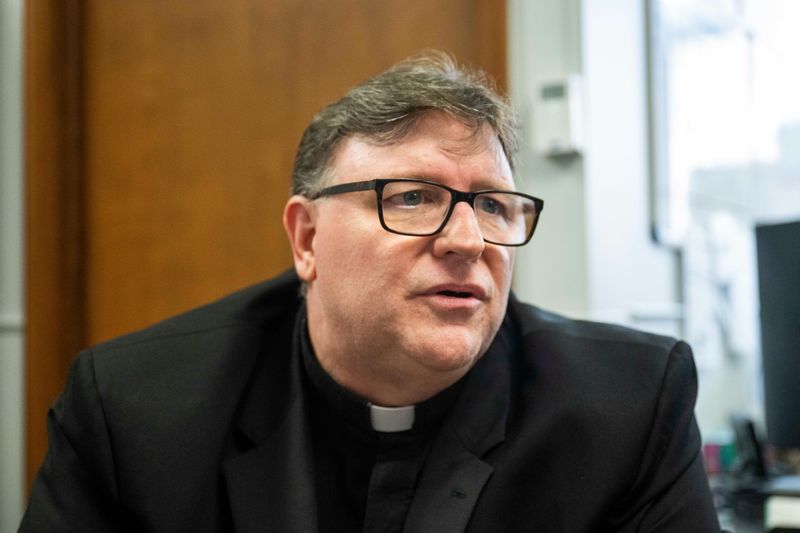
The Rev. Mario Amore, executive director of parish renewal for the Archdiocese of Detroit, said the archdiocese has been divided into 15 planning areas, or geographic areas, and three or four models are being proposed for each planning area. The archdiocese has been holding listening sessions with parishioners this spring as part of its restructuring plan to get reactions.

The models have different potential groupings of parishes, in which a grouping would share a pastor and potentially other priests. In some cases, some churches in the grouping would no longer hold Sunday Mass.
Of the 22 parishes that might stop having Saturday Vigil Mass or Sunday Mass, many are in Wayne County and Detroit, according to the models on the archdiocese’s website for four of the 15 planning areas. That includes planning areas within Detroit and for communities in Monroe County and Downriver.
The models for another three areas will be released on Friday, according to the restructuring website.
Amore said parishioners understand that the archdiocese, which has roughly 900,000 parishioners, “needs to do something” about its personnel and financial challenges. But when it becomes personal for people, it’s “very difficult,” he said.
“And there’s a lot of human emotions and … we need to honor that,” Amore said. “We need to be attentive to that, and no one’s saying that it’s an easy process, and it’s not a process that … we’re happy that we need to undertake, but it is one that we do need to undertake.”
The models are part of the archdiocese’s biggest restructuring plan in years. Announced last fall, Archbishop Edward Weisenburger said the archdiocese can’t maintain the roughly 200 existing parish buildings it has and is working to “right-size” the archdiocese, along with its personnel and financial resources. Each parish in the archdiocese is holding listening sessions this spring or early summer as part of the restructuring process.
While the plan hasn’t been finalized, archdiocese officials haven’t said that some churches will close.
Amore said that if a church stops holding Sunday Mass, parishioners are encouraged to worship at other churches in their “pastorate,” which is a grouping of parishes overseen by a pastor. In the long term, the church building might close, or other sacramental celebrations might take place there, such as weddings and baptisms, he said. The parish’s buildings could also be repurposed for other uses, such as religious education classes.
How is the archdiocese getting feedback on restructuring?
Amore said that as of Wednesday morning, 222 listening sessions with parishioners have taken place in parishes across the archdiocese, and around 190 are remaining through June. The meetings allow the archdiocese to take the proposed models into the parishes and get feedback, he said. Two listening sessions are being held at every parish.
“So every parish across the Archdiocese of Detroit, any parishioner is invited to come and see the proposals and to give their feedback,” Amore said.
As part of the restructuring, which is expected to take two years, the archdiocese would move away from a “families of parishes” approach, in which a grouping of parishes has a team of priests. Instead, it would pursue a “pastorate” model, in which a cluster of one or more parishes is led by one pastor.
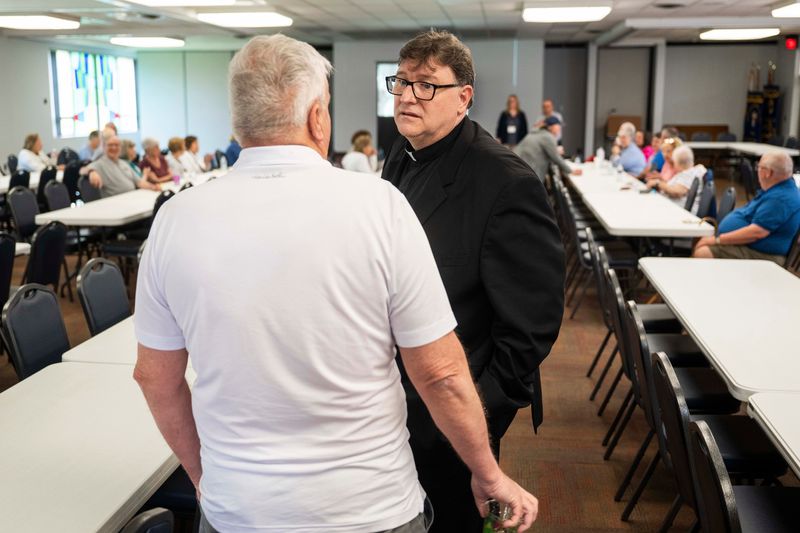
The Rev. Douglas Bignall, pastor of St. Hubert Catholic Church in Harrison Township, where a listening session was held this week, said he is sure that in some listening sessions, people have not been happy about what the restructuring might portend, but he has heard from other Catholics who are “hopeful.”
“It’s a tough decision, no matter how you cut it,” Bignall said. “To take something that’s been very important to people’s lives ― and their church is very important in their life, … their most sentimental moments occur there ― and to say anything’s going to happen to something that’s so important to you is very, very difficult.”
A projected loss of 90 priests is driving the archdiocese’s restructuring
Amore said the Archdiocese of Detroit is projecting it will have about 90 fewer priests in 10 years.
“And so we simply can’t continue to serve the 209 parishes with the number of priests … that we’ll have,” he said.
Nicole Joyce of the archdiocese’s Department of Parish Renewal said in a restructuring website video that many parishes also face “financial pressure” and aging buildings. About four out of every 10 parishes operate with a budget deficit, she said. Amore also said across the Archdiocese of Detroit, there is about $94 million in unfunded capital expenditures.
This is compounded by an overall decline in the practice of the Catholic faith, he said. At one point, 1.5 million Catholics called the Archdiocese of Detroit home. The Catholic census is closer to 900,000 today, with around 150,000 regularly attending Mass.
Some parishes would stop offering Sunday Mass under the models
In January, 178 priests across the archdiocese met for three days at Sacred Heart Major Seminary in Detroit, Amore said. Priests in the different planning areas looked at the number of priests who would be assigned to their area and were asked to create three or four proposed models for the area. The archdiocese and priests later revised those models.
Planning Area 2, which includes Corktown and southwest Detroit, includes nine parishes, two of which would not have Saturday Vigil Mass or Sunday Mass in at least one of the models. They are St. Cunegunda and Most Holy Trinity.
In addition, there are two parishes in the planning area that each have two church buildings. The models have proposed that weekend Mass no longer be offered at one of the two buildings in both of the parishes of St. Francis D’Assisi-St. Hedwig and Our Lady of Guadalupe.
Planning Area 3, which includes the east side of Detroit, has around 17 parishes, nine of which would not have a Saturday Vigil Mass or Sunday Mass time in at least one of the models. Among the nine are St. John Paul II in Detroit, Our Lady Queen of Apostles in Hamtramck, St. Augustine St. Monica Catholic Church in Detroit and Holy Family in Detroit. The others are St. Jude Church in Detroit, St. Raymond-Our Lady of Good Counsel in Detroit, St. Elizabeth in Detroit, St. Hyacinth in Detroit and Our Lady Queen of Heaven Church in Detroit.
Planning Area 4, which includes Downriver communities, has 16 parishes, seven of which would stop offering Saturday Vigil Mass or Sunday Mass under at least one model. They are St. Mary Magdalen in Melvindale, St. Alfred and St. Constance in Taylor, Christ the Good Shepherd in Lincoln Park, Our Lady of the Scapular in Wyandotte, St. Cyprian in Riverview and St. Roch in Flat Rock.
In Planning Area 5, which includes 10 parishes across Monroe County, four of them would not have a Saturday Vigil Mass or Sunday Mass under at least one model ― St. Anthony in Temperance, St. Joseph in Erie, St. John the Baptist in Monroe and St. Anne in Monroe.
In many cases across the archdiocese, a church would stop offering Sunday Mass under one or two of the models, but not under the other one or two models for that planning area.
What’s next for these models?
Amore emphasized that the models are drafts. In similar restructuring processes conducted in dioceses across the country, between 20% and 40% of the models changed based on the feedback from parishioners, he said. Catholics will also be able to share their feedback after the listening sessions through a survey.
The plan will go to the Archdiocesan Restructuring Commission and then an advisory body of priests, which would have to sign off on it. It will then go to Weisenburger for his final approval, Amore said.
“Just because … a parish community might not have Saturday or Sunday Masses in these proposed models does not mean that that … can’t change in the refinement process,” he said.
When asked if some church buildings in the archdiocese will have to close, Amore said yes.
“I think it’s just the reality that we’re facing right now,” he said. “We simply can’t continue to fund all of the different maintenance needs of … some of these buildings.”
Weisenburger is scheduled to announce the new groupings of parishes in 2027.
asnabes@detroitnews.com
This article originally appeared on The Detroit News: Archdiocese of Detroit unveils plans. Which churches will stop masses?
Reporting by Anne Snabes, The Detroit News / The Detroit News
USA TODAY Network via Reuters Connect

1 comment
Traditional Latin Mass