Some say the world will end in fire, some say in ice. From what poet laureate Robert Frost tasted of desire, he holds with those who favor fire. This time of year, the 384-hour GFS forecast model usually disagrees, seldom missing an opportunity to bury the southeastern U.S. under phantasmagoric blizzards that seldom come to fruition.
Seldom, however, is not never.

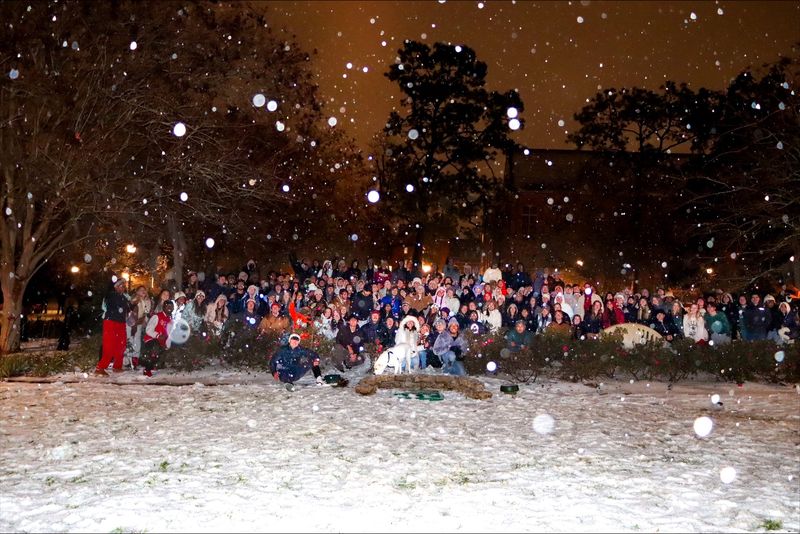
Last January demonstrated winter dreams sometimes do come true. It may be the proverbial snowball’s chance, but as Lloyd Christmas reminds us, weather history is saying there’s a chance of snow in January and February, even in Florida.
With sporadic chatter of potential southern winter storm threats rippling about, let’s pin down what those odds might be and whether the jet stream pattern ahead checks any of the boxes necessary to square the circle and bring winter whimsy to life in 2026.
Rain in your expectations when it comes to Florida snow
First, anchor your expectations in reality.
While mid-January is the coldest time of year in Florida, “cold” is used in a strictly relative sense. In north Florida, average January highs and lows are in the mid 60s and lower 40s. Those numbers are more like lower 70s and lower 50s for Central Florida and upper 70s and lower 60s in South Florida, respectively.
In other words, normal weather is far from supportive of frozen precipitation.
Of course, the northern half of Florida is no stranger to freezing temperatures in winter; in fact, here in the Tallahassee area, mornings in mid-January officially bottom out at or below 32F about 25% of the time. Florida’s all-time record low temperature was set on Feb. 13, 1899, when the mercury polar-plunged all the way to -2F in Tallahassee: a mark unlikely to be equaled without the aid of a supervolcano, the comet that Gerard Butler stares down in Greenland, or numerous Tsar Bombas.
In Central Florida, freezes are much rarer, occurring zero to a few times per year. Metro South Florida hasn’t seen a true freeze since 1989, a year that is closer to the end of the Korean War than it is to today.
While parts of Florida can and do get cold enough for snow or ice with some regularity, freezes are almost always accompanied by dry air and sinking motion in the lower atmosphere, which is not conducive for any kind of precipitation.
Pensacola is the snow capital of Florida but the peninsula
It is rare to have both enough cold air and enough moisture and lift to cause snow in Florida; there’s pretty much only one way it can happen, consisting of no fewer than seven atmospheric ingredients moving in precise harmony to bring about the ultimate meteorological bank shot.
That kind of Rube Goldberg gimcrackery makes Florida snow exceptional. Even in our snow capitol of Pensacola, there only are 14 instances of accumulating snow or sleet since 1880, including the state record of 9.8” near Milton on January 21, 2025.
In Tallahassee, last year’s 1.9” of snow and sleet is one of nine historical instances of accumulating snow since 1893, five of which occurred in February. Non-accumulating snow, sleet, or freezing rain isn’t all that uncommon (relatively) in North Florida, occurring on average two to four times per decade.
Surrounded by warm water, the Florida peninsula has an even tougher time managing frozen precipitation.
While traces of wintry mix or ocean-effect flurries very occasionally happen during significant cold air outbreaks, in the last 100 years only January 1977 and December 1989 have seen widespread accumulating snowfall in Central or South Florida. The January 19, 1977 event resulted in tallies near Lakeland of around 1” and a coating all the way south to Miami.
What are the odds of Florida snow and are the ingredients there?
Overall, history shows the annual odds of accumulating snow in North Florida are around 5-10%, perhaps 1% for the peninsula. So, when it comes to Florida snow expectations, the bar should be on the floor unless there is strong evidence to the contrary.
Is there strong evidence to the contrary in the short or medium term? Not especially.
Of the seven preconditions for Florida snow, the most crucial two are a western U.S. ridge and a very deep trough centered over the Great Lakes, northeast United States, or southeast Canada.
This highly amplified pattern dislodges Arctic air, sending it hurtling across the Plains and into the Southeastern U.S. While forecast models suggest that there will be a western U.S. ridge and eastern U.S. trough between January 15th and 20th, the trough is unlikely to be as strong as the greats that preceded the Florida snowstorms of 1958, 1973, 1977, 1989, or 2025.
That means Florida can expect persistently cooler than average temperatures in mid-January with probable freezes north, and maybe even some exciting cold rain.
But unless the forecast changes dramatically, I wouldn’t bet on snow from anywhere other than my backyard homemade snowmaker, “The Last Snowgun.” (No, I am not joking, and yes, I love snow that much.)
Longer range, Florida will probably see temperatures turn milder after Jan. 20, with perhaps another round of cold weather in the last week of January or beginning of February. With a La Niña likely to bring persistent southeastern ridging and warmth in February and March, that window is probably Florida’s last slim shot at a winter storm in 2026, such as it is.
As a final note, remember that predicting snow and ice in Florida is not what weather forecast models do well, to put it mildly.
Meteorologists usually have an informed guess about what the general weather pattern may be like over the next one to four weeks, but model forecasts have little skill in predicting weather on a specific day more than 7-9 days out.
That’s more like 3-5 days for unusual weather like purported Florida blizzards.
Anyhow, don’t get spun up when Uncle Frank’s Xtreme Weather Basement posts a day 26 Florida snow map from unreliable models like the 18z JFS (Juggalo Forecast System) or 07z Magnavox-AI on Facebook.
I want it to snow, too, but keep your dignity and composure in this winter of our social media #content, even as you keep watching the skies for those coveted Florida flakes.
Dr. Ryan Truchelut is chief meteorologist at WeatherTiger, a Tallahassee company providing forensic meteorology expert witness services and agricultural and hurricane forecasting subscriptions. Visit weathertiger.com to learn more. Email Truchelut at ryan@weathertiger.com.
This article originally appeared on Tallahassee Democrat: Will snow return to Florida in 2026? Our forecaster weighs odds
Reporting by Ryan Truchelut, WeatherTiger / Tallahassee Democrat
USA TODAY Network via Reuters Connect