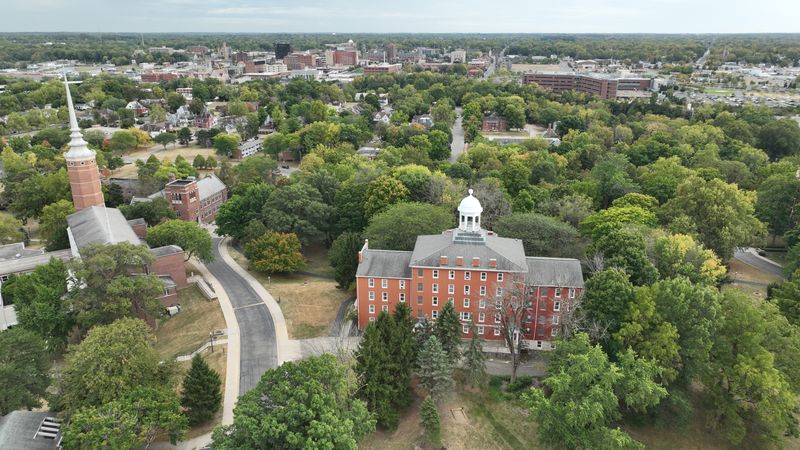
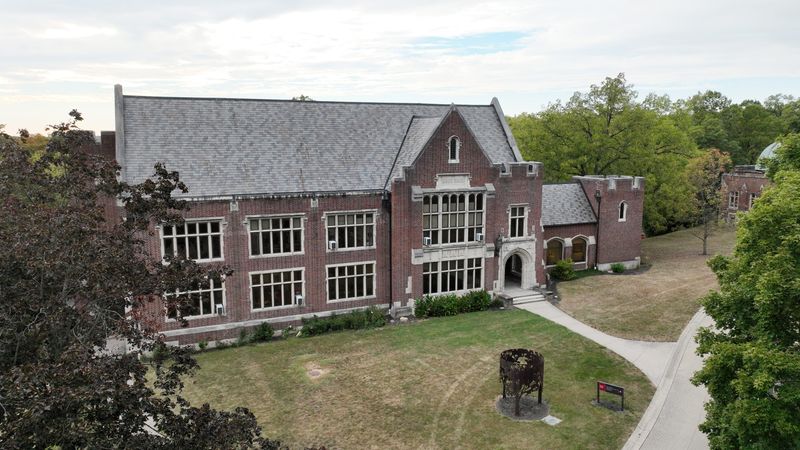
A small liberal arts university in Springfield with a history of financial problems is now on probation for up to two years.
Wittenberg University’s accreditation status was changed to “accredited on probation” effective Nov. 6 because the school failed to meet one criterion in the formal review process that determines whether an institution meets certain standards of quality.

The Higher Learning Commission found that Wittenberg did not meet the “Resource Base and Sustainability” criterion for accreditation, according to a public disclosure notice. This provision requires that financial and personnel resources support the university’s operations and that financial management “balances short-term needs with long-term commitments” to ensure ongoing sustainability, as defined by HLC’s criteria for accreditation.
The university will remain accredited throughout its time on probation, which HLC said will last up to two years. During this time, students can still attend Wittenberg or transfer their credits to another university.
Karen Gerboth, the university’s vice president of marketing and communications, said in a statement that this status change is “neither surprising nor unexpected.”
“What this means for Wittenberg University at the moment is what we have known for some time: our financial challenges are real, but they are not insurmountable,” Gerboth’s statement continued. “We are still an accredited institution, and this decision reflects where we have been, not where we are going under our new president’s inspiring leadership and direction.”
HLC outlined several reasons why its Board of Trustees found Wittenberg in violation of the financial criterion, according to a Nov. 11 letter to university President Christian M. M. Brady, who stepped into the role in June. Here are a few.
Wittenberg’s current enrollment is 1,039 students. Gerboth said the university has worked over the past six months to develop over $11 million in unrestricted funds, allowing Wittenberg to meet financial obligations and strengthen its operations.
She added that recommendations from faculty and the provost about “an exciting academic restructuring” should help support the university’s growth.
“Additionally, our enrollment numbers are trending in the right direction, and our fundraising efforts are bearing fruit,” Gerboth’s statement continued.
This is not the first time Wittenberg has been the subject of financial scrutiny by the HLC.
In February, the accreditor gave the university a “financial distress” designation after a U.S. Department of Education audit raised “substantial doubt” about the university’s ability to continue, according to a Springfield News-Sun report.
Wittenberg will host a “comprehensive evaluation” for probation no later than April 2027, during which a team of peer reviewers will decide whether the university has fixed the issues that prompted the probation, and whether it more broadly meets HLC’s overall criteria for accreditation.
HLC’s Board of Trustees will then meet in November 2027 to review the peer evaluation. There, the Board will decide whether to remove Wittenberg’s probationary status or take even stronger action, such as withdrawing accreditation entirely.
“We are confident in our future, and we are fully prepared to work closely with the commission in resolving the issue identified as expeditiously as possible,” Gerboth’s statement concluded.
Reporter Emma Wozniak can be reached at ewozniak@dispatch.com or @emma_wozniak_ on X, formerly known as Twitter.
This article originally appeared on The Columbus Dispatch: Wittenberg University says it wasn’t surprised financial concerns led to probation
Reporting by Emma Wozniak, Columbus Dispatch / The Columbus Dispatch
USA TODAY Network via Reuters Connect