From Cape Lookout National Seashore in North Carolina to Joshua Tree National Park in California, some spaces are meant to be left in the dark.
Big Cypress National Preserve outside of Naples is one of those places, but the reality is a detention center known as Alligator Alcatraz is causing light pollution in one of the first designated “dark skies” locations east of Colorado.

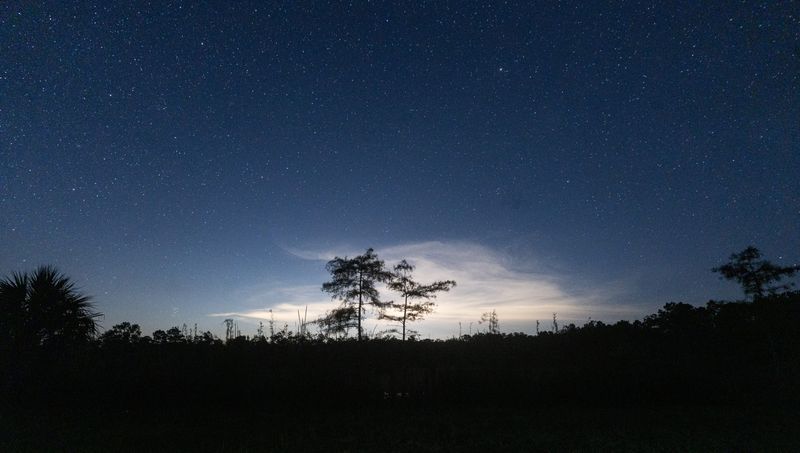
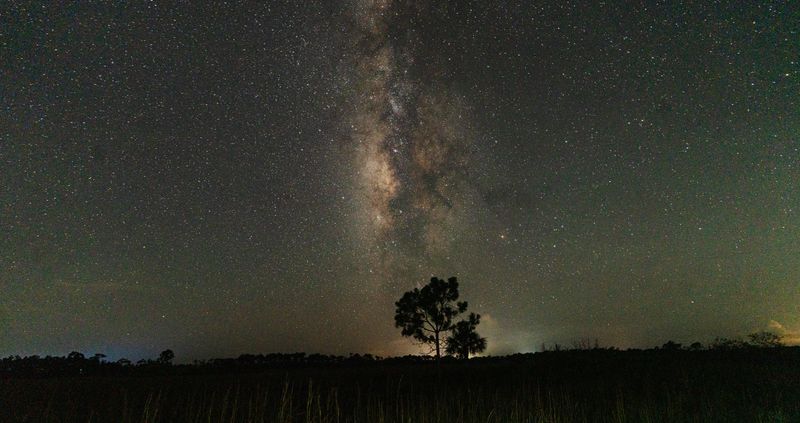
The stars are still there, so is the Milky Way, but now there’s light pollution coming from the detention center.
“The first night I went out, wow, you could see the light pollution from 18 miles away,” said Miami area photographer Anthony Sleiman, who shoots Big Cypress night shots regularly.
Sleiman said the light pollution is visible from places like Turner River Road in Ochopee.
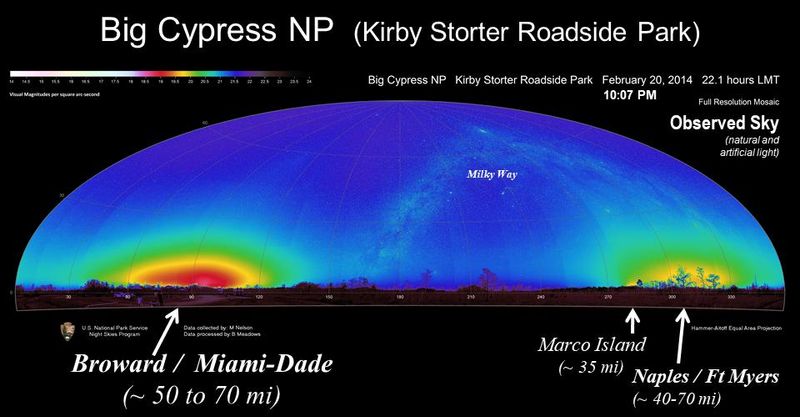
“If you go deep into Big Cypress, if you look east (from the Naples side) you will see the light pollution from Miami, but you can see the detention center is separate,” Sleiman said. “And this is in one of the darkest places in Florida.”
He’s one of many photographers who ply the Big Cypress during new moon phases, meteor showers and other astronoimcal events in hopes of capturing the perfect Milky Way photo.
The Big Cypress is also the first national preserve, and it was formed after Miami proposed the world’s largest airport at the site in the 1960s.
Set aside in 1974, the Big Cypress National Preserve is located mostly in eastern rural Collier County and abuts directly to Everglades National Park.
Big Cypress is one of the darkest places in Florida
The Big Cypress National Preserve was one of the darkest places in the United States, one of 18 National Park Service properties with an International Dark-Skies Association designation.
Sleiman said the location of the detention center itself was once one of the premier nighttime photography spots in all of south Florida.
“Its’ impactful because that detention center, that was a great location to photograph constellations at night,” he said. “That area was a safe place to do it because you didn’t even need to get out of the car. So, it’s making people go deeper into the preserve.”
The Naples Daily News checked out the Big Cypress National Preserve on the night of July 29 into July 30 to document light pollution from the facility.
Glowing lights from the detention center could be seen as far away as Turner River Road, about 18 miles from Alligator Alcatraz.
How Alligator Alcatraz impacts endangered species, their habitats
Critics of the facility say it should not be located in the Big Cypress, or really anywhere near the historic Everglades.
Environmental groups say light pollution is just one reason why the detention center should not be located at the old jetport site near the Collier County line.
They say water quality is also being degraded and that wetlands have been filled and paved over at the controversial site.
Generations of Floridians fought to preserve and protect this area, which spans millions of acres across the extreme south tip of the state.
Many of the endangered animals that thrive here are nocturnal, including the Florida panther and the Florida bonneted bat.
“We have fireflies out there and people don’t realize that,” said Pembrook Pines resident and photographer Diana Umpierre. “The dark sky designation that was earned, I started working on that in 2013. The Big Cypress National Preserve is this special oasis between two very light-polluted areas. Miami is the biggest factor but even the glow from the Naples area is growing.”
Umpierre said the facility is impacting owls, insects, bats, panthers and people.
“You can still go there and see the Milky Way, and I’ve seen it after Alligator Alcatraz from Skillet Strand,” she said. “On the eastern side of the sky, we already have problems with the Miami-Dade glow, now the sky is brighter than it used to be.”
Umpierre said the road leading to Alligator Alcatraz was among the darkest spots in the preserve before Alligator Alcatraz work started nearly two months ago.
“In 2016, when they finalized the process for applying for the designation, I used a light meter on the very street that goes to the airport and the measurement I got was you could see the Milky Way easily, even with poor eye site,” Umpierre said. “That was part of the darkest area of the preserves. It used to make headlines because of its dark skies. Now it makes headlines because of Alligator Alcatraz.”
The animal world is surely responding, wildlife advocates say
Elise Bennett, an attorney with the Center for Biological Diversity, said bat surveys show that the highly endangered bonneted bat lives close to the detainment facility.
“What we do know for sure is there are very few populations and they are incredibly vulnerable to extinction and they need dark skies,” Bennett said of bonneted bats. “It feels like this time it’s in the middle of one of our most important preserves.”
Bennett said U.S. Fish and Wildlife Service data assumes that bonneted bats are present at the Alligator Alcatraz site.
“There are less than a dozen known roosting trees in the wild and we know they are under threat,” Bennett said. “Any direct impact to roosting trees would be bad. Some bat species will use artificial light to catch prey but bonneted bats like big, open dark skies. so these stadium-like lights, you can see that for more than 15 miles, and that impacts the bats’ ability to hunt.”
The Big Cypress is also home to the core Florida panther breeding population, where dozens of males and females hunt, live and breed.
Big cats from the Big Cypress are needed to provide cubs that could one day spread further north and out of the historic Everglades.
There’s also the threat that comes from spraying for mosquitoes, which is being done to protect detainees from various mosquito-borne illnesses.
“Mosquito control spray could poison them or they could eat the insects that have been sprayed,” Bennett said. “One of those sites is only eight miles away from the detention center and these bats can fly 25 miles at night, so it’s not a stretch of the imagination to believe they use this site. It was incredibly dark out there.”
Bennett said other protected animals once used the Alligator Alcatraz site for hunting and habitat.
“The Florida bonneted bat is an icon of Florida, not unlike the Florida panther or the gopher tortoise: they’re found nowhere else on earth and I think they’re adorable,” Bennett said. “There’s a long history of panthers using this site, which indicates they were still there until construction started. This area is vital to the species’ existence and recovery and this is essentially evicting panthers from incredibly important habitat.”
The Big Cypress dark skies designation
The International Dark-Sky Association put Florida on the map nearly a decade ago when Big Cypress National Preserve and the Kissimmee Prairie Preserve State Park were the first two sites east of Colorado that qualified for the designation.
According to press releases from 2016, considerable staff time and effort went into the program to qualify Big Cypress as a designated dark skies location.
“Staff from Big Cypress National Preserve developed outdoor lighting guidelines that specify when and where outdoor lighting is necessary,” a National Park Service website reads. “The maintenance team at the preserve undertook the arduous task of assessing and retrofitting hundreds of light fixtures.”
Umpierre, the photographer from Pembrook Pines, said the park services and volunteers worked hard to obtain the designation.
“It was exciting,” she said. “But now it feels like a scratch on your skin.”
Big Cypress among the last of the nation’s dark skies
Development is moving inward from both coasts, from Miami-Dade and the Naples area.
So, the Big Cypress and Everglades National Park are increasingly being encroached upon from nearby urban sprawl.
“With the extent of urbanization in the eastern United States, it is becoming nearly impossible to experience the night with little impact from artificial light pollution,” a 2016 press release celebrating the dark skies designation reads.
And what was once a celebrated spot to view the Milky Way is home to a controversial detainment center.
“Here in south Florida, away from the urban development of the east and west coasts, Big Cypress National Preserve has one of the last protected night skies where visitors can still enjoy the splendor of the Milky Way and see a night-sky strewn with thousands of stars with only the naked eye.”
Learn the night skies
Go stargazing and spend the evening searching for wonders of the night: distant planets, the luminance of the full moon, the International Space Station zooming overhead, streaking meteorites as they burn in the atmosphere, the river of stars that spans across the Milky Way.
Listen. Many species in the park are active during the night, timing their activities to benefit from the darkness. A remarkable 30% of vertebrates and 60% of invertebrates are night-active. Listen for the chirp of frogs, the low hooting of owls in the distance, or even a female panther screaming.
Learn. For thousands of years, civilizations around the world have observed seasonal patterns of stars appearing and disappearing from the horizon. Learn stories of the constellations that inspired people to navigate, explore, predict seasonal changes, and to portray lessons regarding their culture, religion, and ways of life.
Try a night hike. If you are nervous about being outside at night, bring a friend and/or a red light. You might be pleasantly surprised how well the human eye can see after dark.
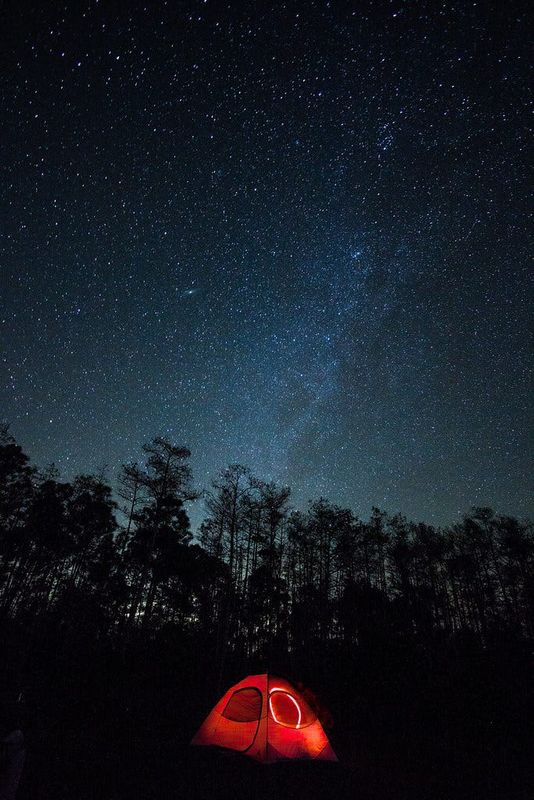
Go camping and sleep under the stars. Exposure to light (particularly the white wavelengths of sky glow) during regular hours of darkness can disrupt our bodies’ circadian rhythm, which is responsible in part for the regulation of sleep.
Source: National Park Service
This article originally appeared on Naples Daily News: Clear, dark skies this season give Neapolitans the chance to view the stars in night sky
Reporting by Chad Gillis, Fort Myers News-Press & Naples Daily News / Naples Daily News
USA TODAY Network via Reuters Connect