LANSING — A United Kingdom-based company wants to build a $120 million data center downtown, with the potential to provide hot water for downtown buildings and provide more than $1 million annually for city purposes.

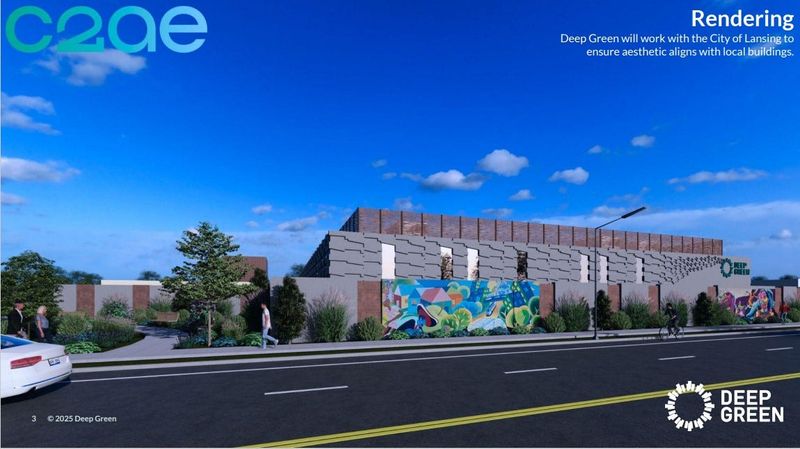
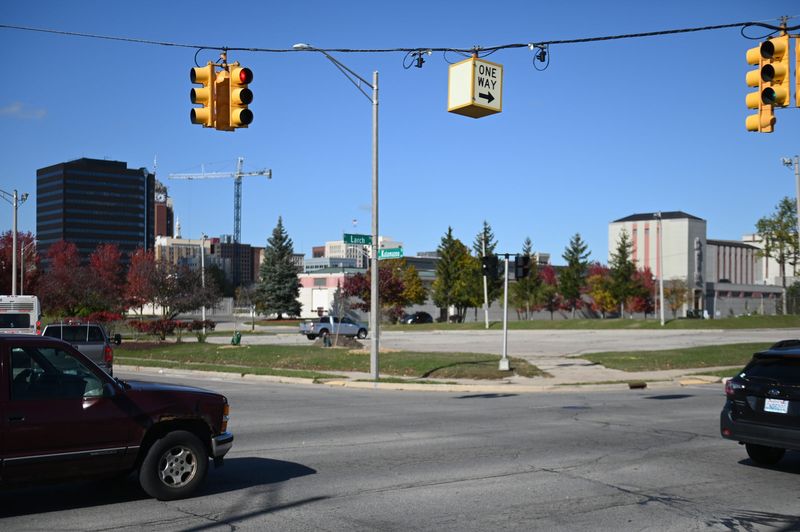
Lansing leaders gathered Nov. 3 at Bellwether Public Relations to promote Deep Green’s plans for a two-story, 25,000-square-foot, 24-megawatt data center on less than an acre along Kalamazoo Street, between Cedar and Larch streets. The site is now a city-owned parking lot across the street from the John F. Dye Water Conditioning Plant owned by the project’s partner, the municipally-owned Lansing Board of Water & Light.
A representative from Deep Green was present via Zoom to promote the data center he said will be ultra-efficient and the first of its kind in the United States because of its “heat network integration.” Deep Green plans to loop into BWL’s water systems to supply free, carbon-neutral heat, rather than BWL heating water with natural gas, according to information provided by Bellwether Public Relations.
“Put simply, we design and operate ultra-efficient, high-density data centers that capture and reuse the heat they produce with negligible water use,” said Mark Lee, chief executive officer of Deep Green. “Our aspiration is to be a global leader in developing sustainable high performance computing infrastructure.
“This week, I’m delighted to announce our proposal to build our flagship U.S. facility in Lansing, Michigan,” he added.
The Lansing Planning Commission will consider Deep Green’s request to rezone 2.7 acres north of Kalamazoo Street from urban core to industrial at its 6:30 p.m. Wednesday, Nov. 5, session at the Neighborhood Empowerment Center, 600 W. Maple St. Lansing Zoning Administrator Sue Stachowiak is recommending approval.
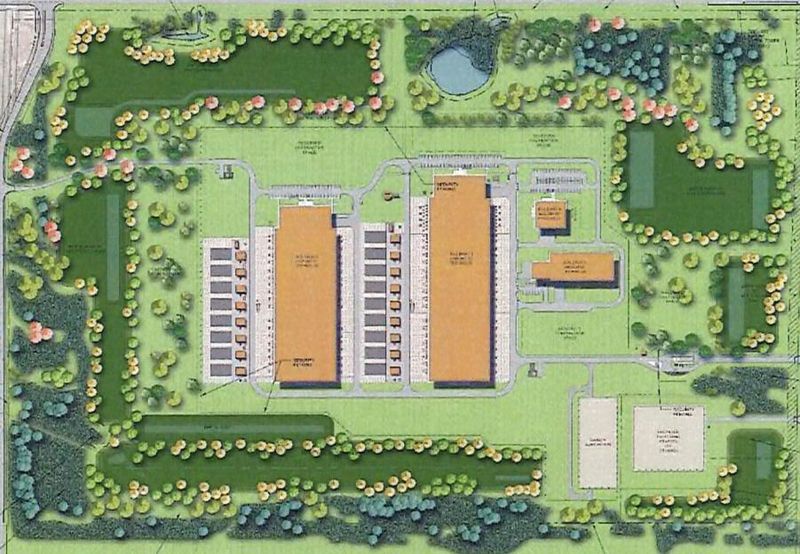
Lee said on Monday the actual data center will occupy three-quarters of an acre, requiring much less land than data centers being proposed in Howell and Saline townships.
Proposals for data centers are happening in Michigan and across the Midwest because of the need for computing capacity, particularly artificial intelligence. There are more than 5,400 across the United States, according to tech advisory firm C&C Technology Group, and a data center map shows fewer than 60 in Michigan. Employment in U.S. data centers spiked more than 60% nationally from 2016 to 2023, according to a January report from the U.S. Census Bureau.
“This will produce high-tech, high-wage jobs and they’ve largely begun speaking and looking for partnerships with Lansing Community College, Michigan State University and the broader K-12 partners,” said Emma Bostwick, of the Lansing Economic Area Partnership. “We are competing internationally. We’ve won this project as the first flagship for America. It not only supports our local economy, but diversifies it. We know that’s incredibly important if we want a resilient economy and a sustainable one at that.”
Deep Green’s proposal is small compared to an announcement last week by OpenAI, the creator of the popular artificial intelligence product ChatGPT, which made a joint Oct. 30 announcement with software giant Oracle and an affiliate of New York-based real estate developer Related Companies to build a data center on 250 acres in Washtenaw County. The facility would feature more than 1 gigawatt in computing capacity, or the amount of electricity it could potentially draw from the power grid, which Wall Street analysts have previously compared to the output of a nuclear reactor. The Lansing proposal is 24 megawatts, and a gigawatt is 1,000 megawatts.
BWL General Manager Dick Peffley said the partnership in Lansing is ideal.
“This is the perfect marriage as far as we’re concerned,” he said. “This will offset 25% of the fuel we burn for heating customers, which is natural gas right now. That’s about $1.1 million in savings that will allow us to reduce our budget and expenses and help minimize rate increases in the future This is a big win for the hot water customers. And Deep Green has been very good to the planet. (And) they are paying for every infrastructure upgrade.”
He also said BWL’s equity payment to the city also should increase by $1 million annually because of the partnership.
Data center proposals typically come with fears over a high usage of water and electricity, but Deep Green is promising a facility with “a negligible impact on water use thanks to a closed-loop cooling system with hyper-efficient performance and near-silent operation.”
The partnership is projected to achieve more than $1.1 million in annual natural gas savings for BWL because of a reduced demand equal to about 5,000 homes and a reduction of carbon emissions through recycled heat equivalent to removing 3,000 cars from the road annually.
“Their load is estimated to build out at 24 megawatts,” Peffley said. “The load was considerably higher when they were going to have to get rid of the heat on their own. That’s a big savings to Deep Green. The win for us is we’re getting that heat for free. The 24 megawatts that you need — we have that surplus in our portfolio right now.”
He did not detail how customers’ rates could change.
“They will be drastically reduced,” he said of rates for hot water customers. “Right now, everything is estimates. As they come to fruition, then we will start doing the reductions.”
Construction could begin in March if the proposal sails through state of Michigan and city of Lansing hoops, including rezoning of the parking lot for the data center that would be within steps of BWL’s water conditioning plant on Cedar Street.
Lee said Monday the project could be online by the first half of 2027.
The project is expected to support more than 50 jobs — over 35 “majority-union construction jobs” and more than 15 long-term technical jobs
Representatives from BWL, the Lansing Economic Area Partnership and the Lansing Regional Chamber of Commerce attended Monday’s media briefing.
They’re hoping the completion of the downtown Lansing data center will position the capital city as a hub for cloud computing, AI, software development, and other fields and provide the digital infrastructure to support local endeavors in education, healthcare and municipal services.
Schor said more than $1 million in additional revenues for Lansing could be used for more police officers and firefighters, corridor improvements, and help for those needing social services.
“At the same time, (the project) will meet sustainability goals while reducing future utility rate increases,” he said in a statement. “This unique project will strengthen our local economy, support good-paying jobs, and move us closer to a cleaner, more resilient high-tech future.”
Open AI’s proposal in Washtenaw County’s Saline Township isn’t the only big data center trying to locate to Michigan.
An unidentified major technology company wants more than 1,000 acres rezoned in Livingston County for a data center.
Residents have largely spoken against that proposed development, voicing concerns about property values, noise levels, and infrastructure and environmental impacts. A handful of supporters have countered with possible economic benefits to Howell Township and Livingston County. The project would become the largest taxpayer in Livingston County, officials said.
The Saline Township facility would be one of the most advanced AI data centers in the country in terms of efficient use of land, water and electricity, according to a news release.
The data center would consist of three 550,000-square-foot, single-story buildings and construction could begin in early 2026, according to a news release. The facility is expected to create more than 450 on-site jobs and 2,500 union construction jobs.
The data center wouldn’t require any additional power generation, the release said, and it would employ a closed-loop water system that wouldn’t require additional water from the Great Lakes.
DTE Energy would supply all of the facility’s electricity, the news release said, “using existing resources augmented by a new battery storage investment — financed entirely by the project — in a way that ensures there is no impact on DTE’s existing customers’ energy supply or rates.”
In September, the Saline Township board voted 4-1 to deny a rezoning of 575 acres of farmland for the project after numerous residents voiced opposition at public hearings.
The Related Cos. affiliate, known as Related Digital, then sued the township in Washtenaw County Circuit Court over the denial, alleging improper exclusionary zoning. The township board voted earlier this month to settle the lawsuit and allow the data center project to proceed.
Contact editor Susan Vela at svela@lsj.com or 248-873-7044. Follow her on Twitter @susanvela. JC Reindl: 313-378-5460 or jcreindl@freepress.com contributed. Follow him on X @jcreindl
This article originally appeared on Lansing State Journal: $120 million data center proposed in downtown Lansing. What we know
Reporting by Susan Vela, Lansing State Journal / Lansing State Journal
USA TODAY Network via Reuters Connect