This story has been updated with new information.
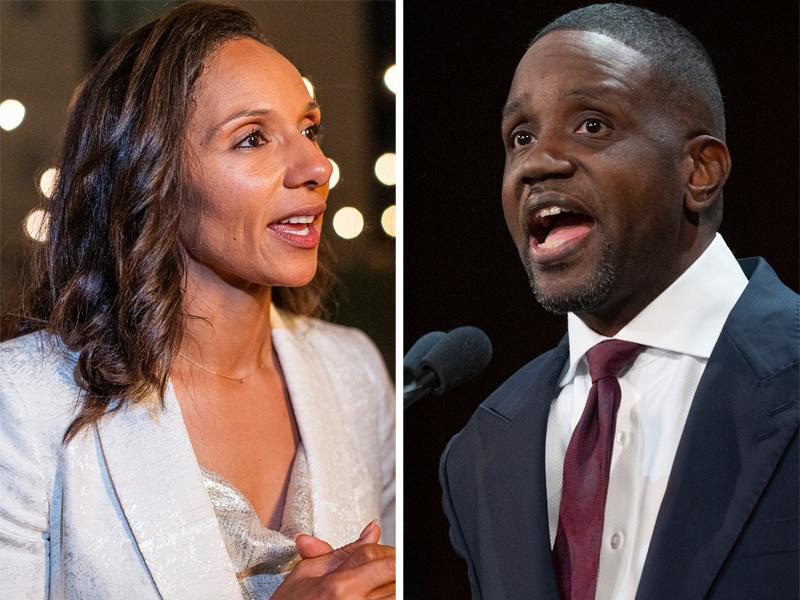
The last Sunday in what otherwise has been a low-key race for mayor of Detroit erupted with allegations that one candidate would bring a culture of corruption back to city hall, while the front-runner kept a low-profile.

The Rev. Solomon Kinloch Jr., trailing in polls and fundraising, started the day at the east campus of Triumph Church with a sermon that started slowly and built to a crescendo of accusations that opponent Mary Sheffield violated city rules by voting to approve contracts worth millions of dollars for a demolition contractor while she was in a relationship with its chief executive.
“You got somebody sitting at the table for the last 12 years, that knows it’s part of the charter that you cannot give out city contracts to somebody that you know so that the money turns around and benefit yourself,” Kinloch said, referring to Sheffield, the City Council president who was first elected in 2013. He did not specify what benefits he believes Sheffield received.
The Michigan Enjoyer, an online news organization, reported on Oct. 30 that Sheffield was in a relationship with Brian McKinney, the CEO of Gayanga, a controversial contractor who has been paid millions of dollars to demolish homes in Detroit.
Sheffield’s father, the Rev. Horace Sheffield III, confirmed Saturday, Nov. 1, that Mary Sheffield dated McKinney.
Sheffield’s Chief of Staff Brian White said in a statement on Oct. 30 that Sheffield did not vote on any contracts involving Gayanga dating back to 2019. A Free Press analysis of city records found Sheffield voted to approve some city contracts with Gayanga in 2019 and thereafter.
Kinloch’s accusations were the key point in the sermon he delivered at Triumph’s campuses in Detroit and Southfield.
“Let me tell you what’ll happen, after what we just came from that dark cloud and history of corruption, if y’all let that woman become the next mayor, she goin’ in under federal investigation,” Kinloch said from the pulpit of Triumph’s church on East Grand Boulevard in the North End. “Because if Kinloch and the media and the world can find out about it, why would you think law enforcement don’t know about it?”
Kinloch told the Free Press he hopes the late-breaking news and comparing Sheffield to Kwame Kilpatrick, the former Detroit mayor convicted in 2013 of public corruption, will help close a gulf between the candidates after Sheffield won 51% of the vote in the nonpartisan Aug. 5 primary while Kinloch received 17%.
Sheffield’s campaign staff would not comment Sunday to the Free Press on Kinloch’s allegations. Sheffield told long-time Detroit political pundit and 105.9 FM talk show host Mildred Gaddis during a morning interview: “This is what you expect from a candidate who’s desperate, who understands that he has no policy, and no ways to solve the solutions that we’re dealing with here in Detroit.”
The Free Press did not follow Sheffield’s campaign Sunday because campaign staff did not share her morning schedule until after all of the events had concluded. After the Free Press asked Sheffield’s campaign and City Council staff to comment on Kinloch’s assertions, spokeswoman Brittni Brown notified a reporter that Sheffield cancelled her plans to knock on doors in Detroit neighborhoods Sunday afternoon.
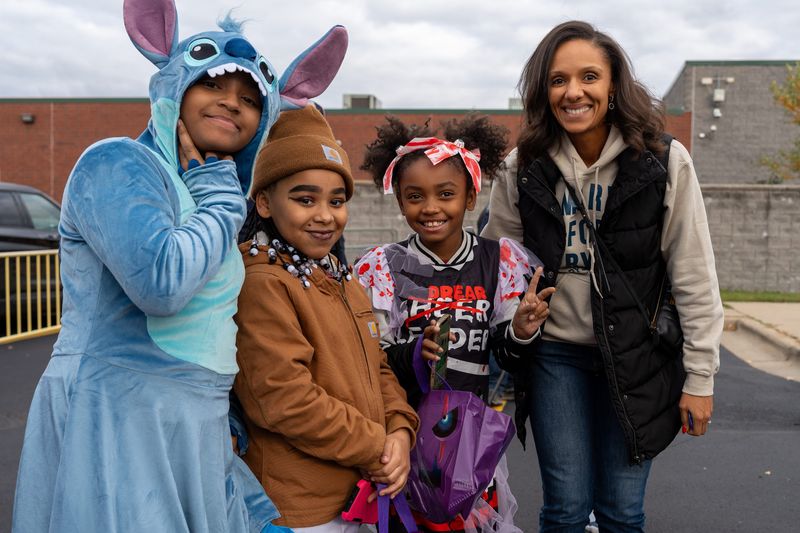
Sheffield told a reporter on Friday at a Halloween in the D event at Chandler Park, where she passed out campaign buttons to children and their families: “We’re going hard, all the way to the end. We never take anything for granted.”
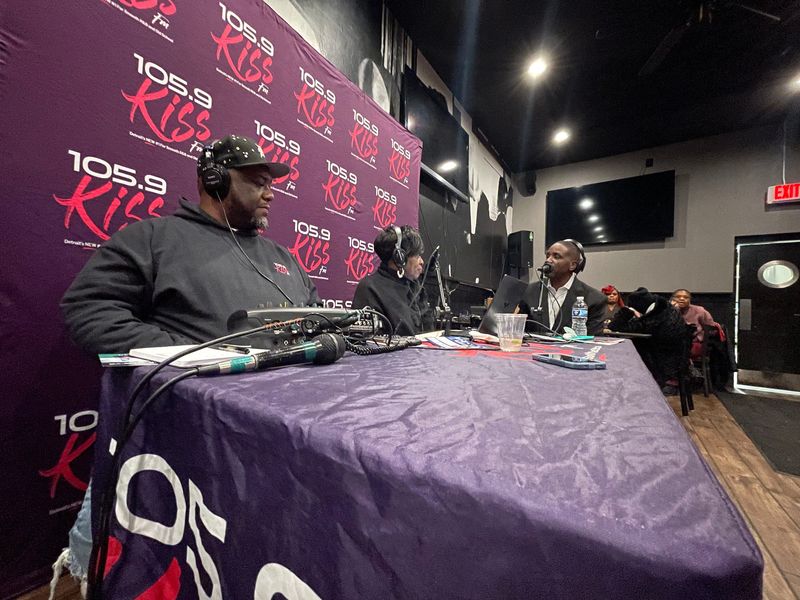
In between church visits Sunday, Kinloch visited Cutter’s Bar & Grill in Eastern Market, where he did a live radio interview with Gaddis.
In addition to questioning Kinloch about Sheffield and McKinney, Gaddis asked Kinloch to address questions about real estate transactions involving him and his church and his 1994 conviction on assault charges for beating his first wife. Kinloch said the real estate transactions were proper and blamed his youth and immaturity for the assault, reiterating what he told the Free Press in an exclusive interview on July 25 when he said: “I went through the judicial process and a redemptive process. I received counseling, not only outside but inside the church. I accepted responsibility and I learned from the mistakes and I’ve tried to use it to help other men.”
Voters will render their own verdict on Tuesday, Nov. 4, when the final ballots will be cast to replace outgoing Mayor Mike Duggan, who is running for governor as an independent in 2026. Candidates for Detroit’s seven City Council districts and two at-large council seats will also be on Tuesday’s ballot.
City Clerk Janice Winfrey said she expects an 18-23% voter turnout this election and urged residents to be more involved. Winfrey is attempting to reduce barriers by offering free bus rides to the polls through the Detroit Department of Transportation. She also invested more on block parties with free food and social media influencers to tap more voters who are likely to use social media over other avenues to drive engagement for the election.
Sheffield told the Free Press last week her team is trying to increase turnout for this and future elections.
“We’ve been driving from day one trying to increase voter turnout, really trying to reach demographics that are oftentimes overlooked,” Sheffield said. “We’ve been really heavily engaging our young people. We hope it’ll be an increased turnout.”
Kinloch told his congregation Sunday that polls based on likely voters are not counting most Detroiters.
“We’ve been calling all of those less propensity voters that have not been regular and frequent voters,” he said. “And we’ve been knocking on the doors.”
Kinloch, who got in the race more than a year after Sheffield formed her candidate committee in late 2023, told the Free Press that while he wished he had got in the race sooner, he believed he could still win.
The Free Press has profiled each candidate. Readers at freep.com can learn more about Sheffield’s background here and Kinloch’s here.
At least 1,600 residents cast ballots before early voting ended Sunday. At least 44,000 absentee ballots have been received, and city officials anticipate receiving at least 60,000 total. Those votes will be counted on election day. Detroiters can vote in person Tuesday between 7 a.m. to 8 p.m.
Dana Afana is the Detroit city hall reporter for the Free Press. Contact: dafana@freepress.com. Follow her: @DanaAfana.
Violet Ikonomova is an investigative reporter at the Free Press focused on government accountability in Detroit. Contact her at vikonomova@freepress.com.
M.L. Elrick is a Pulitzer Prize- and Emmy Award-winning investigative reporter, director of student investigative reporting program Eye On Michigan, and host of the ML’s Soul of Detroit podcast. Contact him at mlelrick@freepress.com or follow him on X at @elrick, Facebook at ML Elrick and Instagram at ml_elrick.
This article originally appeared on Detroit Free Press: Sleepy Detroit mayor race ends with a flurry of accusations as underdog tries to close gap
Reporting by M.L. Elrick, Dana Afana and Violet Ikonomova, Detroit Free Press / Detroit Free Press
USA TODAY Network via Reuters Connect