Torre Johnson knew the man signing in at Sankofa House looked familiar. Johnson hadn’t seen him in decades, but he couldn’t forget the face of a former rival.
In their early years, they’d been adversaries in different gangs within Milwaukee’s Harambee neighborhood. And while they previously “got into it” with each other, Johnson said, addiction took hold of both their lives and made everything else around them fade away.

Johnson, 61, may have found sobriety 37 years ago, but for decades, he watched too many in his community — friends, neighbors, and, yes, former rival gang members — be trapped by and die from substance use disorder.
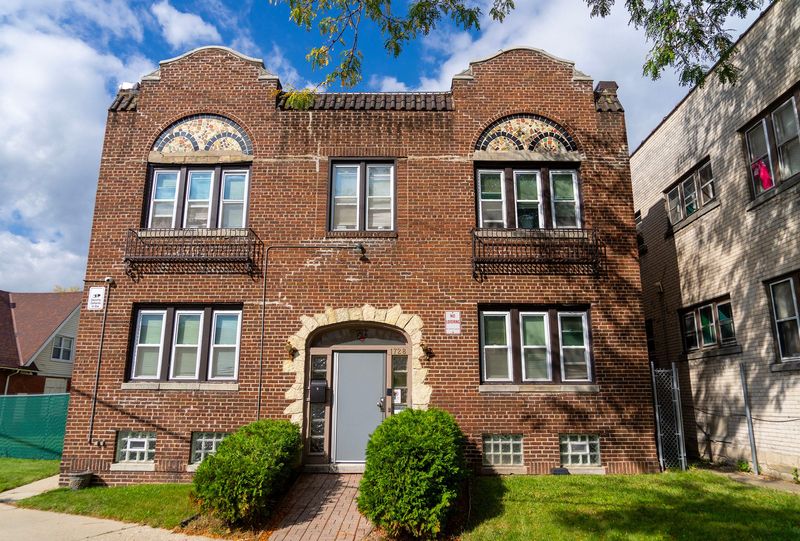
That was part of the motivation for Sankofa House, the addiction treatment center Johnson helped found in the Arlington Heights neighborhood. The treatment center’s name, Sankofa, is a word from the Akan tribe of Ghana that translates loosely to “go back and get it,” and suggests that the future depends on learning from the past and growing.
Sankofa House provides long-term housing, peer-support services and multiple chances for people seeking recovery from substance use disorder. And just down the street, he manages Nova House, at North 22nd Street and West Atkinson Avenue. Both facilities operate a recovery program through Wisconsin Community Services, a Milwaukee County nonprofit focused on advocacy and community safety.
Recently, Johnson has seen a rise in older adults coming to both centers.
It’s a growing concern, not only in Arlington Heights, but throughout Milwaukee County. In 2024, out of 5,450 nonfatal overdoses, 1,092 people in Milwaukee County were 55 and older. Of all the overdose deaths, more than half belonged to people 55 and older, according to data from the Milwaukee County Department of Health and Human Services.
Older adults, in other words, are dying at a disproportionate rate to other age groups, due to a confluence of unique factors.
The rise in older populations need for recovery resources is unfortunate to Johnson, but he is glad they are still seeking out resources and looking to improve their lives despite their age. His main goal is to provide support and encouragement, especially during relapses.
In Johnson’s mind, the time spent sober can’t be taken away, even if they stumble. It is what they learn from their past stumbles ― their sankofa ― that counts.
“Tomorrow, you might smoke some crack, but that was at 12 o’clock,” Johnson said.
“At 12:05, you could quit.”
Opioids and older populations in Milwaukee County
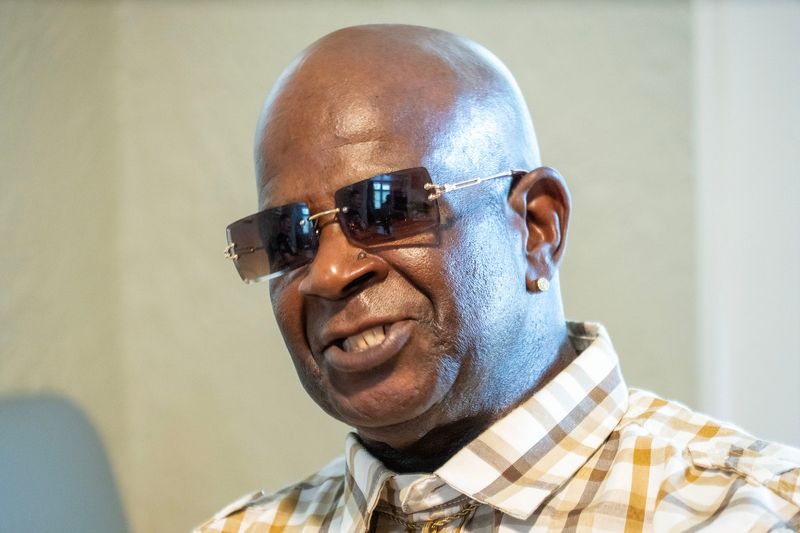
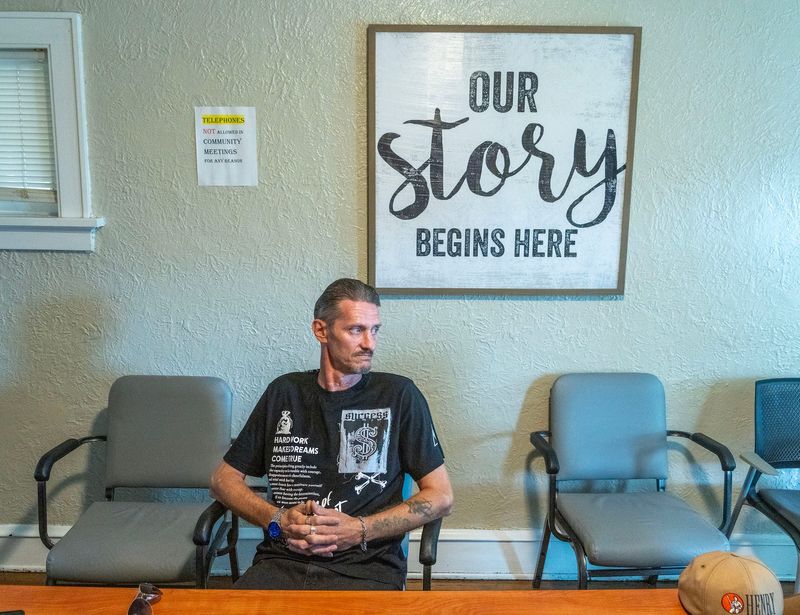
At 61, Tim smiles and cracks jokes around the table with men with whom he’s established strong positive relationships. He’s an impeccable dresser and proudly sports designer clothes, “a clean look for a clean man,” he quipped during a Milwaukee Journal Sentinel visit on Sept. 25.
Tim’s been sober since November 2023, but it was a journey that spanned more than a decade. In 2012, Tim met Johnson, who helped him decide to get sober. His addiction made him do “nasty things,” like steal from his family and commit repeat offenses that landed him in prison.
“I’ve been shot at eight times. I lost a leg in the process,” said Tim, who asked that his last name not be used out of respect for his family. “I wanted to change, but I didn’t know how.”
Over the years, street drugs have evolved to become more addictive with the growing fentanyl crisis. There’s always the risk of cocaine, methamphetamines and other drugs being laced with synthetic fentanyl, and Tim knows of these dangers firsthand. While he was still using, he recognized some of the drugs he took could have been laced with stronger substances.
Many people don’t even realize they’re taking something laced with fentanyl, according to Ricky Person, the opioid prevention coordinator with the Milwaukee County Department of Health and Human Services.
“Cocaine is addictive enough alone and by itself, methamphetamine is addictive enough alone and by itself, but now you add fentanyl,” said Person.
Statewide data shows an average of about 32% of the total fatal overdoses in adults 55 and older included both stimulants like methamphetamine or cocaine and an opioid. In 2020, 69 people who were 55 and older died from this type of overdose, according to data from the Milwaukee Department of Human and Health Services.
By 2023, the deadliest year for this group, 193 people died from this type of overdose ― a threefold rise.
Adults like Tim, who have struggled with substance use disorder for years before the age of 65, are sometimes called “hardy survivors,” said Michelle Haese, substance use initiative director at the Wisconsin Department of Health Services.
Older adults, or hardy survivors, face increased risk of falls and fractures, often from impaired coordination and reduced bone health. Some may also be homeless or have limited means to travel, furthering the cascading dangers.
In the halls of Sankofa
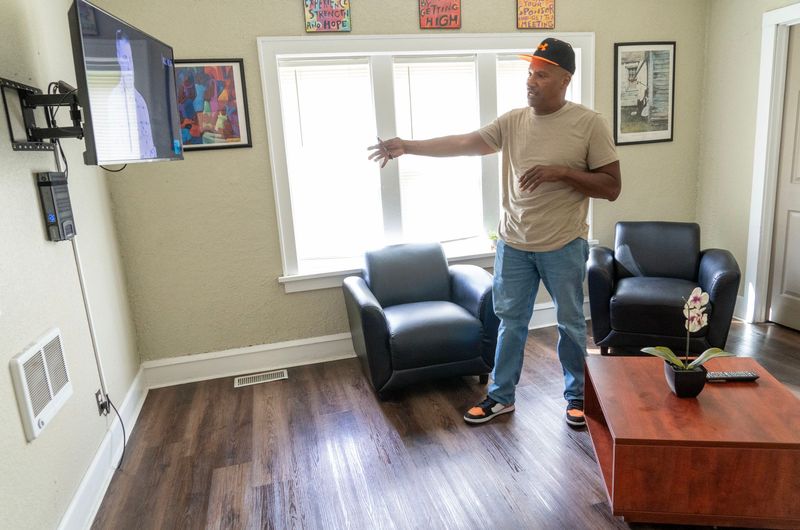
Sankofa House opens up from Atkinson Avenue, and, once inside, a long hallway runs to the back of the building. Each room has an open space with chairs set up to face each other so residents can mingle.
Since 2024, Sankofa House and Nova House have seen around 273 residents combined. The most common age of residents is between 51 and 60, followed by 41- to 50-year-olds and 61- to 70-year-olds.
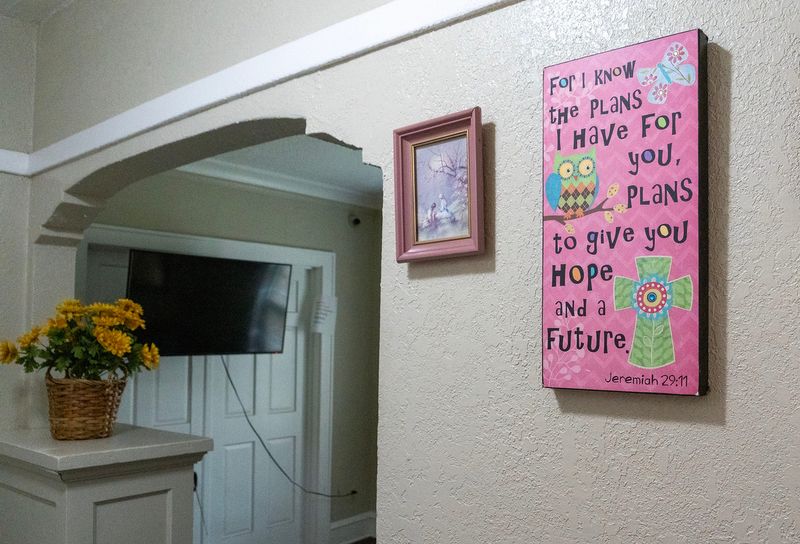
The facilities are simple, but clean — an important point to help with recovery.
“We try to make it a really powerful place where people can feel better about themselves and then do better,” said Chad Meinholdt, vice president of Wisconsin Community Services’ Behavioral Health Services.
The program at the facility lasts 90 days, after which patients go to the second part of the Wisconsin Community Services program, called Unlimited Potential — an outpatient clinic to access therapy and other services.
A common experience before choosing recovery is the feeling of being “too far gone,” said Daniel, who did not wish to share his last name. Daniel struggled with addiction for nearly four decades and, following recovery, now serves as the building manager of NOVA House.
Daniel, like Tim and many others, sought help for addiction before and relapsed often. What made Daniel’s recovery stick was the kindness and respect of those he encountered at Sankofa House, many of whom were familiar faces.
Tim and Daniel knew each other for years, and both struggled with addiction. Years later, Tim was running a group support session when he noticed Daniel.
“When I got there, I only had one change of clothes and that was it,” Daniel said.
The following day, Tim brought in bags of clothes to give to everyone, including Daniel.
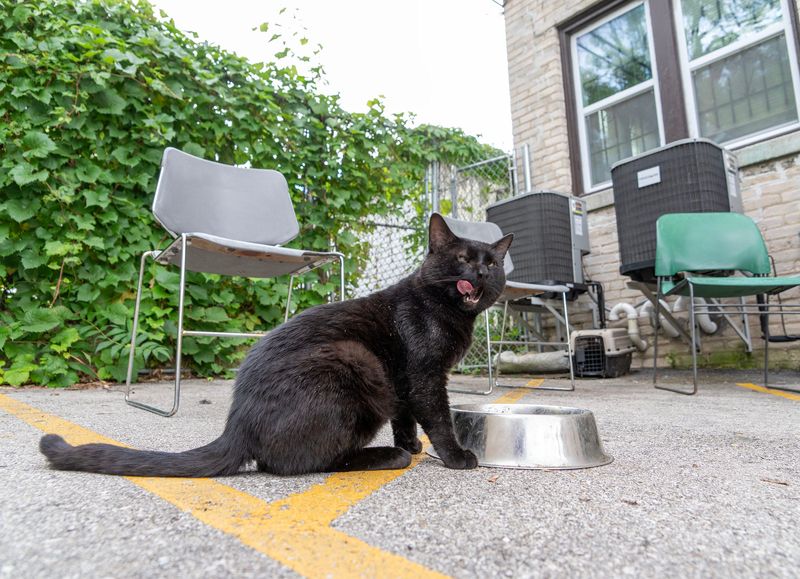
Time spent at Sankofa varies from person to person. Some people paint. Other residents talk with Sankofa staff, like Johnson or whoever is there. Daniel would pace along the back fence every day. Sometimes, he would be accompanied by the neighborhood cats that the house feeds.
Facilities like Sankofa and Nova House help those recovering from addiction fill their time with activities that distract them from the urge to use.
However, recovery is largely up to the individual. For people like Tim, it is about acceptance and forgiveness.
“I love me today,” Tim said. “I am going to keep on loving me.”
Resources to seek recovery
Milwaukee has varying resources for those who would like to take the first step toward recovery. City clinics are available, and the addresses can be found here.
Those who wish to go through Sankofa or Nova House must be referred by Milwaukee County.
Additional resources can be found below.
Natalie Eilbert covers mental health across Wisconsin with a focus on treatment access, disability rights, stigma reduction and suicide prevention. Reach her at NEilbert@greenbay.gannett.com.
Everett Eaton covers Harambee, just north of downtown Milwaukee, for the Journal Sentinel’s Neighborhood Dispatch. Reach him at ejeaton@gannett.com. As part of the newsroom, all of Everett’s work and coverage decisions are overseen solely by Journal Sentinel editors.
Support for the Dispatch comes from Bader Philanthropies, Zilber Family Foundation, Journal Foundation, Northwestern Mutual Foundation, Greater Milwaukee Foundation and individual contributions to the Journal Sentinel Community-Funded Journalism Project. The project is administered by Local Media Foundation, tax ID #36‐4427750, a Section 501(c)(3) charitable trust affiliated with Local Media Association.
Learn more about our community-funded journalism and how to make a tax-deductible gift at bit.ly/MJS_support . Checks can be addressed to Local Media Foundation with “JS Community Journalism” in the memo, then mailed to: Local Media Foundation, P.O. Box 85015, Chicago, IL 60689.
This article originally appeared on Milwaukee Journal Sentinel: Recovering together: older adults at risk of fatal overdose, two centers offer way forward
Reporting by Natalie Eilbert and Everett Eaton, Milwaukee Journal Sentinel / Milwaukee Journal Sentinel
USA TODAY Network via Reuters Connect