Note: The following contains excerpts from a Sept. 9, 2016, article in The News-Press entitled “History of flushing Lake Okeechobee dates back to 1800s” by Cynthia A. Williams.
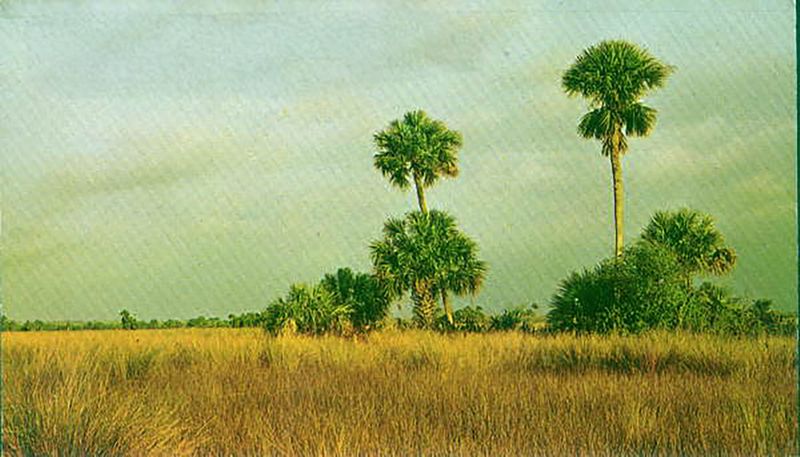
From Lake Okeechobee to Florida Bay and originally occupying 4,000 square miles, the sawgrass marsh of the Everglades is a slow-moving river.

Even before Florida was a state, Americans have been studying the “Ever Glades,” drumming their chins with their fingertips, trying to figure out how to drain what they considered to be a big useless swamp and turn it into productive and profitable farmland.
1837
Interest in draining the Everglades began eight years before Florida became a state. The second Seminole war (1835-1842) brought the U.S. army to the wetlands and focused the attention of the nation upon them. After the war ended, Congress directed the secretary of war to prepare a report “in relation to the practicability and probable expense of draining the Everglades of Florida.”
The report described it as “suitable only for the haunt of noxious vermin or the resort of pestilent reptiles,” and requested an appropriation of half a million to drain them.
1850
Congress opened debate on the proposed Swamp and Overflowed Lands Act, which gave states title to any wetlands they could “reclaim.”
A third Indian war intervened, followed by the Civil War, but after that the subject of draining the Everglades came up again. Florida’s Internal Improvement Fund agency found a Pennsylvania real estate developer named Hamilton Disston interested in the project. Disston gave the IIF $1 million for 4,000,000 acres of land, which he promised to drain in return for title to half of it.
1881
On Sept. 21, a tug came slowly upriver to Fort Myers. Gliding in tow behind the boat was a contraption that probably awed the townsmen, delighted the kids and worried the townswomen. It was the monster dredge that was going to gnaw its way up the Caloosahatchee, with its terrible teeth widening, deepening and straightening the twisting upper reaches of the river all the way to its headwaters at Lake Hicpochee. It was possibly the largest reclamation project in the history of the nation.
However, things didn’t go exactly as planned. Simply stated, Disston’s drainage canals didn’t drain. He failed to reclaim so much as one acre of wetland.
1904
In the gubernatorial election of this year, Napoleon Bonaparte Broward ran on the promise of reclaiming the Glades “for the people.” He was elected. Efforts began again.
James Wright, a USDA engineer, drew up a report stating that draining the Glades would not be difficult or costly; he calculated that eight canals designed to hold a maximum daily rainfall of four inches would be sufficient to drain 1,850,000 acres.
Land speculators went into frenzied overtime, advertising the Everglades as “The Promised Land.”
1910
Congress passed the River and Harbors Act, appropriating $121,000 to deepen the Caloosahatchee River channel. Victory seemed assured. However, things didn’t go exactly as planned. Wright came under the scrutiny of the U.S. House of Representatives, to whom Wright’s USDA colleagues testified that he was “absolutely and completely incompetent for any engineering work.”
Land values sank, sales plunged. Land developers were sued and arrested for mail fraud, leaving the people who had invested their life savings in the land wading around in water black with the larvae of mosquitoes.
1916
Incredibly, six years later, the land developers, trailed by hopeful settlers, were coming back. Efforts to drain the Glades had been dismal failures, but on the slightly elevated, natural levee areas around the lake, experiments in soil improvement had made the production of sugarcane and vegetables possible.
1921
Around 2,000 people lived in little start-up communities like Moore Haven (“Little Chicago”) and Belle Glade (“Muck City”) created to contain them. Clewiston was cut out of whole cloth to house agricultural workers brought in to labor the fields.
However, things didn’t go exactly as planned. The levees built around Lake Okeechobee were only 18 to 24 inches above the level of the lake.
1926
On Sept. 16, a levee engineer predicted that in the event of high winds, “Moore Haven is going under … ” Two days later, a category 5 hurricane struck and 1/3 of the people in Moore Haven, including the engineer’s wife and daughter, drowned.
Flood control became the new priority in Everglades reclamation.
1929
The Okeechobee Flood Control District was formed, and the Army Corps of Engineers (USACE) took over field operations. The USACE built an earth berm 35 feet high to encompass the 730 square miles of Lake Okeechobee and named the dike after President Herbert Hoover.
Then they dug east from the lake to the St. Lucie River and west to the Caloosahatchee and named this new 155-mile cross-state channel the Okeechobee Waterway.
We had opened a scenic shortcut between the Gulf of Mexico and the Atlantic Ocean. The rivers thus joined to the great Okeechobee would serve, incidentally, as conduits for the discharge of excess water from the lake.
And for once, things went exactly as planned.
This article originally appeared on Naples Daily News: A look back: The Everglades – Draining the swamp never went as planned, thankfully
Reporting by Marco Eagle / Naples Daily News
USA TODAY Network via Reuters Connect