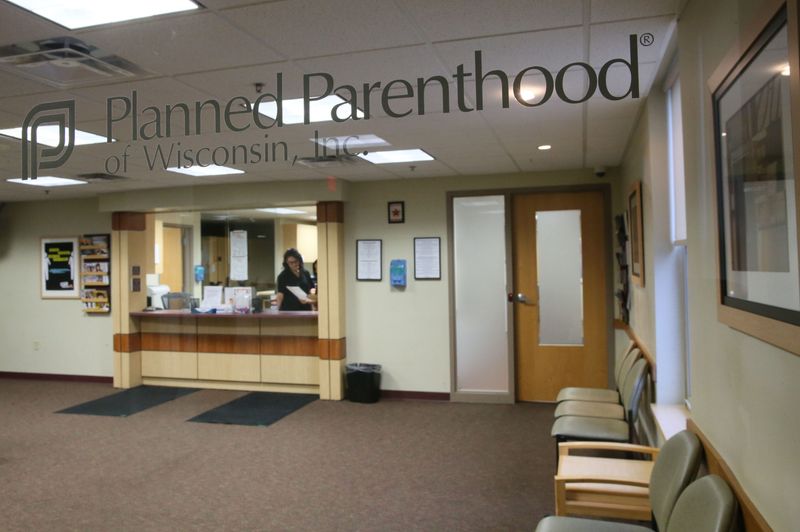
MADISON – Planned Parenthood of Wisconsin will pause scheduling abortion appointments starting Oct. 1 as it determines how to move forward under President Donald Trump’s recently enacted tax and spending bill, a provision of which deprives Planned Parenthood and its members of Medicaid funding.
Officials with the organization stressed that the move is a temporary hold while the issue works its way through the courts and providers work to determine how to continue services within the current legal landscape.

In the days leading up to Sept. 30, the organization is coordinating with providers throughout Wisconsin and working to see as many patients as possible before the federal law takes effect, ensuring patients are “referred swiftly and receive timely, compassionate care with as little delay as possible.”
“Planned Parenthood of Wisconsin is — and always will be — focused on putting our patients first. Our commitment is unwavering: Planned Parenthood of Wisconsin will continue to provide the full spectrum of reproductive health care — including abortion — as soon as we are able to,” Planned Parenthood of Wisconsin president and CEO Tanya Atkinson said in a statement. “In the meantime, we are pursuing every available option — through the courts, through operations, and civic engagement.”
The pause on abortion scheduling comes just a little more than two years after Planned Parenthood announced that it would resume providing abortions in Wisconsin, after 15 months without access during the legal limbo following the U.S. Supreme Court’s ruling in Dobbs v. Jackson Women’s Health.
Trump’s sweeping bill, signed into law July 1, includes a one-year measure barring clinics that provide abortions from accepting Medicaid for any of their other reproductive services. That provision means Planned Parenthood patients would not be able to use Medicaid coverage for other health care services, including obtaining contraception, testing for sexually transmitted infections, cancer screenings, menopause management and postpartum care.
Using federal dollars to pay for most abortions has been illegal for decades, under the 1976 Hyde Amendment.
“This is a direct result of Donald Trump’s Big Ugly Bill,” said Democratic U.S. Sen. Tammy Baldwin in a statement posted on X. “It wasn’t enough to terminate health care for millions of Americans; they’re coming after Wisconsin women’s reproductive rights and freedoms, too.”
Three of Wisconsin’s 24 Planned Parenthood clinics, in Madison, Milwaukee and Sheboygan, provide abortions. The Sheboygan clinic provides medication abortions only, while the other two also offer surgical abortions.
A federal judge issued a preliminary injunction in July blocking enforcement of the abortion-related provision, finding the law likely violated the Constitution by targeting Planned Parenthood’s health centers specifically as punishment for providing abortions. But a federal appeals court on Sept. 11 put that injunction on hold, making the provision enforceable again pending further legal action.
Officials with Planned Parenthood of Wisconsin said they are “closely monitoring the courts and preparing to act the moment we are able to resume care.”
The provision against abortion providers does not mention Planned Parenthood by name, but the organization argues it was “crafted specifically to penalize Planned Parenthood and the patients we serve.”
Wisconsin Right to Life executive director Heather Weininger said the organization’s move “only confirms that … Planned Parenthood of Wisconsin has long centered its operations around abortion services.”
“Taxpayer dollars should never fund the taking of innocent preborn lives,” Weininger said in a statement. “Women and girls facing difficult or unexpected pregnancies deserve compassion, real support, and life-affirming care — and that’s exactly what the pro-life movement is committed to providing.”
Planned Parenthood serves about 50,000 people across Wisconsin, about 60% of whom are covered by Medicaid. The organization is what’s known as a safety net provider, meaning it sees patients regardless of their ability to pay, and can often get them in for an appointment within days. That’s a stark contrast from typical wait times for a new patient appointment at other types of clinics, which can average more than a month.
According to a recent analysis by Guttmacher, a research organization that supports abortion access, federally qualified health centers and local health departments would each need to increase their caseloads by 144%, and hospitals would need to increase their caseloads by 142% to meet the increased demand for contraceptive care created by closing Planned Parenthood clinics in Wisconsin.
Planned Parenthood officials also pointed to the 2013 closure of a Shawano County clinic, which was followed by a 46% increase in cases of chlamydia in the following years, as a sign of what funding cuts can do.
In neighboring counties where Planned Parenthood clinics remained, increases occurred in the same timeframe but were significantly lower, according to state data. The Shawano clinic was one of four rural clinics that shuttered after the 2011-13 state budget eliminated more than $1.1 million in state funding.
Planned Parenthood of Wisconsin officials noted the organization is used to efforts to restrict its work at the state and federal levels, and has previously sued against state laws restricting abortion access.
In the aftermath of the U.S. Supreme Court’s decision to overturn Roe v. Wade, states like Wisconsin were left in legal limbo.
Questions quickly surfaced over whether an 1849 law banning abortion in nearly every case superseded subsequent regulations enacted on abortion access in Wisconsin, including a 2015 law under which abortion is banned 20 weeks after “probable fertilization.” Abortions were unavailable in Wisconsin until Planned Parenthood resumed them in September 2023, following an order from a Dane County judge.
The state Supreme Court invalidated the 1849 law in July.
“To the patients who count on us: we are here for you. To our staff and supporters: thank you for standing with us. We remain dedicated to care — no matter what,” Atkinson said.
Jessie Opoien can be reached at jessie.opoien@jrn.com.
(This story was updated to add new information.)
This article originally appeared on Milwaukee Journal Sentinel: Planned Parenthood of Wisconsin to pause abortions as it sorts out Trump tax and spending law
Reporting by Jessie Opoien, Milwaukee Journal Sentinel / Milwaukee Journal Sentinel
USA TODAY Network via Reuters Connect