(This story has been updated to fix an inaccuracy)
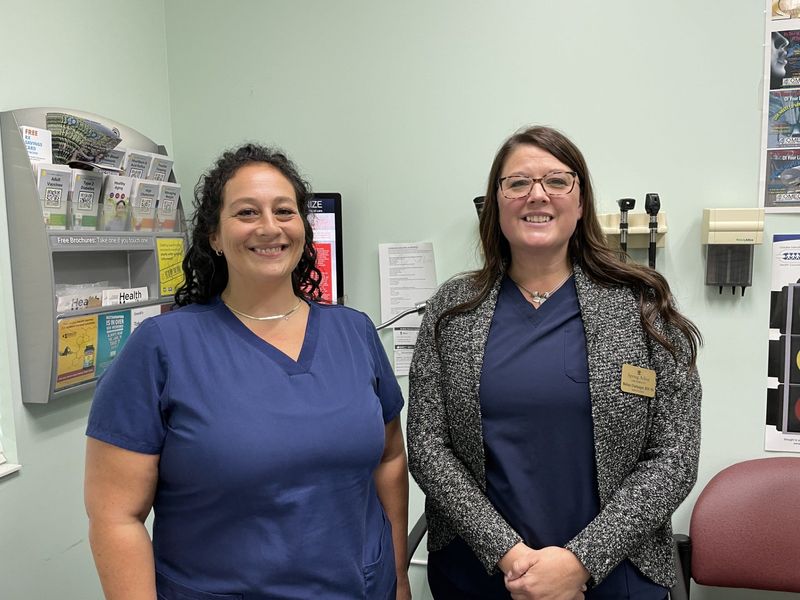
MONROE, MI — Laura Pashaian and Melissa Champagne are area nurses studying to become nurse practitioners.

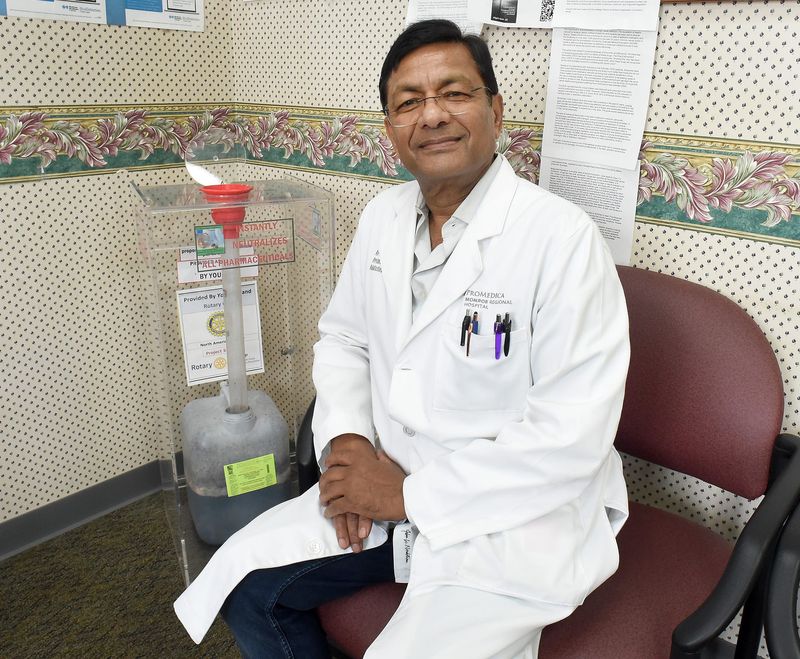
When they started their clinical training with Dr. Arun Gupta, the women had to overcome their own stigmas about people addicted to drugs. Now, both are considering work in addiction medicine.
NPs are registered nurses who receive extensive training beyond a bachelor’s degree. They can diagnose patients and prescribe medications. Gupta has trained more than a dozen medical students and nurse practitioners in the last few years. Gupta is a general practice physician, but he’s also an addiction medicine provider. He said his patients have an 85% success rate for beating addiction.
“I thought, ‘I’m going to be here with all these junkies.’ I’m so surprised every single day,” Champagne said. “Very quickly, I saw the good in what he’s doing.”
Overcoming the stigma
Champagne and Pashaian said at least 90% of Gupta’s patients seeking help with addiciton are “regular people.” They range in age from 20 to late 70s.
“They are from all walks of life: factory workers, teachers. They are working professionals,” Champagne said. “Being here opened our minds to the possibilities and the need for the treatment. That’s the reason I’m so passionate. I had a negative stigma in my brain. But, being here and learning, talking to these patients and hearing their stories really changed my mind.”
For a lot of patients, addiction began years ago with a prescription.
“Many started out with a prescription from their primary care provider. They had back pain (for example) and walked out with 90 Vicodine,” Champagne said. “It was what the doctor told them to do. Most of the (doctors), I don’t think they were doing it to harm people. But, it broke a trust. We need to mend that. We need to educate (patients) that they can trust us again. We are not here to judge. We all have our vices. We want you to share and talk to us.”
What’s the treatment?
“A big problem is undereducation. People don’t really understand what substance abuse treatment looks like,” Pashaian said.
Both nurses have witnessed success with Suboxone taken as part of regular care by a medical provider.
Suboxone, according to Harvard Medical School, is “a combination medication containing buprenorphine and naloxone, (and) is one of the main medications used to treat opioid addiction.”
Champagne said Suboxone also helps with pain, but the medication doesn’t leave patients seeking more pills.
“It’s not addictive. It doesn’t give them the high feeling,” Champagne said.
“They are not chasing for more. They go on with normal living,” Pashaian said. “Many have success from the very beginning. It’s just a tool, like blood pressure medicine. Long-term, it’s safe and effective.”
Champagne said Suboxone is best combined with regular care and monitoring from a medical care provider.
“All along, (Gupta) talks with patients and monitors other issues, like mental health,” she said. “He helps them through.”
The results
Almost immediately after starting Suboxone, Champagne and Pashaian said patients tell them they feel better. Long-term, many achieve some life goals.
“On opioids, narcotics or heroine, (they say), ‘I felt like a zombie. I didn’t even realize how hazy I was, how messed up I was,'” Champagne said. “Now, (they say), ‘I have a clearer head. I can do things.'”
Almost all patients eventually share their recovery successes with Gupta, Champagne and Pashaian.
“They’ve gotten their kids back. They are working. They are getting high school diplomas. They get their lives back. The light is back in their eyes. They are functioning again. It’s really eye-opening,” Pashaian said. “‘Dr. Gupta gave me my life back,’ we hear that everyday. It’s saving lives. That’s our goal.”
“I cried with a patient who got her kids back. I cry a lot. It’s heartwarming and heartbreaking at the same time,” Champagne said. “I really found what I’m super passionate about. It’s something where I actually feel like I’m doing good. (I hope to) work here in Monroe. I’m from this community, so I want to give back to our own community.”
Who are Laura Pashaian and Melissa Champagne?
Pashaian, a 2003 Monroe High School graduate, has been a nurse for two years at ProMedica Monroe Regional Hospital.
She has a Bachelor of Science degree in nursing from Chamberlain University in Chicago. Now, she’s in the nurse practitioner program at Chamberlain. She’ll finish in February. Pashaian has one son.
Champagne of Britton has been a nurse for six years in the ICU at the University of Michigan Hospital in Ann Abor.
A 1998 Summerfield High School graduate, she has a Bachelor of Science degree in nursing from Eastern Michigan University. Now she’s in the nurse practitioner program at Spring Arbor University. She’ll finish in May. Champagne is a mom to seven and grandmother to four.
— Contact reporter Suzanne Nolan Wisler at swisler@monroenews.com.
This article originally appeared on The Monroe News: Breaking stigmas: These nurse practitioners in training want to fight addiction
Reporting by Suzanne Nolan Wisler, The Monroe News / The Monroe News
USA TODAY Network via Reuters Connect