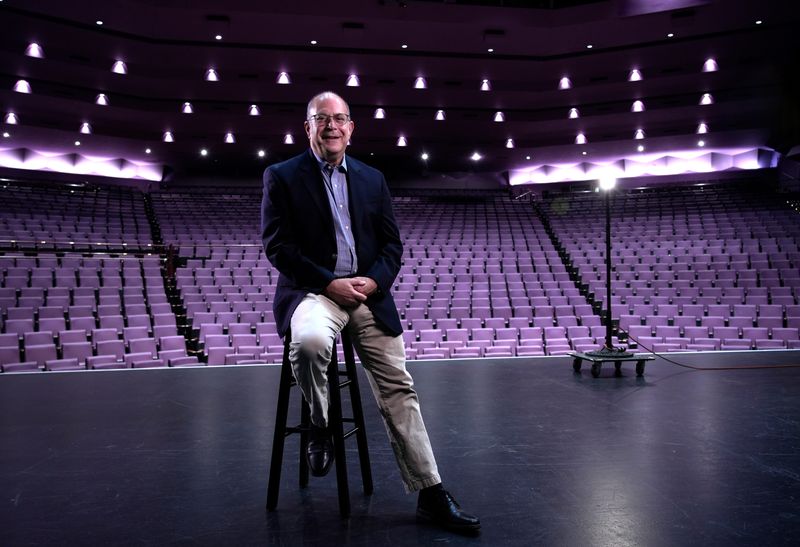
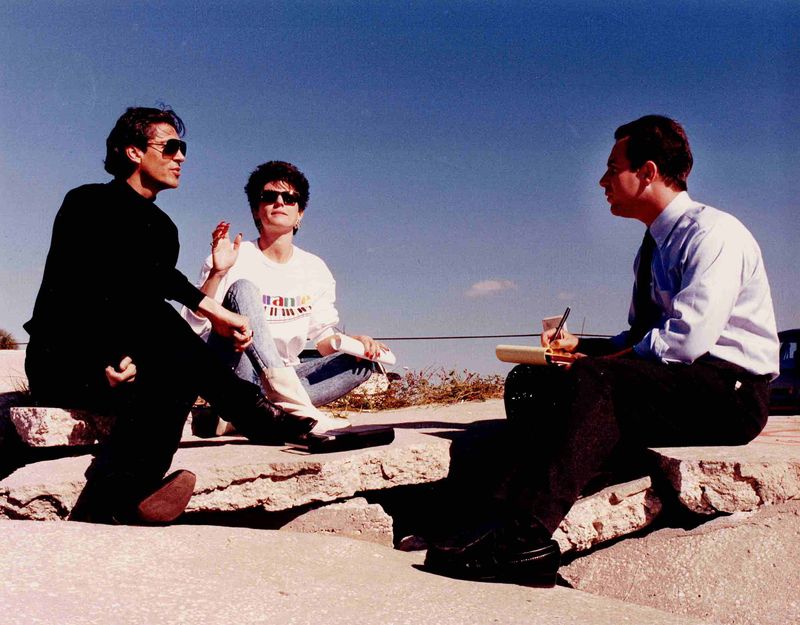
I came to the Sarasota Herald-Tribune from Washington, D.C., in 1984 as an assistant city editor overseeing a large team of local reporters, with a dream of being a theater critic one day.
I figured I’d stay in Sarasota for a couple of years and then move to a bigger city where I might get to write about theater, even part-time. I didn’t know much about Sarasota’s growing reputation as an arts center until I arrived, and I didn’t know that the paper had been discussing hiring a full-time theater critic.

Talk about being in the right place at the right time. A few months after I was hired, I was offered a chance to write a review on a night off from my editing job, an assignment that launched me toward my dream much faster than I expected.
It turned into nearly 41 years of theater reviews and celebrity interviews, as well as stories about the business of the arts, arts funding, museum exhibits, operas, leadership searches, new buildings, acting classes and much more. I even had the opportunity to act in a 10-minute play and direct a full-length script.
I also spent a number of years as TV Editor and TV Critic and got to spend a few weeks each summer learning about all the new fall shows at the TV Critics Association press tours, where celebrities were everywhere. The night I met Lily Tomlin at a CBS party was particularly memorable.
I’ve had an aisle seat to witness the explosive growth in the local arts scene, the fading of several companies, and the birth and development of others.
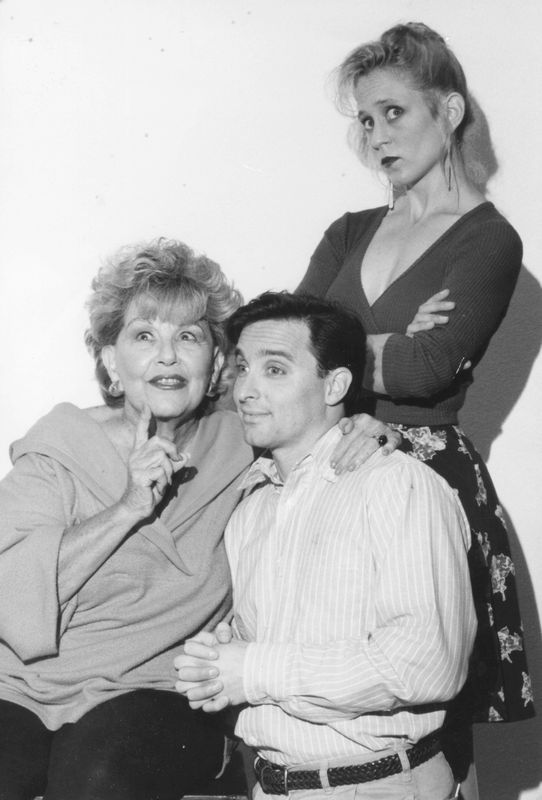
My first review for the Herald-Tribune was of a 1985 production of Kaufman and Hart’s comedy “Light Up the Sky” at the Sarasota Players. I ordered a ticket without identifying myself as being from the paper – I wasn’t “the” critic yet. When I arrived at the box office, I found a stack of notes urging patrons to write to our publisher and executive editor to complain that for the first time in some 50 years, the Herald-Tribune wasn’t reviewing one of the theater’s productions.
Imagine their surprise when my review appeared, saying that the Players “never actually light up the sky, but they manage to set off some sparks.” The theater’s managing director sent a note of apology and thanks to our executive editor, Bill McIlwain, along with a beautiful flower arrangement. He kept the flowers in his office and gave me the card.
That review led to a few more assignments at Florida Studio Theatre, the Golden Apple Dinner Theatre, the Sarasota Players and the Manatee Players, introducing me to a range of professional and amateur theater companies. By the end of the year, I was offered a position as the paper’s first full-time critic.
‘What’s a critic?’
When I was 12, my parents took me and my brothers to see my first Broadway show, the musical “1776.” I loved the whole experience, as history came to life with actors singing about the birth of our nation right in front of me. That led to annual Christmas-week trips to Broadway. One year, my oldest brother asked what the critics said about a particular show. Apparently, I asked, “What’s a critic?”
It may be the most important question I have ever asked because it was how I discovered that there was a job where you get paid to go to the theater and write what you think about it. Thirteen or so years later, Bill McIlwain and Diane McFarlin, who would go on to become publisher of the Herald-Tribune, took a chance on this young writer.
My first night on the job in February 1986, I was asked to review the great jazz singer Mel Tormé, and the next night, my features editor assigned me to review the Central Ballet of China, which posed a real dilemma because I knew little about dance and I had no time or ability to prepare. There was no internet or YouTube back then.
I quickly realized that every experience in a theater would be a learning experience. I also still firmly believe that you have to love the art form that you’re reviewing. You have to want every experience to be great and try to express how it might be better. I can’t imagine sitting through so many nights at the theater if you didn’t enjoy going.
I worked hard to make my writing engaging enough for those who probably would never see the shows I was writing about. I also came to see my job as something of an ombudsman, a representative of the audience, trying to hold each theater up to its highest standards. No theater can achieve its best every time, nor can any writer. I always tried.
The ‘Voice of God’
For generations, critics of all art forms wrote as if their opinions were the “Voice of God.” There was no other acceptable viewpoint. I hope I never sounded that way. I am just one person who gets paid to express an opinion. I’d like to think it’s valid and informed and that most people would agree with me, but I have always respected different opinions from readers. We’re all critics after all.
Of course, there were times when I would get an avalanche of complaints about a particular review. I remember a production of “The 1940s Radio Hour” at Asolo Repertory Theatre that drew a lot of negative reaction. I have two folders of complaints about reviews of shows at Florida Studio Theatre, which has sometimes launched letter-writer campaigns against me and my pieces.
I’ve never been the harshest critic, and I always tried to provide constructive criticism.
Finding a home in an arts community
As the years passed, I realized I had found a home in this growing arts community. I hesitated knowing the artists I was reviewing at first, but as our staff shrank it became a necessity to meet and interview them. For the most part, they were stimulating and interesting, off stage and on.
When I arrived, Asolo Rep had a strong resident company of actors who made their homes here. I loved seeing Bradford Wallace, Isa Thomas, Douglas Jones, David S. Howard and more in countless shows when Asolo was truly a repertory theater. There were some regulars at Florida Studio Theatre, particularly Kate Alexander, who now mostly directs. And you’d get to see actors return again and again at the Golden Apple Dinner Theatre, the once-beloved dinner theater that had a 41-year run in a space next to the Sarasota Opera House before closing in 2014. It’s a miracle what owner Robert Turoff and his wife, actress and director Roberta MacDonald, managed to do on a small stage, a small budget and just a week to put together sometimes terrific shows. They had years of hit productions, but audience tastes changed and the appeal of a place where you could eat and see a show began to diminish.
Theatre Works opened right around the time I started part-time reviewing and I saw just about every production before it closed in 2003. It operated in what was once the Palm Tree Playhouse, a one-time movie theater that is now home to FST’s Gompertz Theatre.
Theaters closed and others opened. For a time there was I Love a Mystery productions, which used local actors to present dinner theater-style performances of murder mysteries, some of them cleverly done. There have been two iterations of the Sarasota Jewish Theatre. The current second version, led by Carole Kleinberg, has found its niche in the community after just a few years.
The Urbanite Theatre was started by two graduates of the FSU/Asolo Conservatory who wanted to see more diversity in the kinds of shows presented here. The company is about to start its 12th season and it has been an exciting new venue from the opening production of the startling drama “Chicken Shop.”
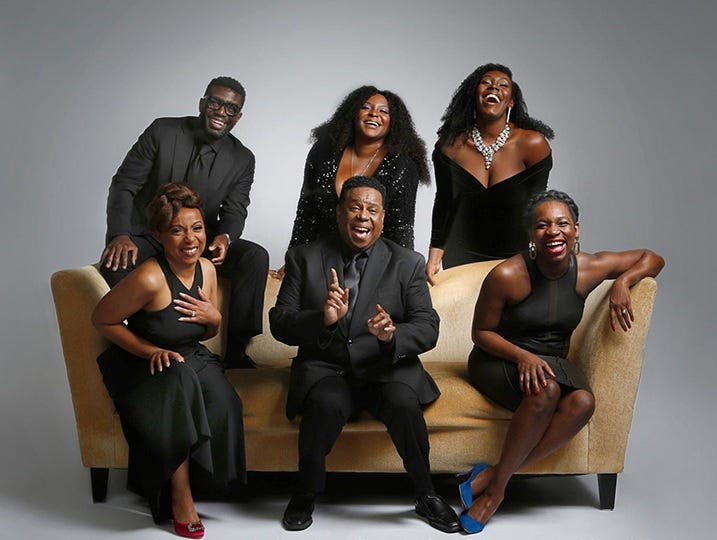
And then there’s the amazing story of Nate Jacobs, who was frequently seen performing in small roles at Asolo Rep and musical revues at FST, but wanted something more. He put together a show called “Cotton Club Cabaret” that was presented in the Theatre Works space, and, with a lot of determination, built it into what we now celebrate as the Westcoast Black Theatre Troupe, which marked its 25th anniversary this past season. No one would have predicted that a Black theater could thrive in this mostly white community. It’s a testament to Jacobs’ talent, the way he has nurtured another generation or two of performers who never had such opportunities, and smart financial advice from people like former banker Christine Jennings and former Asolo Rep Artistic Director Howard Millman, who saw the potential.
I’ve watched the way six artistic directors led Asolo Repertory Theatre, beginning with John Ulmer, followed by the short tenure of Megs Booker, who never connected with the community and nearly led to the company shutting down, before Millman was brought back to Sarasota from Rochester to help revive it. He set the stage for the successful run of Michael Donald Edwards and now Peter Rothstein, who brought their own touches to its programs.
I had once hoped to outlast the long tenures of Richard Hopkins, who has been producing artistic director of Florida Studio Theatre since 1980, and Victor DeRenzi, who has led the Sarasota Opera since 1982. Both have enjoyed great success in their roles.
40 years of learning
The FSU/Asolo Conservatory has provided some of the most interesting and exciting productions I’ve seen over the years, none more memorable than a production of Ted Tally’s “Terra Nova” about the devastating results of competing teams racing to the South Pole. I can still feel the chill in the air while watching the actors play explorers freezing on their trek. (It wasn’t just the air conditioning.)
The graduate acting program has also been a great source of self-growth. When John Ulmer was artistic director of Asolo Rep, he invited me to take part in the five-week workshop he led with the first-year students, when it was a two-year program. I was there every day, trying not to make a fool of myself as we recited poems, practiced basic acting skills and worked on characters from “The Spoon River Anthology.” It really informed how I evaluated performances because it helped me see the difference between actors who were naturally inhabiting their roles and those just pretending to do so.
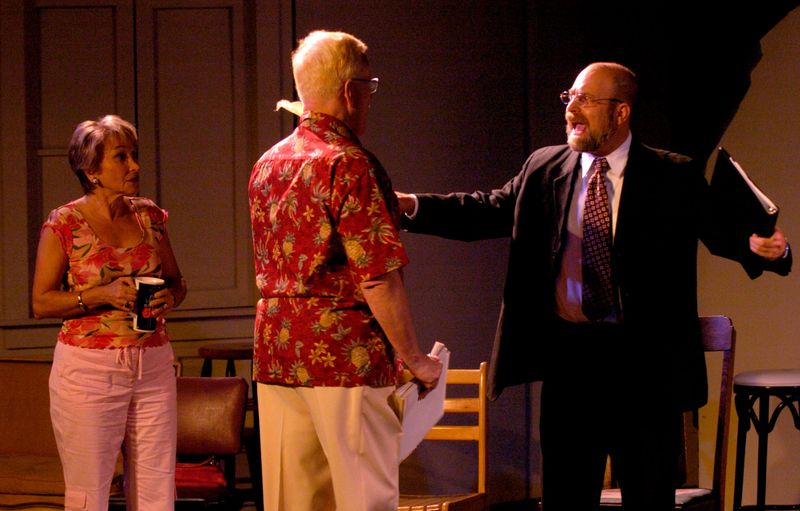
I tried to put into practice what I had learned in 2006 when I was cast in a 10-minute play by Sarasota Rising Executive Director Jeffery Kin called “The Color of My Condo,” part of a collection of plays presented by the Sarasota Actors Workshop. Suddenly, I experienced what actors often talked about: how each performance was different. Each time, I tried to connect in a better way to my character and the situations. It was always the same but different.
Two years earlier, the Manatee Players gave me a chance to direct for the first time as part of a summer festival of new plays by local writers. I was asked to direct a lovely play called “Alligators” by Sylvia Reed, who had once been a colleague at the Herald-Tribune. I really knew nothing about staging a play, but I focused on helping the actors get to the heart and essence of their characters. It was a mind-exploding experience, one that I’d love to experience again in the future.
In 2010, I began a three-year project to follow the Conservatory class of 2013 through their training process, from initial classes in acting, movement, speech and more, through their roles in second-year productions and then as members of the Asolo Rep company. Although I didn’t get to spend as much time with them as I would have liked, it gave me a chance to better understand what they go through.
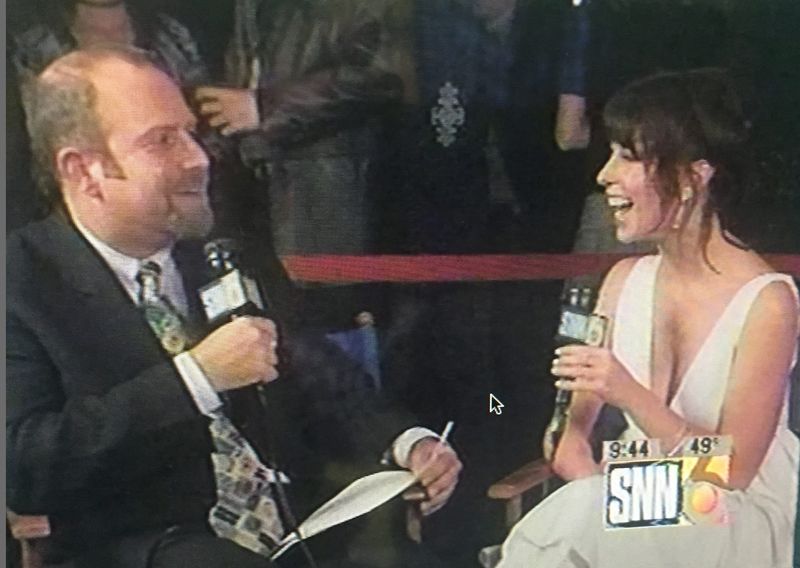
Though I was trained as a print reporter, I learned about the TV side of things when the Herald-Tribune launched SNN6 inside our newsroom. At the start, I was asked to do reviews on air, which was a challenge without any video from the theaters – that would change soon enough. And later, with the help of some expert videographers, I put together a weekly State of the Arts feature. In 2004, I served as the main host of the station’s opening night coverage of the Sarasota Film Festival with actress Jennifer Love Hewitt, who was a gracious partner, even with the live band playing right next to us.
Celebrity encounters
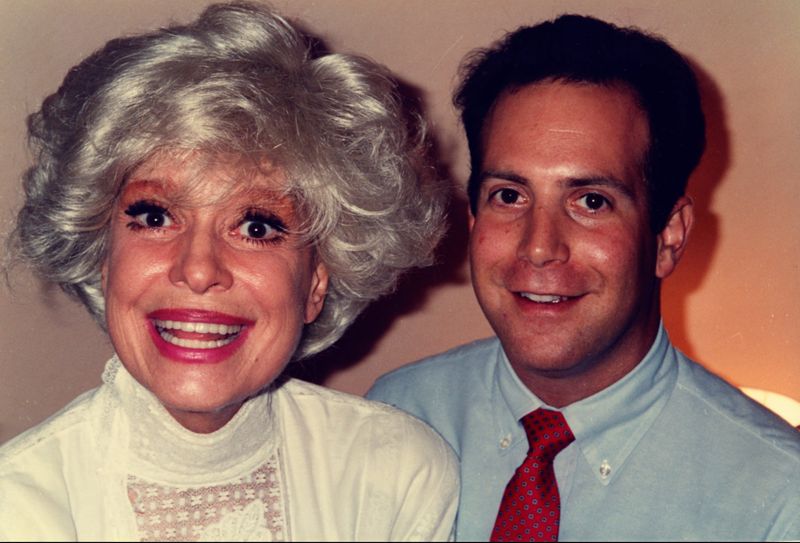
I have met and interviewed a lot of famous people over the years, from George Burns and Patti LuPone to Tommy Tune, Lucie Arnaz, Liza Minnelli and Mandy Patinkin. But nothing tops the three hours I spent having dinner with Carol Channing in a Punta Gorda hotel before one of her concert shows. I know she was sharing stories about her career that she had probably told a million times, but it was fascinating.
I’ve also had a chance to promote more home-grown talent, like students at Booker High School’s Visual and Performing Arts Center and young artists at our community theaters who went on to Broadway or film and TV work, like Charlie Barnett, Syesha Mercado, Kim Shriver, Sara Inbar, Drew Foster and Maria Wirries.
What I’ve liked best, though, is getting to know the artistic and creative people who make Sarasota such a vibrant and exciting place, from museum directors and curators to orchestra musicians and conductors, singers at the Sarasota Opera, and the countless actors I’ve spoken with who made me eager to see their latest work.
Favorites
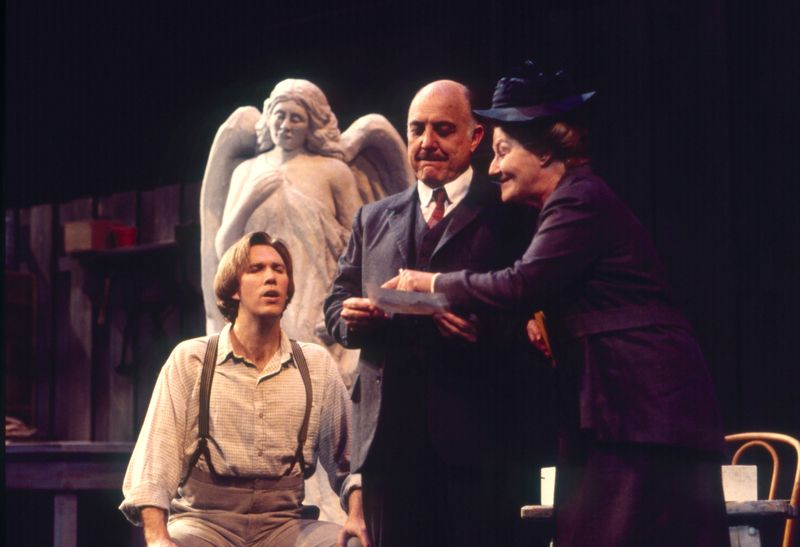
I’m always asked what my favorite shows have been over the years, and I always deflect the question. There have been too many, and without a solid list, I would forget some key possibilities. But there are two that stand out in important ways. One was a 1996 production of “Look Homeward, Angel” at Asolo Rep, directed by Eberle Thomas (a former co-artistic director) and starring Bradford Wallace and Isa Thomas. It showed me what I look for when I go to the theater – to be so drawn into the world of a play that I forget I am watching a play. That night, I thought I was actually living in the boarding house depicted on the stage. It was a sublime experience.
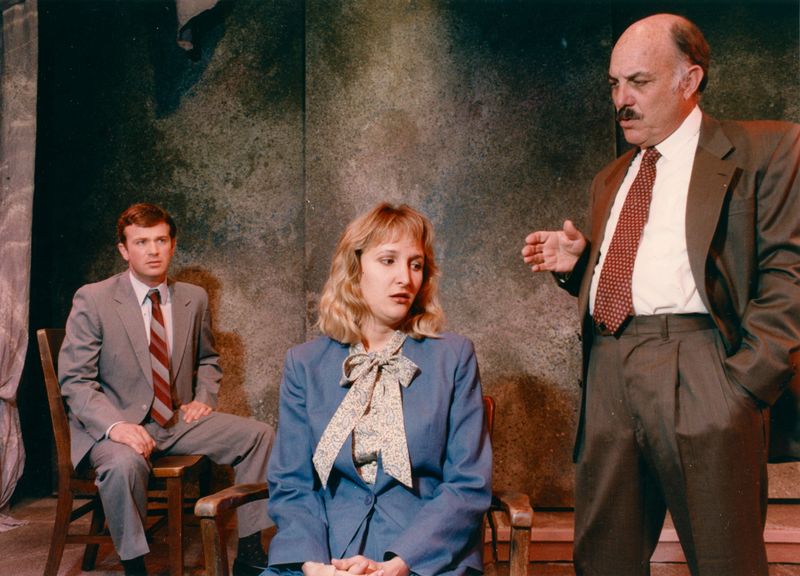
And then there’s FST’s 1992 production of Emily Mann’s “Execution of Justice,” a docudrama about the trial of San Francisco Supervisor Dan White, who was accused of murdering Mayor George Moscone and fellow Supervisor Harvey Milk, who had become a national gay icon. It wasn’t the play so much as Jeffrey Dean’s set, which featured crumbling and cracked courthouse walls that spoke volumes about the flaws in the criminal justice system that the play addressed. It made me pay a lot more attention to scenic design as well as the stories told by costumes, lighting, hair and makeup.
A great support system
When I started as theater critic, I was part of a large features department with a dozen editors and page designers, and a team of terrific writers who helped me grow as a writer, critic and person. I spent years watching Charlie Huisking struggle over every word while producing stories that were so breezily written that you’d think they were pre-ordained. I enjoyed tangling with our one-time art critic Joan Altabe about the good and bad in art. More recently, Susan Rife, my predecessor as Arts Editor, and writer and dance critic Carrie Seidman continued to challenge me.
I began my career as a reporter and editor in the local Washington, D.C., bureau of United Press International. I couldn’t have asked for a better training ground because I wrote about everything, from local city council meetings to plane and subway crashes, hostage situations, art donations to the Smithsonian and features about shows at the Kennedy Center. I learned how to juggle multiple stories at the same time, which has served me well over the years.
I am thankful to the countless artistic leaders who have taught me so much, and the marketing and public relations directors who have made it possible to tell those stories.
Because of my job in Sarasota, I got to be involved with the American Theatre Critics Association, which helped me explore theater in other major cities and at annual festivals around the world. I have served the organization as a board member and longtime president of our non-profit Foundation.
As I close out this chapter of my life and career, I want to thank all of you who have read my stories, ribbed me over occasional mistakes and frequently told me how much you enjoyed my writing. I always felt I wasn’t as good as many of my colleagues, but that only pushed me to work a little harder.
I feel like the luckiest person because I got to do what I had dreamed of since high school. Not many people get that chance.
I don’t plan to stop writing about the arts and reviewing theater. After a break of a month or two, I hope to be back at it, though not quite as intensely. I hope by the time the season starts in November, I will be writing features and reviews once again, and we can continue the conversation. I will be spreading the word as soon as a plan is set.
And in the meantime, you can reach me at criticjay@gmail.com.
Thank you, all.
This article originally appeared on Sarasota Herald-Tribune: Theater critic says farewell to the Herald-Tribune after 40 years on the aisle
Reporting by Jay Handelman, Sarasota Herald-Tribune / Sarasota Herald-Tribune
USA TODAY Network via Reuters Connect