According to a recent memo from the Florida Department of Transportation (FDOT), the city of Tallahassee and Leon County have been directed to eliminate all artistic crosswalks by Sept. 3. These are the very installations that residents, students, and community partners helped design as effective traffic control devices and mechanisms to enhance pedestrian safety.
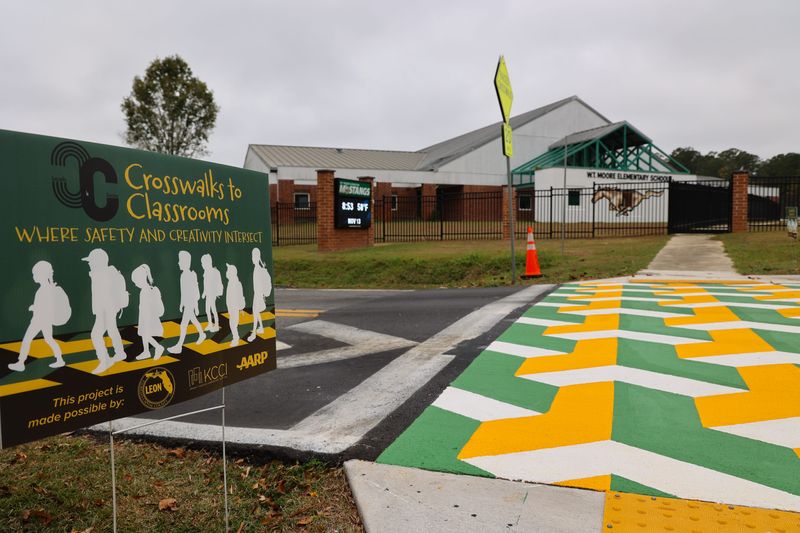
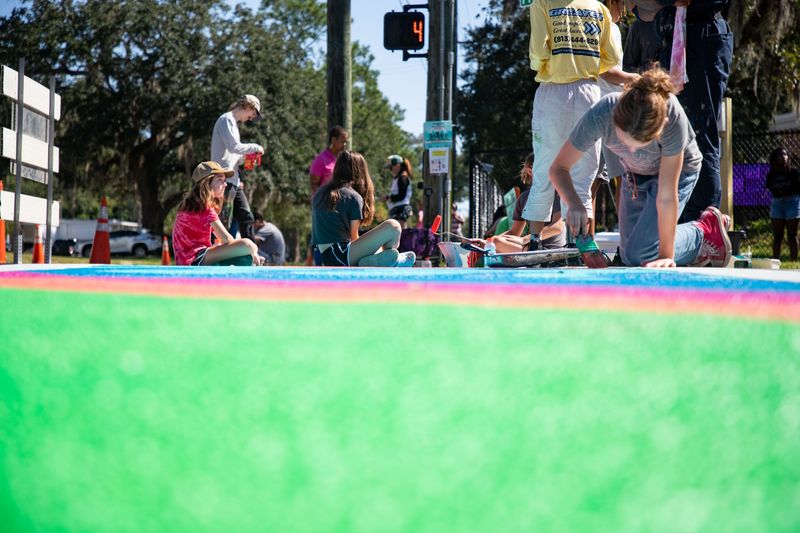
The Crosswalks to Classrooms initiative, led by the non-profit Knight Creative Communities Initiative (KCCI), began with a simple, powerful goal: to make routes to school safer for children. Led by a group of 12 diverse volunteers, called KCCI Community Catalysts, with funding from private businesses and support from Leon County, the city, the Leon County School Board, and local educators and PTOs, more than a dozen artistic crosswalks throughout Leon County were installed.

Building on this success, KCCI launched Crosswalks to Courthouse with local government support, adding three more vibrant crosswalks in downtown Tallahassee near a popular parking garage.
Decorative crosswalks are more than beautification; they are research-based safety interventions. Studies from the AAA Foundation for Traffic Safety and the Federal Highway Administration show that brightly colored and patterned crosswalks help slow traffic, improve driver awareness, and increase the likelihood that motorists will yield to pedestrians.
Research published in Accident Analysis & Prevention further confirms that visual enhancements, such as color and design, reduce vehicle speeds and pedestrian crash rates.
Here in Tallahassee, the results are measurable. Local research showed that the artistic crosswalks along Dempsey Mayo Road reduced speeding by more than 20 mph. Along both Dempsey Mayo and in the downtown corridor, KCCI used Color-Safe pavement markings, a federal and state-approved material known for its visibility, durability, and cost-effectiveness.
The Dempsey Mayo installation was funded by AARP as part of a larger pedestrian safety effort.
At Cobb Middle School and Kate Sullivan Elementary, evaluations showed a notable increase in drivers stopping before the crosswalk and a decrease in vehicles running stop signs or signals. These are not assumptions — they are outcomes backed by observation and data.
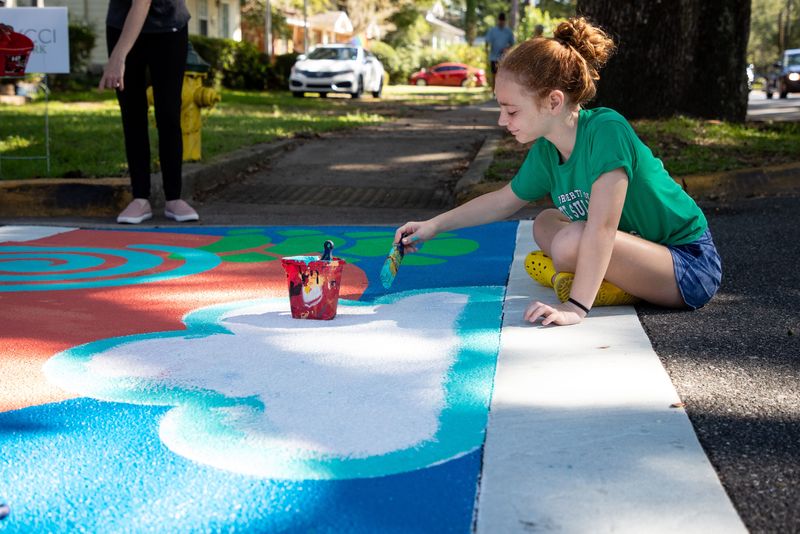
These crosswalks are also expressions of neighborhood identity. Students, teachers, active-living residents, and local artists came together to co-design each project, creating work that is not only functional but meaningful.
Each installation underwent a rigorous local government review process to ensure compliance with local, state, and national safety standards. The designs promote creativity and civic engagement without invoking political ideology — only the shared belief that our community values safety.
FDOT’s updated guidance stems from federal interpretation of street marking regulations, and prohibits all artistic crosswalks — including those designed to enhance safety. Communities across the country are responding with requests for clarification or proposing reasonable compromises.
A directive that impacts local infrastructure and years of community investment should be subject to public discussion, not quiet compliance.
The decision to remove these crosswalks has already been made — without public input, and without a transparent explanation to the residents who helped bring them to life. That silence speaks volumes.
Our community leaders attempted to work with FDOT to better understand the guidance and explore solutions that protect both compliance and community safety. Ultimately, they were unsuccessful.
These artistic crosswalks are more than paint — they are effective traffic control devices, grounded in research and proven to reduce vehicle speeds and improve pedestrian safety. They were vetted, community-driven, and cost-effective. Treating them as expendable sets a troubling precedent and ignores the value of public engagement in shaping safer streets.
Moving forward, I urge the Florida Department of Transportation to reexamine how these decisions are made — and to consider exemptions for locally tailored solutions that demonstrate measurable safety outcomes.
Let’s ensure future actions reflect not only federal guidance, but also the voices and values of the people who walk, bike, and drive these streets every day.
Holly McPhail is a local community advocate and consultant to nonprofits with a vested interest in serving children, youth and families. She served as a Community Catalyst for the Knight Creative Communities Initiative (KCCI) in 2023.
JOIN THE CONVERSATION
Send letters to the editor (up to 200 words) or Your Turn columns (about 500 words) to letters@tallahassee.com. Please include your address for verification purposes only, and if you send a Your Turn, also include a photo and 1-2 line bio of yourself. You can also submit anonymous Zing!s at Tallahassee.com/Zing. Submissions are published on a space-available basis. All submissions may be edited for content, clarity and length, and may also be published by any part of the USA TODAY NETWORK.
This article originally appeared on Tallahassee Democrat: Why erase what works? : Tallahassee’s artistic crosswalks are worth protecting | Opinion
Reporting by Holly McPhail / Tallahassee Democrat
USA TODAY Network via Reuters Connect