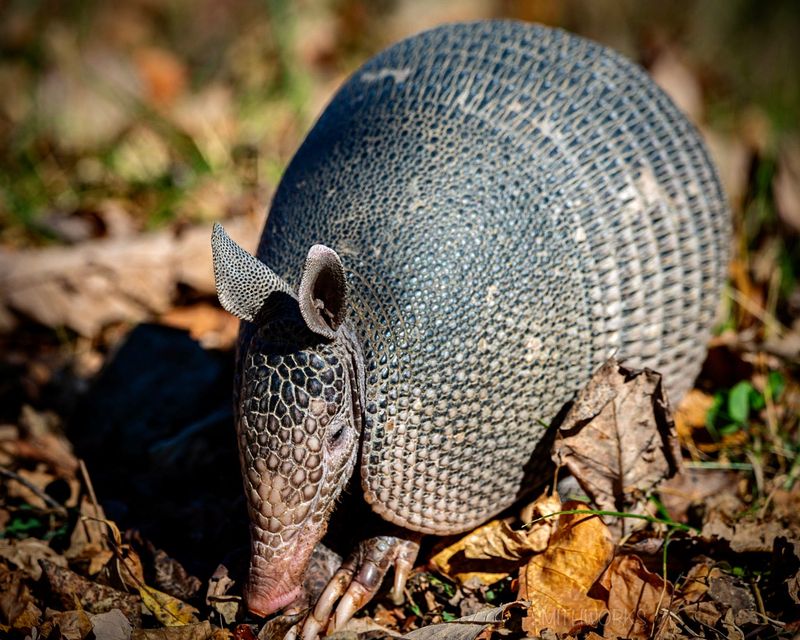
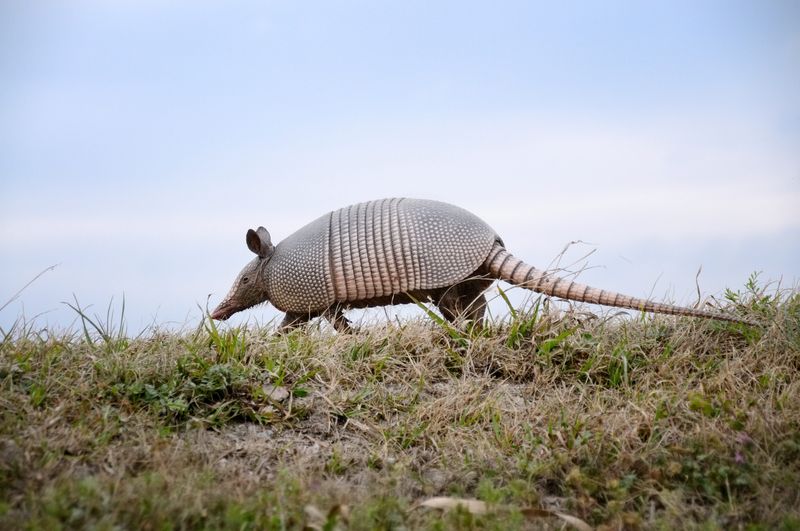
Armadillos are often assumed to be a critter of the wild west, but they can actually be found in several places across the United States, including Indiana.
The Indiana Department of Natural Resources recently confirmed an Aug. 19 sighting on social media that yes, the armored rodents do live in Indiana and their numbers have steadily increased over the past 20 years.

Here’s what we know about armadillos in the Hoosier State.
Are there armadillos in Indiana?
Yes, armadillos do live in Indiana, according to Indiana DNR.
The nine-banded armadillo is the only armadillo species found in the United States, which of course makes it the only species found in the Hoosier State.
Reports of armadillo sightings go back to the early 2000s, when they were spotted on Indiana’s roadways in southwestern Indiana, according to Indiana DNR.
Recent observations of both live and dead armadillos on Indiana roadways indicate this species can be found year-round across the southern half of the State, but Indiana DNR has had reports of armadillo sightings as far north as Porter County (Valparaiso).
Armadillo sightings becoming more common in Indiana
Since the early 2000s, Indiana DNR has confirmed 230 reports of armadillos, and the frequency of reports has increased in the past five years. Nearly 90% of armadillo reports were received from 2017-2025.
A recent video of an armadillo was shared on Facebook by Indiana DNR on Aug. 19.
Commenters were surprised to see the little armored fellow on an Indiana road.
One user wrote: “I saw one in South Bend a couple months back. I thought I was hallucinating or losing my mind.” Other commenters shared similar experiences.
Story continues after photo gallery.
Do armadillos carry leprosy or other diseases?
Yes, armadillos can carry several dangerous diseases including parasitic worms, and in some cases rabies, but the one that scares most people is leprosy.
Besides humans, nine-banded armadillos are the only animals capable of carrying M. leprae, the bacteria that causes leprosy.
According to a 2018 study from Colorado State University, armadillos have been shown to transmit M. leprae to people in Texas, Louisiana and Florida, where humans come into contact with the animals and especially those who consume armadillo meat.
What should you do if you see an armadillo?
Armadillos are nocturnal creatures, but it is still possible to see them during the day.
If you do, you should avoid handling them and report the sighting to Indiana DNR.
It is important to note that any diseases armadillos carry are difficult for humans to contract without close contact. So unless you’re handling or eating them, it’s unlikely you will contract any of their diseases.
Every armadillo may not be carrying the diseases listed above, but it’s still important to exercise caution whenever you’re around these animals just in case.
Are armadillos an invasive species in Indiana?
As of August 2025, evidence does not suggest an expanding armadillo population will negatively impact Indiana’s wildlife populations, according to Indiana DNR.
Data collected through armadillo reports will aid biologists in assessing what impacts armadillos have on other wildlife found in the Hoosier State.
Armadillos and digging
Not unlike other ground-dwelling mammals in Indiana, armadillos love to dig and they will do it anywhere, including your yard.
“Residents may discover armadillo digging activities to be a nuisance,” Indiana DNR wrote on their website.
To help prevent or stop armadillos from digging on your property, Indiana DNR recommends fencing or barriers that are slanted at an angle with one portion buried underground.
If armadillos have created burrows under structures, Indiana DNR recommends illuminating the burrow or placing a radio near the entrance to help drive them away.
What you shouldn’t do? Fumigants, poisons, or traps are not advised for armadillo control, say experts.
Can I trap or kill an armadillo in Indiana?
No. Nine-banded armadillos are protected under Indiana Administrative Code (312 IAC 9-3-18.5). They’re considered an exotic mammal and therefore cannot be trapped or killed unless the armadillo is destroying or causing substantial damage to property.
If property damage is occurring, landowners and tenants can remove the armadillo without a permit or contact a permitted wildlife control operator.
Have you seen an armadillo in Indiana? Report it here.
If you’ve spotted an armadillo, or any other interesting mammal in the Hoosier State, you can report your sighting using Indiana DNR’s online form here: on.IN.gov/Report-A-Mammal.
John Tufts covers trending news for IndyStar and Midwest Connect. Send him a news tip at JTufts@Gannett.com. Find him on BlueSky at JohnWritesStuff.
Katie Wiseman covers trending news for IndyStar and Midwest Connect. Contact her at klwiseman@gannett.com. Follow her on Bluesky @katiewiseman
This article originally appeared on Indianapolis Star: Armadillos are becoming more common in Indiana. Do they carry diseases? Can you trap or kill them?
Reporting by Katie Wiseman and John Tufts, Indianapolis Star / Indianapolis Star
USA TODAY Network via Reuters Connect