It was a day of celebration mixed with a tinge of uncertainty.
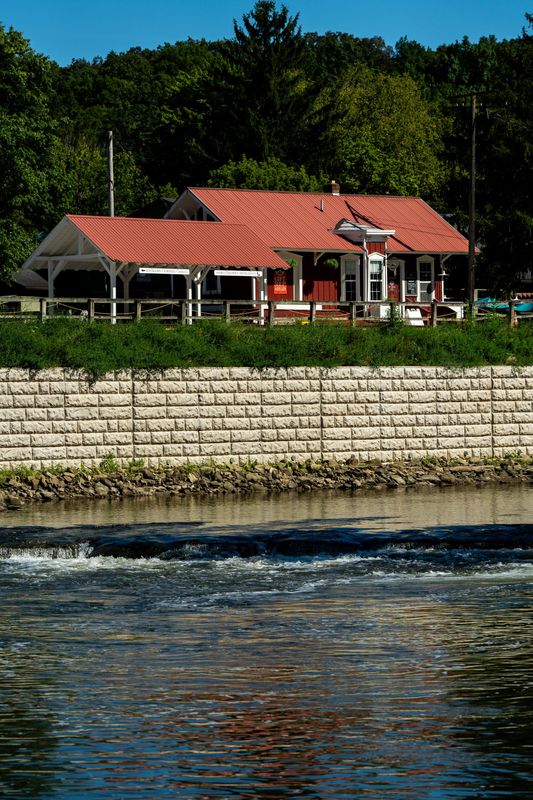
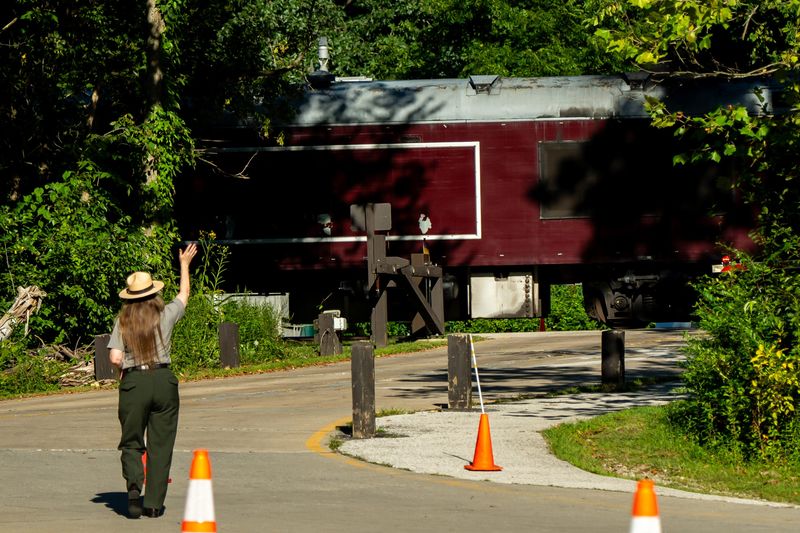
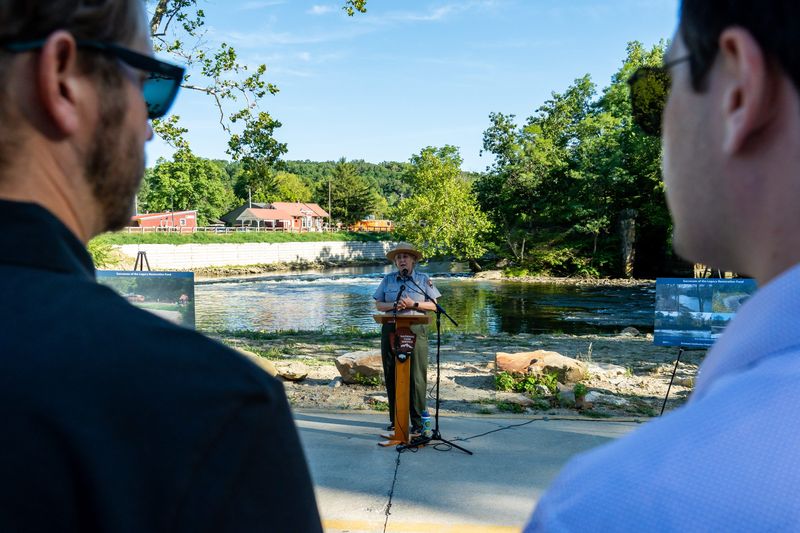
Northeast Ohio politicians boarded the Cuyahoga Valley Scenic Railroad late afternoon Aug. 18 to get a firsthand look at an ambitious project to shore up erosion along the Cuyahoga River − aptly dubbed the crooked river − in the sprawling national park that stretches from Akron to Cleveland.

Work on the $24.8 million riverbank stabilization project is coming to an end just as the Great American Outdoors Act that funded the effort to stabilize the river’s edge to preserve the tracks for the scenic railroad and the path for the Ohio & Erie Canal Towpath Trail is set to sunset.
The funds that will need to be renewed by federal lawmakers also paid for the removal of vacant structures within Cuyahoga Valley National Park and work on Perry’s Victory and International Peace Memorial in Put-in-Bay.
CVNP Superintendent Lisa Petit said the work to stabilize the banks in several sections along the river, including by the Lock 29 Trailhead in Peninsula, literally kept the popular trail in the park open for visitors and the trains running.
Proponents say the 32,950-acre national park is an economic engine in the region, boasting about 2.9 million visitors annually with an estimated economic impact of $225 million and worth the investment of funds for further improvements.
The Great American Outdoors Act, Petit said, helped fund projects needed to not only preserve the park but also ensure its future as it celebrates its 50th anniversary in 2025.
Making the case for the Great American Outdoors Act
The uncertainty over future capital projects in the Cuyahoga Valley National Park comes amid the backdrop of cuts earlier this year and layoffs across federal agencies.
Aside from trimming rangers and full-time employees, the national park also reduced the number of temporary workers who help maintain the parks during the busy summer season.
CVNP spokesperson Pam Barnes said the Greater Akron park has been as busy as it has ever been this summer with some record crowds at its Visitor Center in Boston Mill.
And the effort this year to seek public input on the state of affairs within the national parks, Barnes said, has been overwhelmingly positive from Cuyahoga Valley National Park visitors.
Showing off the completion of the ambitious erosion project to local and regional politicians and their representatives was also a chance for park officials and supporters to shore up support and make the case for federal funds to be set aside to pay for deferred maintenance and needed repairs.
Cuyahoga Valley Scenic Railroad President Larry Stevenson said without the work along the river’s edge, the scenic railroad would not be able to make the runs through the entire park from Akron to Independence.
The full runs between the two communities just returned this year thanks to the effort to make critical repairs along a couple sections of track that run close to the river.
“It (the erosion problems) really hampered our operations,” he said.
Stevenson contends the railroad is more then “just a train ride” but is a “vital link connecting people to the one-of-a-kind treasure that is Cuyahoga Valley National Park.
The federal funding for projects like the erosion effort keeps the legacy alive, Stevenson said.
Greg Peckham, president & CEO of the Conservancy for Cuyahoga Valley National Park, said it was important to show policy makers what the funds for the Great American Outdoors Act were used for and the importance of its being renewed by lawmakers.
“From restored trails and bridges to enhanced accessibility and safety, these improvements are tangible proof of what public investment can achieve,” he said.
And a train ride through the national park, they say, was the perfect vehicle to make the case for the continued funding to be set aside for the national parks that is set to expire in a few weeks.
“We believe that advocacy begins with experience,” said Kimmy LoVano, the Conservancy’s community engagement director. “When our elected officials walk the trails, ride the train, and meet the people whose lives are touched by this park, they become champions for its future.”
The existing bill − approved during the first Trump administration − provided some $1.3 billion a year over the last five years for projects within the national parks. It expires on Sept. 30.
This article originally appeared on Akron Beacon Journal: Cuyahoga Valley National Park marks end of ambitious river erosion project
Reporting by Craig Webb, Akron Beacon Journal / Akron Beacon Journal
USA TODAY Network via Reuters Connect