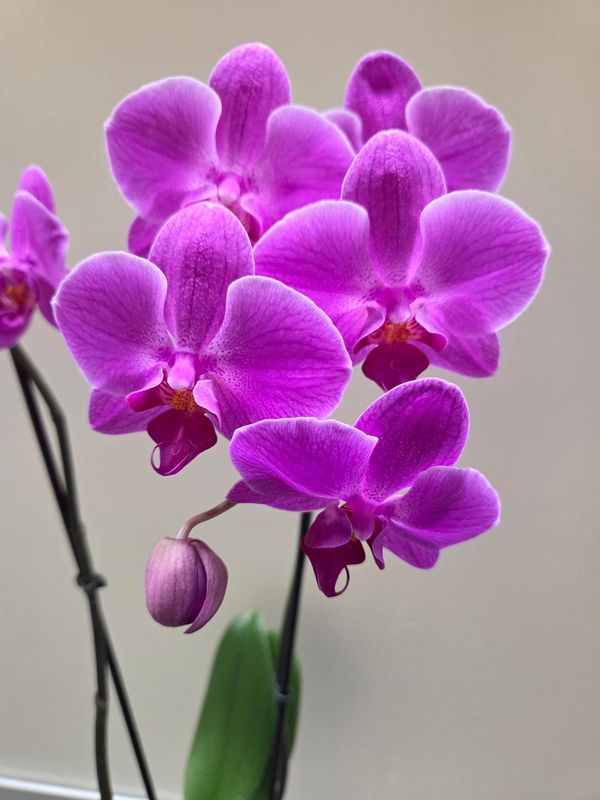
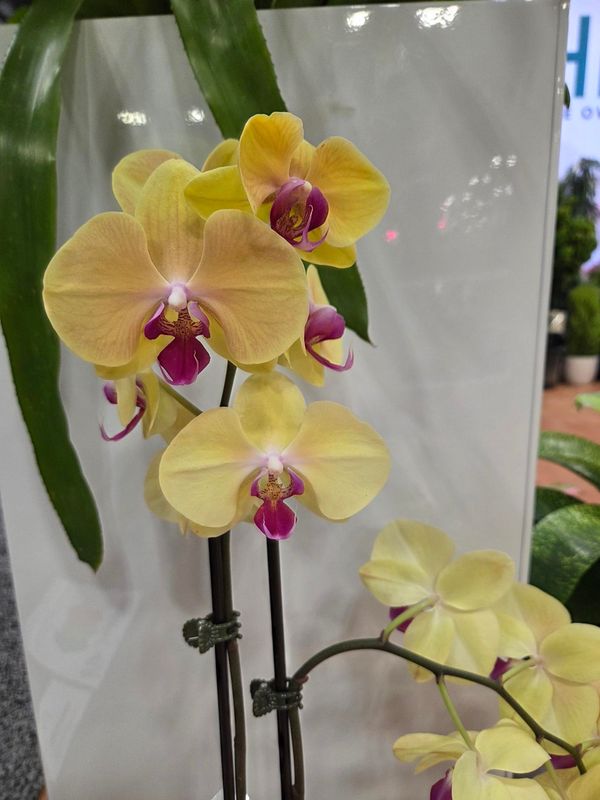
Orchids make excellent houseplants, even for those individuals who lack the requisite green thumb. Orchid flowers are colorful, unique and dainty, and the blooms last a long time.
While orchids have a reputation for being difficult to grow indoors, by selecting the right type of orchid and providing the correct environmental conditions, anyone can have success with these tropical beauties.

Types of orchids
Certain types of orchids require high light, high humidity or cool, humid conditions, which may be difficult to maintain in most homes. There are two types of orchids, however, which do not require such specific environmental conditions and can flourish in conditions found in most homes.
These two types of orchids are Paphiopedilum, commonly called slipper orchids and Phalaenopsis, commonly called moth orchids.
Slipper orchids
Paphiopedilum orchids are called slipper orchids and grow on the shaded floor of tropical forests, where temperatures are warm and the humidity is high. When grown indoors, slipper orchids generally require a temperature range between 65 degrees at night to no more than 90 degrees during the day.
In their natural environment, slipper orchids grow in a low-light environment and these conditions can be recreated in the home by situating the plant in an east or west window. Alternatively, slipper orchids do well under an artificial light source.
The growing medium where slipper orchids grow naturally is tropical forest leaf litter, which never dries out completely. To successfully grow orchids, you should try to mimic these soil-moisture conditions by watering frequently enough to keep the potting media moist but not soggy wet.
When potting orchids, use a special orchid potting mix as these products use bark as the primary component, which drains rapidly and has some water holding capacity.
Slipper orchids prefer high humidity, a condition which can be difficult to replicate in most homes due to winter heating and summer cooling. Most slipper orchids, however, seem to survive in the low humidity of most homes.
If you are looking to jazz up a bathroom space in the home, slipper orchids will thrive in the higher humidity of bathrooms which contain showers or bathtubs.
Moth orchids
Phalaenopsis orchids are called moth orchids, which naturally grow on the bark of trees in the shade of warm and humid tropical forests. Like slipper orchids, moth orchids grow in low-light conditions and do best in east or west windows, or under artificial light.
Some varieties of orchids may require different light requirements, so always check the plant tag for care instructions for your variety.
Moth orchids are a little more finicky about humidity conditions and may not thrive in the low-humidity conditions of most homes. These orchids do best when grown on a humidity tray.
You can make your own humidity tray by filling a shallow bowl with small stones and keeping water in the bowl at all times. Just be sure that the pot itself is not submerged in water so that it does not develop root rot.
As the water around the stones evaporates, it creates humid conditions that will mimic the environment in which these orchids grow naturally.
Watering orchids
The proper watering technique is critical to success with growing any type of orchid. As a general rule, orchids should be watered once every seven to 10 days. To determine if an orchid plant requires watering, you should stick your finger into the potting media to check if it is dry.
Only water if the mix feels completely dry. Always use lukewarm water in order to mimic the natural tropical environment.
Allow the water to drain through the pot thoroughly and remove any standing water. Do not allow water to pool up on the leaf stems. If water is sitting on the base of leaves after watering, pat them with a paper towel to remove excess moisture to prevent fungal growth.
The frequency of watering should be reduced during the plant’s dormant phase in the winter months.
Abundant supply
If you go looking to buy an orchid in Greater Columbus, you will find an abundance of several different types of orchids in garden centers and even the floral section of your favorite grocery store.
The abundant supply of orchids is due to the fact that the largest grower of orchids in North America is located right here in the Buckeye State.
Green Circle Growers, located in Oberlin in northeast Ohio, grows millions of orchids each year in 33 acres of greenhouses, where they use tissue culture to clone plants from mother stock.
Mike Hogan is Extension Educator, Agriculture and Natural Resources and associate professor with Ohio State University Extension.
This article originally appeared on Farmers Advance: Garden: Caring for orchids as houseplants
Reporting by Mike Hogan / Farmers Advance
USA TODAY Network via Reuters Connect