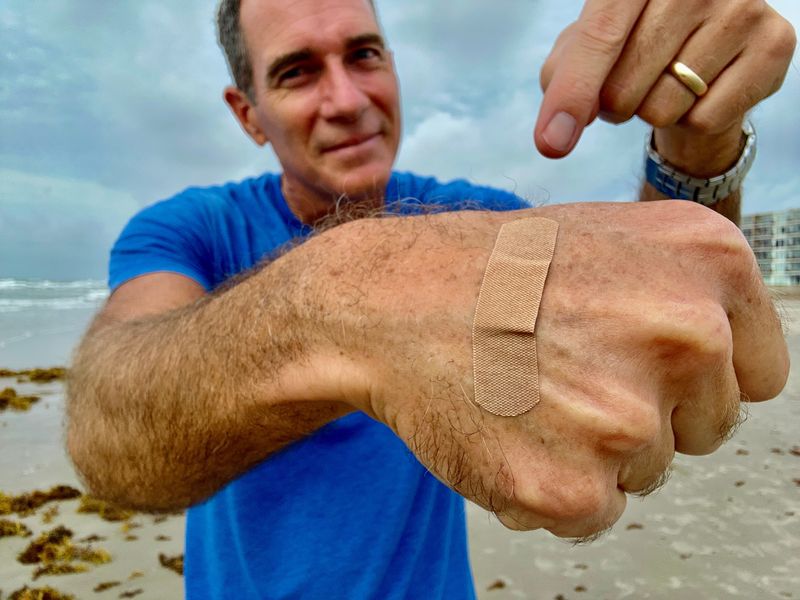
Could we get flesh-eating bacteria in north central Florida?

Highly unlikely, but it’s possible after a major flooding event on par with the hurricanes we endured in 2024.
As of July 11, the Florida Department of Health reported a total of 11 Vibrio vulnificus cases across the state, with those cases accounting for all four fatalities.
The rare “flesh-eating bacteria” specimens are typically found in saltwater, brackish water and contaminated raw or undercooked seafood. It’s part of a group of vibrios that are called “halophilic” because they require salt.
An average of 150 to 200 cases are reported each year to the Centers for Disease Control and Prevention. And as hurricane season continues to bear down on Florida, the number of infections in our state could potentially rise as seawater is brought onshore.
Cases have been rising this year, raising a troubling question: Are warmer summer temperatures fueling a seasonal surge, or is the increase more closely tied to the types of water where the bacteria thrive?
Have there been cases reported locally?
No cases have been reported in Lake and Marion counties this summer, or in the past few years, according to the Florida Department of Health.
One case was reported in Sumter County in 2024, but it was not fatal.
When the Daily Commercial reached out to the Department of Health branch in Sumter County to find out more, the spokesperson said that details about specific cases and individuals are confidential and exempt from Florida Sunshine laws.
But why Sumter County?
Vibrio vulnificus thrives in warm, brackish seawater, not typically in the lakes of north central Florida.
Last year, the state’s Department of Health linked a surge in cases to Hurricane Helene during the aftermath of the storm that caused widespread flooding.
Last year in the Sunshine State, there were a record 82 cases and 19 deaths, most of them after October, when large areas of the state were flooded by back-to-back hurricanes, Helene and Milton. Vibrio vulnificus requires brackish saltwater to spread.
Waterways such as the Withlacoochee River and its tributaries were contaminated by stormwater runoff, infecting people with open wounds or compromised immune systems, increasing the risk of infection.
Where in Florida have people died of the ‘flesh-eating bacteria’?
Four fatalities were reported in Florida this year.
Residents have died of the “flesh-eating” bacteria in Bay, Broward, Hillsborough and St. Johns counties.
How does a person get infected?
Infection can occur when people swallow contaminated water or if it gets into an open wound.
People can also become infected due to contaminated raw or undercooked seafood, especially shellfish such as oysters that carry the bacterium in warm coastal waters during the summer months.
What rare pathogen can be contracted in freshwater?
Dr. Jose Alexander, clinical microbiologist and director of microbiology, virology and immunology at AdventHealth Orlando, has warned about another life-threatening, albeit rare, organism in freshwater.
“In freshwater lurks another life-threatening organism to avoid – the brain-eating amoeba,” he told the Orlando Sentinel.
Naegleria fowleri can enter through the nose and kill its host within 3-7 days.
“Infection with Naegleria fowleri is most common during the summer months of July, August and September,” the Florida Department of Health says on its website.
In South Carolina, 12-year-old Jason Carr died this week from what state health officials believe was an infection of Naegleria fowleri.
Survival is rare battling the pathogen, but not impossible.
Caleb Ziegelbauer, who was 13 when he battled the rare brain-eating amoeba after a trip to the Port Charlotte Freshwater Beach last year, survived after months of treatment in a Fort Myers children’s hospital and a transfer to a Chicago hospital.
This article originally appeared on Daily Commercial: Flesh-eating bacteria vs. brain-eating amoeba? What we know in north central Florida
Reporting by Julie Garisto, T. Sudore and C. A. Bridges, Leesburg Daily Commercial / Daily Commercial
USA TODAY Network via Reuters Connect