The One Big Beautiful Bill, now a law, is entering history’s annals as not only the biggest tax cut in U.S. history but also the largest cut to federal health funding that ensures medical care for the poorest.
The expected slashing could be dramatic enough that even Floridians with private insurance may feel the effects of the law that President Donald Trump signed July 4. In addition to delivering a host of Trump’s priorities, including money for border security and erecting statues of national heroes, the law cuts Medicaid, the state-federal partnership that funds everything from newborn babies’ delivery to nursing home residents’ care.

Florida’s hospitals are bracing themselves as the fine print gets worked out. Mary Mayhew, president and CEO of the Florida Hospital Association, lamented the widespread perception that the $900 billion cut over 10 years will only affect those misusing the system and undocumented immigrants.
“They (congressional Republicans) have so grossly mischaracterized all of this by narrowly defining it as fraud, waste and abuse, when in fact these are massive cuts,” said Mayhew, who has served in state health care administrations under two Republican governors.
Florida is among the states spending the least when per-capita Medicaid costs are calculated, so other states are likely to feel more pain from the reductions. Still, certain services, such as delivery rooms, NICUs, psychiatric units and rural hospitals, get significant support from the Medicaid system and this carving could put these services on the endangered list in Florida said Mayhew, who also worked for the U.S. Department of Health and Human Services in a top-ranking position for the first Trump administration.
Over the last 20 years, eight Florida hospitals in rural areas have closed their doors and this will not improve the challenges to providing care in those regions, Mayhew said.
“We already have rural hospitals that are incredibly financially stressed,” Mayhew said. “If their charity care increases as a result of this, if the needed funding for Medicaid is reduced, in the future, we may see more rural hospitals close. And of course, when a rural hospital or any hospital closes, you also lose access to the physicians in the community. You’re forcing people to travel farther and farther distances to get access to health care. We already have OB-GYN (specialists who deliver babies) deserts in Florida.”
How much flows from the feds to Florida for Medicaid?
Florida could lose up to 20% of the $19.5 billion the federal government sends the state annually to subsidize the state’s portion of health care insurance costs for the poorest Floridians, according to national and state health policy research organizations. In 2023, the federal government was footing the majority — 65% — of Medicaid’s total cost in Florida, according to KFF, the national research nonprofit based in Washington and San Francisco.
Medicaid beneficiaries include 43,000 nursing home residents, 93,000 newborns and their mothers, 2 million children, nearly 400,000 adults with disabilities and about 65,300 older residents who receive home- and community-based services.
Shelley Gottsagen knows two of those people who rely on Medicaid and fears any change to the status quo. Her 90-year-old mother lives in an assisted-living facility, with support from Medicaid, and her 39-year-old son, who has Down syndrome, works busing restaurant tables with the help of social services paid through Medicaid.
“My mother is really my greatest concern,” said Gottsagen, 70, of Boynton Beach who works in social services. “Before she went into assisted living, she was trying to live by herself. She couldn’t stand up to cook. She needs her legs wrapped. She bruises really easily.
“For a parent of children with developmental disabilities, the real worry is what happens when I die,” she added.
State Republican leaders don’t expect that children will lose their KidCare or that elders will be turned out of their Medicaid-funded long-term care, however.
When and where will cuts to Medicaid kick in?
Florida is one of 10 states that did not expand their Medicaid program to include more low-income adults in order to draw down more federal funding. Because of that, state Sen. Gayle Harrell, R-Stuart, doesn’t expect that the cuts will have as significant an effect on Florida, as it will in other places.
“Yes, there will be some reductions, but, commensurate with what other states are getting, their reductions because of their expansions, will be significantly more percentage wise,” Harrell said. “We have already put in certain requirements for recipients.”
The new work requirements for Medicaid recipients got a lot of attention nationally, but Florida is already checking on that once a year. The new law requires a semiannual check, she said, which will increase costs to the state.
Harrell noted too, that the state, in this last budget, added new health care funding for federally qualified health clinics, rural areas and nursing homes.
Justin Senior, CEO for the Safety Net Hospital Alliance of Florida, whose member hospitals, mostly in urban areas, serve the highest proportion of Medicaid patients compared to others, agrees with Harrell’s assessment that Florida will not be as hard-hit as other states, due to its tight focus on child needs, whereas other states have taken a more expansive approach.
Plus they have some time to plan: Hospitals likely won’t feel the effects until 2028, Senior said.
“I think when you’re trying to save this much money in the Medicaid program, that it’s hard for any payee to come out unscathed,” Senior said.
“We’ll be watching it closely,” he added.
Partisan divide
Congressional Democrats all voted against the mega-budget law. Many put out statements decrying what passed the U.S. Senate when Vice President J.D. Vance cast a tie-breaking vote, and then was ratified by the U.S. House with a razor-thin margin — four votes — in favor of it.
U.S. Rep. Lois Frankel, D-West Palm Beach, said she’ll keep fighting.
“This bill is nothing short of cruel. It includes the largest Medicaid cut in history, ripping health care away from nearly 17 million Americans, including two million Floridians, and raising costs for everyone else,” said Frankel, in a statement, citing a figure that is mostly those who will lose their Obamacare subsidies when they expire at the end of 2025, according to KFF.
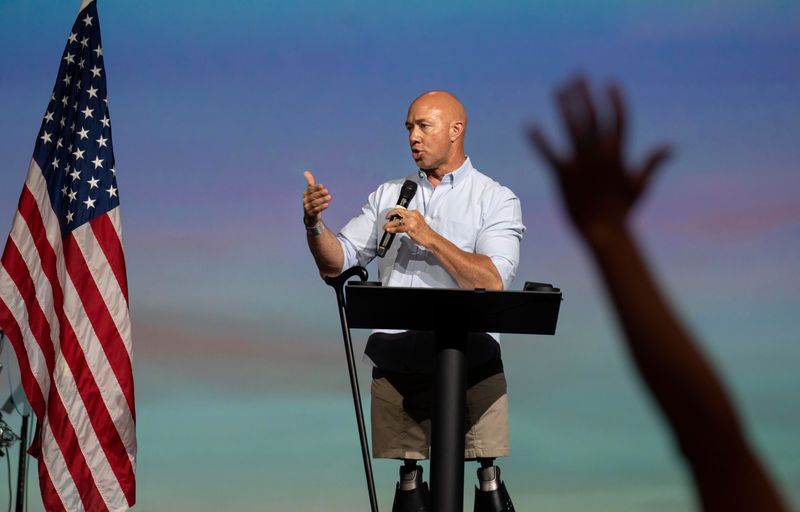
Meanwhile, U.S. Rep. Brian Mast, R-Stuart, posted a statement and recorded a message posted on X.com stating the bill contains “a lot of wins for the American people,” and emphasized the benefits of tax cuts and economic stimulus. He also took on the “myth” that the new law slashes Medicaid.
“We’re not cutting Medicaid — we’re removing those that have no business being on the Medicaid program at all,” Mast said, citing the states that have undocumented migrants on their Medicaid rolls.
Florida is not one of those states, however.
Advocate: Dental care likely hardest hit
Still, advocates of expanding health care see shortfalls in care developing as a result of the One Big Beautiful Bill becoming law, even if it’s not as great as that happening in other states.
Florida will still see increased costs because of the stepped-up work requirement checks in the bill and less federal money because of a change in a funding mechanism has been used to draw down federal money for the last 40 years, predicts Scott Darius, executive director of Florida Voices for Health, an advocacy organization aimed at improving health care access. It will likely hit something like pediatric dental care and services to people with disabilities, he said.
“Dental is always the first on the chopping block,” Darius said. “In Florida, we’re already in a tough place when it comes to oral health access.”
A University of Florida study found that, in 2021, more than 300 dental hospitalizations could have been prevented with timely care among those aged 0 to 20.
Dr. Paayal Bhakta, who works at the ACORN Dental Clinic in Brooker, near Gainesville, said she’s had to extract abscessed baby teeth, which if left untreated could lead to serious health complications like fatal blood infections.
“If a child needs sedation for dental treatment, it is very difficult to find openings and locations that can accommodate,” she said.
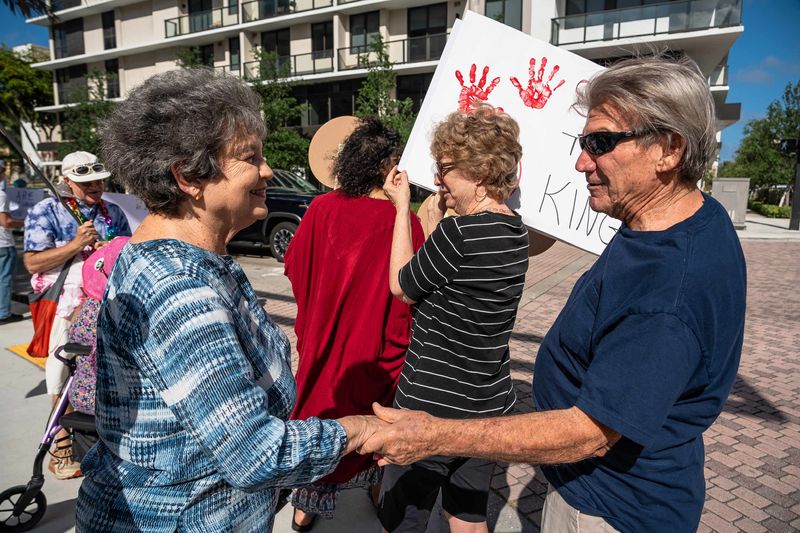
Going forward in Boynton Beach, Gottsagen plans to keep attending protests against the cuts and the Trump administration. Of the protests she’s been to, she said she’s been glad to see the next one is bigger than the one before.
“There’s a message there,” she said, of the potential disruption for her mother and her son. “They are cutting taxes so rich people get richer, and the elderly, people with disabilities, women, people of color, immigrants and the LGBTQI community will just disappear.
“The cuts to Medicaid will be a death sentence to many people,” Gottsagen said.
Anne Geggis is the insurance reporter at The Palm Beach Post, part of the USA TODAY Florida Network. You can reach her at ageggis@gannett.com. Help support our journalism. Subscribe today
This article originally appeared on Palm Beach Post: How ‘One Big Beautiful Bill’ affects Medicaid, rural hospitals, health and social services
Reporting by Anne Geggis, Palm Beach Post / Palm Beach Post
USA TODAY Network via Reuters Connect