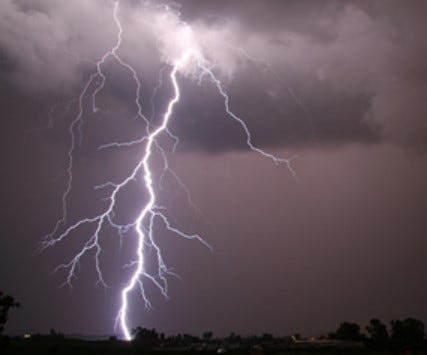
For years, various sayings and myths have downplayed the threat of lightning.
But after two females were struck near a north Columbus high school soccer field June 29, leaving one critically injured, it’s important to remember how real that danger can be.

The incident, which took place outside Northland High School, is a reminder that lightning strikes do happen — and knowing how to stay safe is essential.
How common are lightning strikes?
According to a CDC report from April 2024, the chances of being struck by lightning in a given year are less than one in 1 million. Nearly 90% of all lightning strike victims survive.
That’s not to say you should write off the possibility of being struck as impossible. From 2006 through 2021, 444 people died by lightning strike in the United States. That’s nearly 28 deaths each year.
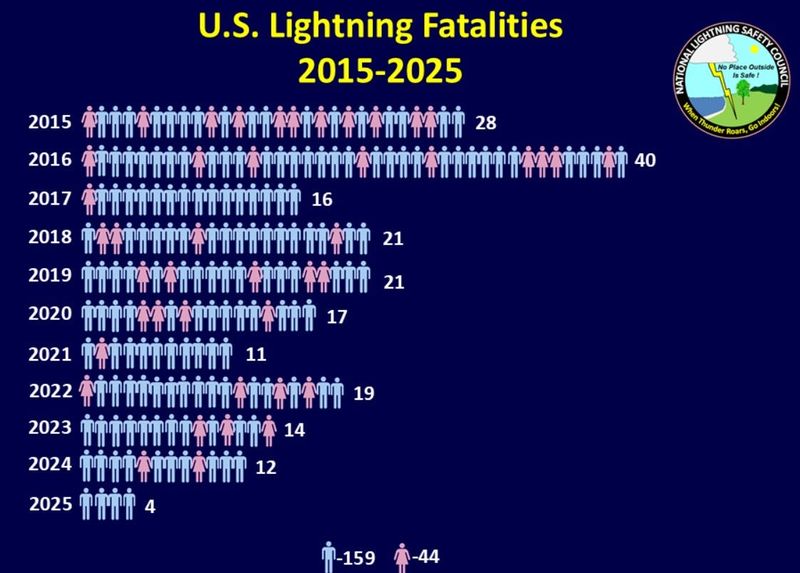
The National Weather Service and National Lightning Safety Council reported an average of 20 people killed by lightning per year between 2015 and 2025, with an additional couple hundred injured.
As of June 25, these agencies say four people have been killed by lightning in the U.S. this year.
When are lightning strikes most common?
Though lightning can occur any time of year, most deaths by lightning strike happen during the summer months, particularly in July.
In fact, of the 444 people who died by lightning strike from 2006 through 2021, over 33% died in July, compared to just over 22% in June and around 17% in August.
The least likely month in which to die by lightning strike is November, with zero deaths reported across the 16-year period.
Lightning deaths most commonly occur on weekends, specifically Saturday afternoons, and two out of three deaths by lightning strike occur between noon and 6 p.m.
Where is the risk of getting struck by lightning the greatest?
Southeastern states are most at risk when it comes to lightning strikes.
Excluding areas like the Rocky Mountains, where thunderstorms occur regularly across the summer months, lightning generally decreases from the Southeast to the Northwest.
From 2006 through 2021, Ohio was found to be middle-of-the-road with respect to lightning deaths in the United States, reporting somewhere between six and 15 deaths across the 16-year period. Fellow midwestern states Illinois, Indiana, Wisconsin and Michigan rated the same.
Here are the states with the most recorded lightning deaths and injuries.
What can I do to minimize my chances of being struck by lightning while indoors?
Though being indoors is a good idea during a storm, the belief that you can’t be struck by lightning while inside is a myth. In fact, one in three injuries by lightning strike occur indoors.
Luckily, there are ways to reduce your risk of being struck by lightning while inside.
What do I do if lightning strikes when I’m outside?
“When thunder roars, go indoors.”
This popular proverb actually isn’t a myth. The CDC recommends checking the forecast often and listening for distant storm activity to avoid being outdoors during thunderstorms.
If you’re stuck outside, there are still ways to minimize the risk of being struck.
Reporter Emma Wozniak can be reached at ewozniak@dispatch.com, or @emma_wozniak_ on X, formerly known as Twitter.
This article originally appeared on The Columbus Dispatch: What you need to know about lightning safety amid severe thunderstorms in Columbus
Reporting by Emma Wozniak, Columbus Dispatch / The Columbus Dispatch
USA TODAY Network via Reuters Connect