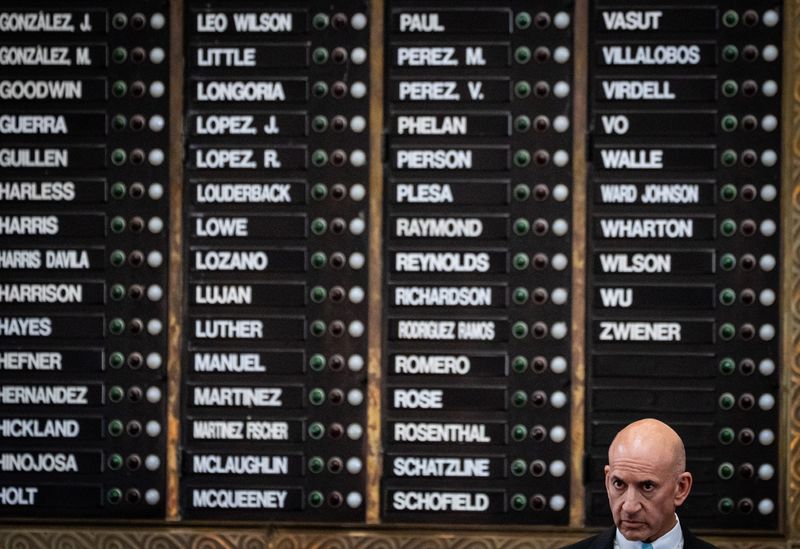
Sunday was the second to the last day of the 2025 legislative session, and more importantly, the final day to push legislation over the finish line and onto the desk of Gov. Greg Abbott.

Much of the action in both chambers focused on measures not identified as priorities of either Abbott or legislative leaders. But a few pieces of significant legislation were debated and a couple of priorities of top state leaders fell by the wayside. Typically, the final day of the legislative session is mostly ceremonial.
Will state judges get a pay raise?
Legislation that would have granted state district judges their first pay raise in a dozen years has appeared to fall victim to a House-Senate standoff in closing days of the session.
But some members of the House and Senate spent Sunday trying to put a deal together in the effort to pass on the final day of the session. It would require suspending several rules, but it could be done.
Senate Bill 293 passed the House last week without much controversy after the sponsor, state Rep. Jeff Leach, R-Plano, made clear that members would not be voting themselves a backdoor increase to the pensions they earn for extended service in the Legislature. Lawmakers’ pensions would still be calculated as if judges’ pay remained $140,000 per year, and not at the $175,000 the bill would have paid judges.
Under state law, lawmakers are paid only $7,200 a year. However, once they reach eight years of service, they are eligible for state pension that is in line with a salary-linked pension that judges can draw. The more years of service, the more valuable the pension of judges — and lawmakers — is.
When SB 293 returned to the Senate, the upper chamber sought to nullify the decoupling of judge-lawmaker pensions without consulting the House. With the legislative session ending Monday, the two chambers would have to agree on SB 293 by midnight Saturday. That deadline came and went with no deal on the bill.
Stay tuned.
Bid to let attorney general prosecute election fraud falls apart
A proposal that would have granted Attorney General Ken Paxton new powers to enforce Texas’ election laws died on Sunday after House and Senate lawmakers failed to reach a compromise.
The Senate’s expansive version of House Bill 5138 would have empowered Paxton to prosecute any election code violation at any time. In contrast, the House version allowed the attorney general to take on election fraud cases only if the local district attorney waited more than six months to prosecute.
The legislation was all but certain to face legal challenges if it went into effect. The all-Republican Texas Court of Criminal Appeals struck down a similar law in 2021, ruling that the state Constitution forbids the executive branch from taking on the judicial-branch duty of prosecuting crimes. District attorneys are considered to be part of the judicial branch, while the attorney general is not.
Voter citizenship bill left in dust with time running out
Legislation that would have required proof of citizenship to register to vote was left languishing as the clock was running out of the session.
Though state and federal law already prohibits noncitizens from voting, Senate Bill 16 filed by Mineola Republican Sen. Bryan Hughes would have required voters to prove their citizenship to their local voter registrar.
The bill sought to create a bifurcated voter registration system and would require applicants and already-registered voters to provide a document like a birth certificate, passport or naturalization certificate to be eligible to cast a ballot in state or local elections. If a voter does not provide citizenship documents, they would be able to vote only in federal races.
Expansion of medical marijuana program clears both chambers
Legislation to broaden the umbrella of the state’s medical marijuana program to including chronic pain and Crohn’s disease was sent to the governor.
If signed into law, House Bill 46 would allow patients eligible for the state’s medical marijuana program to use products like cannabis patches, lotions, prescribed inhalers and vaping devices. The list of qualifying conditions would also expand to include chronic pain and terminal or hospice care.
This article originally appeared on Austin American-Statesman: Down to the wire: Setback for Paxton, no deal on voting bill ahead of final session’s day
Reporting by John C. Moritz and Bayliss Wagner, Austin American-Statesman / Austin American-Statesman
USA TODAY Network via Reuters Connect