

Q & A on how to avoid ticks this season
By Barb Pert Templeton

The Michigan Department of Health and Human Services (MDHHS) is encouraging Michigan residents to take steps to avoid tick bites while enjoying the outdoors. Tick-borne diseases, particularly Lyme disease and anaplasmosis, are increasing across the state.
A recent press release from the Department of Natural Resources (DNR) stated that Lyme disease cases in Michigan have increased by 168% over the last five years. The state recorded 1,215 cases in 2024, as compared to 452 cases in 2020. Anaplasmosis cases in Michigan have seen an almost fivefold increase over the last five years, with 82 cases in 2024 compared to 17 in 2020.

“Preventing tick bites is the best way to prevent tick-borne diseases, including Lyme disease and anaplasmosis,” said Dr. Natasha Bagdasarian, chief medical executive. “If you find a tick attached to your body, promptly remove it. Monitor your health, and if you experience fever, rash, muscle or joint aches or other symptoms, or if you suspect a tick has been attached for more than 24 hours, consult with your medical provider.”
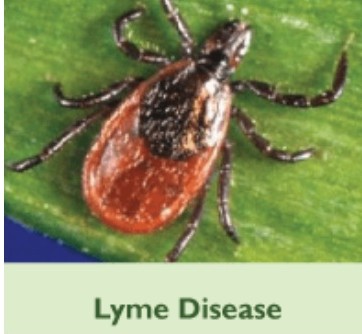
Both Lyme Disease and anaplasmosis are transmitted by what’s commonly known as the blacklegged or deer tick. The blacklegged tick, which has eight legs, is well-established in parts of Michigan’s Upper and Lower Peninsulas and has been expanding its range over the years.

The MDHHS started the ‘Got a Tick Submit a Pic’ program several years ago and have had hundreds of photos emailed to them by state residents.
Signs and symptoms of tick-borne disease typically begin one to two weeks after a tick bite, often after being in wooded or brushy areas where ticks commonly live. Early symptoms can be non-specific and include fever or chills, rash, headache, fatigue and muscle aches. Early treatment with appropriate antibiotics can decrease the risk of serious complications.
Blue Water Healthy Living sent some questions to Laina Stebbins, associate public information officer with MDHHS, to find out more about ticks and how to avoid them this season.
Blue Water Healthy Living: Why are the numbers for ticks increasing so much (168%)? Better reporting from the public or?
Laina Stebbins, associate public information officer with MDHHS: Lyme disease cases have increased by 168% over the last five years, with 452 cases in 2020 and 1,215 cases in 2024. There are many variables that could play a part, such as more ticks surviving winter, changing behavior of animals that spread ticks/disease, physician awareness leading to more testing and more. In 2022, there was a national definition change for Lyme disease. A case definition is a set of criteria used to determine whether an individual should be classified as having a particular health condition, like Lyme disease. Epidemiologists use these case definitions to classify and
count cases for public health data. Some of the increase in case numbers could be attributed to this change in the Lyme disease case definition.
BWHL: What is the most populated tick area? Tall grass, woods?
Stebbins: Ticks like shady, moist areas in wooded locations and tall grasses. Well-groomed lawns that are mowed often are less of a risk.
BWHL: Should people be concerned that the ticks are in their own backyards?
Stebbins: Yes, ticks can be carried into yards on birds and small mammals, so it is possible.
BWHL: How can someone keep their pets safe in their own backyard?
Stebbins: Use tick and flea preventatives and check pets regularly for ticks.
BWHL: If you pull a tick off you or your pet, should you immediately seek medical attention or wait for symptoms? Stebbins: A photo of your tick can be emailed to MDHHS-Bugs@michigan.gov for identification, as not all species of ticks carry and transmit disease. The person who was bitten should be monitored for symptoms such as rash, fatigue, fever, etc. occurring within 30 days of the latest tick bite or visiting an area with ticks. Should illness occur, seek prompt medical attention. For any questions about pets/animals, contact your veterinarian.
BWHL: What does health and human services recommend for prevention?
Stebbins: When in areas with ticks, stay on well-groomed trails and avoid contact with high grass, brush and ground covered in fallen leaves. Apply EPA-approved insect repellents. Wear light colored clothing so ticks can be spotted easily. Tuck your shirt into your pants and your pants into your socks. Perform tick checks and shower after being outdoors. Tumble dry clothes on high heat for 10 minutes after being outside.
BWHL: What time of year is most prevalent for tick bites?
Stebbins: Early spring through late fall. Ticks can be active at temperatures above 400F.
BWHL: I notice it says to send photos of the tick – is that something people do a lot?
Stebbins: Yes – so far this year, MDHHS has received over 400 photos of ticks for identification. The photos can be sent to MDHHS-Bugs@michigan.gov and more instructions can be found at this link. More information on ticks and tickborne disease can be found at www.michigan.gov/lyme.
