

By Jana Choukeir and Eman Abouhassira
DUBAI, June 27 (Reuters) – A tanker reported being struck by a projectile in the Strait of Hormuz on Saturday, Britain’s maritime security agency said, after the United States and Iran each launched strikes in the worst escalation since they signed their interim peace deal.

The warring sides each accused the other of violating the agreement they reached two weeks ago to end the four-month-old conflict. Washington said it hit Iranian targets overnight, while Iran said it had struck targets linked to U.S. forces on Saturday in response.
Saturday’s attack on a tanker in the strait followed an attack on a cargo ship on Thursday that triggered the escalation. Iran has made a fresh bid to assert control over the world’s most important energy shipping route, which has begun to reopen over the past two weeks after months of disruption.
Britain’s UKMTO maritime security agency said the tanker that was hit on Saturday had sustained damage to its bridge, with all crew reported safe. The Joint Maritime Information Center, run by a coalition of navies protecting shipping, said it had raised its security threat level as a result of recent incidents.
Iran has not directly commented on reports of specific attacks on ships. But Iranian state television reported that the Revolutionary Guards had fired “warning shots” towards unspecified ships attempting to pass through channels not approved by Iran, and that this was now prompting other ships to seek Iranian permits before attempting to cross the strait.
Earlier, Iran’s foreign ministry said it had launched “defensive” attacks on U.S.-linked military targets, while Bahrain, which hosts the U.S. Navy’s regional headquarters, reported an Iranian drone attack. The U.S. military did not immediately respond to the reports.
IRAN ASSERTS CONTROL OVER VITAL STRAIT
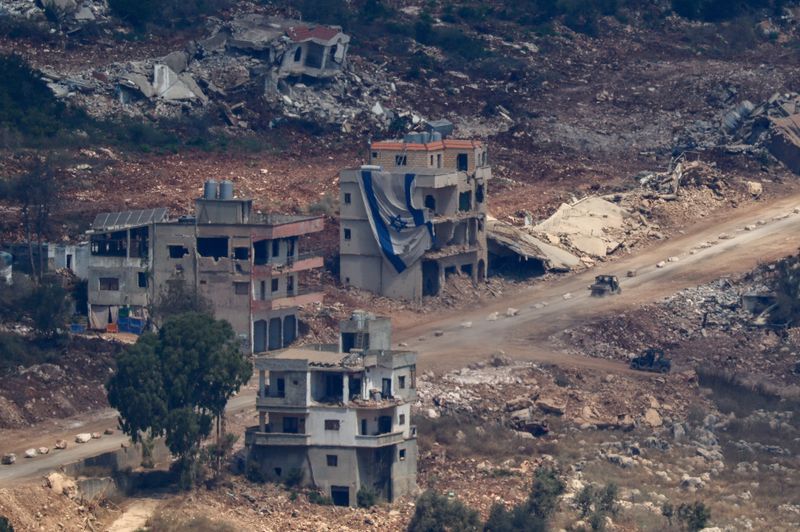
Iran has accused the United States of failing to uphold the interim agreement, in particular by failing to sustain a promised ceasefire in Lebanon, which U.S. ally Israel invaded in March in pursuit of the Iran-backed militant group Hezbollah.
Israel and Lebanon have repeatedly agreed U.S.-brokered ceasefire deals, the latest of which was announced on Friday. But these have so far had only limited overall impact, with Israel insisting it will not withdraw from a swathe of territory it has seized and Hezbollah repeatedly rejecting calls to give up its arms as long as Israeli troops remain in place.
Lebanese state television reported an Israeli drone strike on Saturday in the Nabatiyeh area in the south, which has seen Israeli strikes throughout the conflict.
Mohsen Rezaei, an adviser to Iran’s supreme leader, said the United States had violated the war-ending memorandum of understanding by supporting what he called proxy forces in the region and creating tensions in the Strait of Hormuz.
Throughout the war, Iran has responded to U.S. attacks by hitting neighbouring Gulf states that host large U.S. military bases. Iranian state television said the Revolutionary Guards had delivered “a decisive response” after U.S. forces hit a communications tower in the port city of Sirik. Iran’s Mehr news agency said the Iranian port was operating normally with no damage reported to facilities or equipment.
Bahrain said Iran’s latest attacks violated the memorandum of understanding.
Hundreds of ships, including tankers laden with oil, have been blockaded inside the Gulf since the war broke out. As they began leaving through the strait over the past two weeks, oil prices have tumbled close to pre-war levels on the resulting surge in supply.
But fully resolving the global energy crisis would require sustaining two-way traffic through the strait at pre-war levels, likely to be possible only if shippers come to accept it as safe.
Washington has been promoting a southern lane along the coast of Oman, while Tehran, which ultimately aims to charge fees for use of the strait, wants ships to use a northern route through its waters and under its control.
Ebrahim Azizi, the head of the Iranian parliament’s national security committee, said on Saturday that any violation of Iran’s shipping instructions would be met decisively.
‘VIOLENCE WILL BE MET WITH VIOLENCE,’ VANCE SAYS
U.S. Vice President JD Vance, President Donald Trump’s chief negotiator on the conflict, said the Americans had adhered to the ceasefire deal, and Iran was to blame for any return to conflict that might result from its actions.
“Iran signed a ceasefire agreement. We have honored it. If they have disagreements about how the MOU is being applied, they can pick up the phone. But violence will be met with violence,” Vance said on X.
As has regularly been the case throughout the war, the escalation unfolded over the weekend while markets were closed, giving the sides two days to stake out tough positions and exchange fire without causing any immediate surge in oil prices.
In past cases, including both of the last two weekends, bitter words on Friday and Saturday were followed by more ameliorative positions from both sides in time for markets to reopen on Monday.
Before the renewed outbreak of violence, oil prices fell about 3% on Friday, on course for a steep weekly fall.
(Reporting by Reuters bureaus; Writing by Daniel Trotta and William Mallard; Writing by Peter Graff; Editing by Chris Reese, Alexander Smith and Andrew Heavens)
By Jana Choukeir and Eman Abouhassira | Reuters | © Copyright Thomson Reuters 2026.
