By Karin Strohecker
LONDON, May 15 (Reuters) – Venezuela launched a “comprehensive public debt restructuring” on Wednesday, but still faces major hurdles to pull off one of the largest and most complex sovereign reworks on record.

The government and state oil firm Petroleos de Venezuela (PDVSA) have about $60 billion of bonds that are in default, although analysts estimate that once accrued interest, other claims and arbitration awards are included, total liabilities could top $150 billion.
Here are some key questions and answers:
WHICH DEBTS WILL THE RESTRUCTURING ADDRESS?
The government has said the goal is a “normalisation” of its outstanding debt obligations, including its international government debt and PDVSA’s bonds.
Its statement is less clear about other debts. Official debt – loans from multilateral lenders – would be “addressed through institutional normalisation”, while there is no mention of how it will handle the bilateral debt it has borrowed from other governments around the world.
According to JPMorgan’s analysis, Venezuela owes around $2 billion to both the Inter-American Development Bank and the Development Bank of Latin America and the Caribbean. Bilaterally it owes at least $10 billion to China, with Brazil and Japan also sizeable creditors.
JPMorgan said the restructuring of Venezuela’s bonds and commercial debt could take a different – and potentially faster – path than its defaulted loans to ‘official sector’ creditors.
WHAT ARE VENEZUELA’S BASIC TENETS?
Venezuela says the restructuring would be grounded in four principles, namely sustainability, comprehensiveness, good faith and transparency, and celerity, or speed.
But analysts have doubts about how quickly Caracas will be able to proceed, while still ensuring the process looks thoroughly enough at all types of claims and U.S. legal issues.
Nonetheless, the intent to restructure has added to this year’s sharp rally in the country’s bonds.
Analysts at Citi said Venezuela was moving faster than expected toward a restructuring, stressing that although not imminent, it was important that the process is now credibly underway.
WHAT HAPPENS NEXT?
Venezuela has set out an ambitious timeline, pledging to deliver a macroeconomic framework and a debt sustainability analysis (DSA) in June.
The framework would spell out economic assumptions and forecasts, while the DSA would assess its ability to service debt and signal how drastically the debt must be restructured.
Both usually involve the International Monetary Fund and can take months to compile. The June timeline suggests the Fund might not play a prominent role, a point that has raised eyebrows among analysts and investors who are used to the IMF providing credible, independent assessments in these kinds of situations.
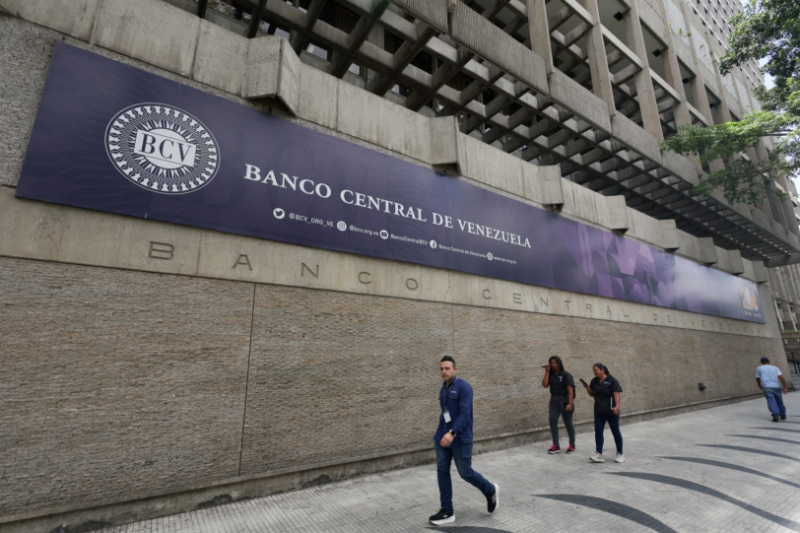
The IMF said on Thursday it had not been involved in the process so far, while the interim President of Venezuela’s central bank, Luis Perez, told Reuters a delegation would travel to Washington by month-end to meet with the IMF.
WHEN CAN NEGOTIATIONS BEGIN?
Caracas has hired U.S.-headquartered financial services firm Centerview Partners after Washington’s recently issued Office of Foreign Assets Control licence allowed it to appoint advisers.
However, the licence does not allow Venezuela to engage in negotiations with bondholders and hammer out a deal.
One group of investors has already formed the ‘Venezuela Creditor Committee’ (VCC).
AJ Mediratta, partner at Greylock Capital Management, which is part of the VCC, said the committee had been signalling to U.S. authorities for the past year that it was ready to engage, but that Venezuela itself was not yet in a position to begin talks.
Analysts think Washington could move quickly to now grant permission to enter negotiations.
(Reporting by Karin Strohecker, additional reporting by Johann M Cherian, editing by Marc Jones and Kirsten Donovan)