

By Dave Sherwood
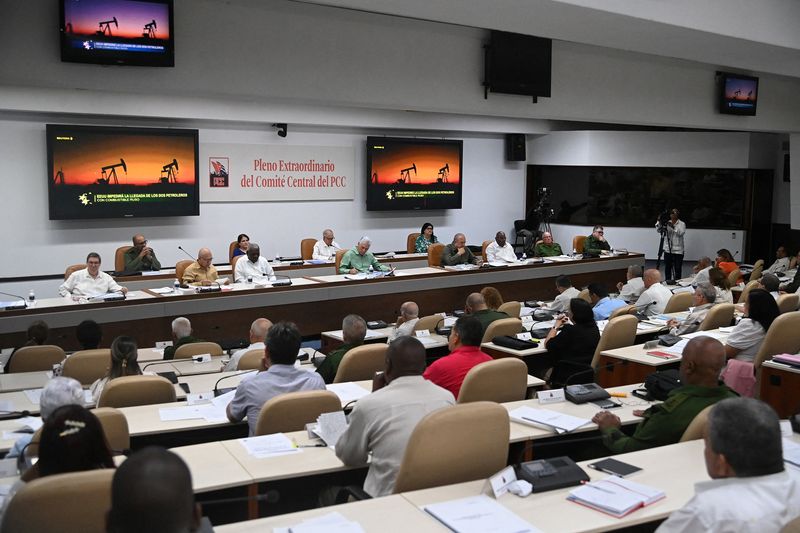
HAVANA, June 18 (Reuters) – Cuba’s prime minister on Thursday presented lawmakers with sweeping measures backed by the Communist Party and former leader Raul Castro that would privatize a vast swath of its socialist economy in a bid to survive punishing U.S. sanctions.

The measures, if approved by lawmakers and implemented, would represent the single largest change to Cuba’s socialist model since former leader Fidel Castro’s 1959 revolution and a major shift towards a market economy.
The reforms, presented by Prime Minister Manuel Marrero, would open the door to private real estate development on the Caribbean island, transform state-owned businesses into private commercial ventures with shares and equity stakes and allow private banks to enter Cuba’s once state-dominated finance sector.
The measures would also vastly reduce red tape on the island’s privately held businesses and entrepreneurs.
Marrero told lawmakers the reforms recognize the market as “an instrument for the efficient allocation of resources,” in a highly unusual concession from a Communist Party official in Cuba.
But he cast the measures as true to Cuba’s socialist roots.
“These transformations do not constitute a deviation from our socialist project; on the contrary, they respond … to its development,” Marrero said. “The updating of the economic and social model has the essential purpose of improving the quality of life of our compatriots.”
The list of 175 measures, presented in a nearly two-hour-long speech to lawmakers by the prime minister, now requires a vote of the National Assembly for implementation.
Debate and discussion of the measures ensued in the assembly immediately following their presentation.
Many of these open-ended proposals have surfaced, both inside and outside Cuba, for years, but pressure from the United States has once again pushed them to the fore.
Severe Trump administration sanctions – including a months-long oil blockade – have left Cuba with little room to maneuver, devastating its already ailing economy, forcing an exodus of foreign businesses and decimating the all-important tourism industry.
Long-time Communist Party leader Raul Castro – indicted in May in the United States on murder charges – backed the reforms in a written letter presented first to the politburo on Wednesday, and then to lawmakers on Thursday, calling them “beneficial” and urging their speedy implementation.
(Reporting by Dave Sherwood; Additional reporting by Ayose Naranjo; Editing by Daniel Wallis)
By Dave Sherwood | Reuters | © Copyright Thomson Reuters 2026.
