Sankofa House, an addiction treatment facility that gained notoriety for its peer-supported recovery programming, is slated to lose all its funding this August due to Milwaukee County budget cuts.

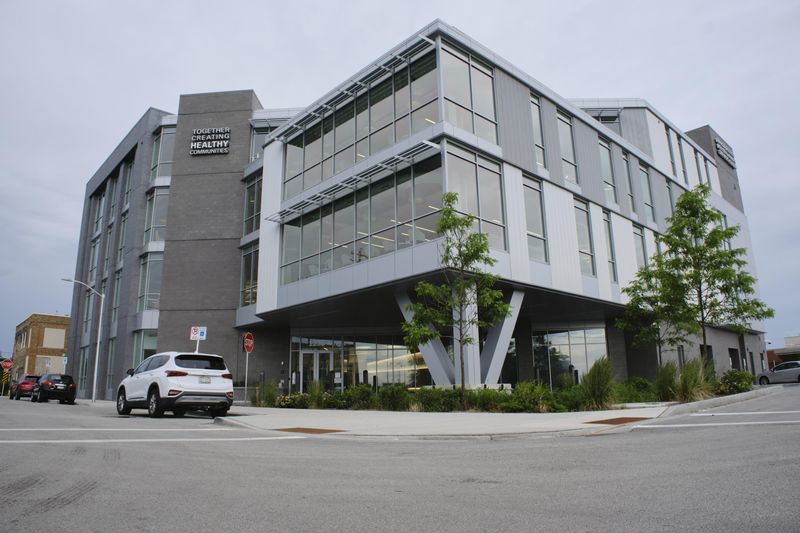
Sankofa House founder Torre Johnson and supporters of the recovery house spoke out against the county’s decision to defund the facility during a Milwaukee County Mental Health Board meeting on Thursday, June 11, at the Marsha P. Coggs Health and Human Services Center.
The county will stop funding the facility for a host of reasons, including the loss of federal grants, restrictions on how federal funds can be used to address substance use disorder and a multimillion-dollar deficit in the county budget, according to officials who spoke at the Thursday meeting.
“Our reserves are dwindling,” said Joy Tapper, chair of the Milwaukee County Board of Health Finance Committee.
“We encourage providers to continue to work with their Medicaid HMOs, to continue to work with philanthropic organizations, and to look for other sources of funding, both short and long term.”
Sankofa House does not have another private funding source lined up, according to Johnson, meaning it cannot pay to house residents recovering from substance abuse, which could force the facility to close.
Funding cuts put Sankofa House residents in jeopardy
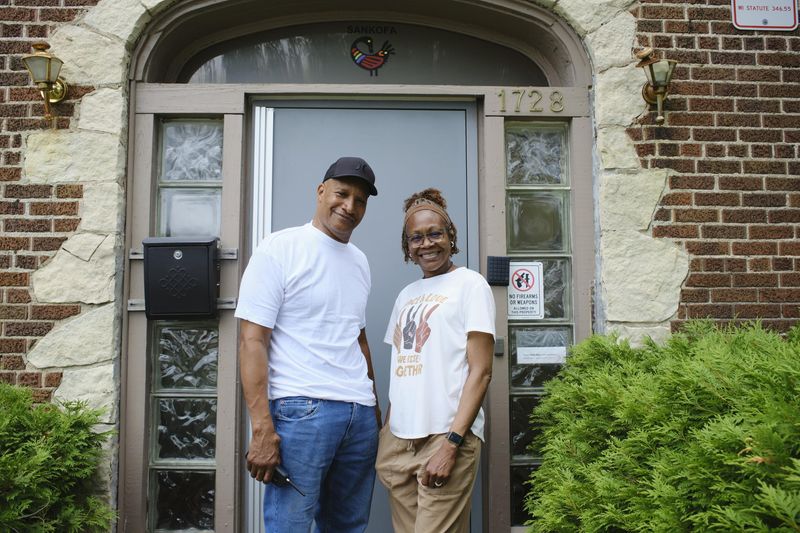
Monica Taylor-Linyard, 59, a counselor and administrator with Sankofa House, always carries the center’s house phone with her.
When it rings, she answers.
Sankofa House can serve up to 12 men and six women at a time and is run by staff who have previously lived with substance use disorders.
According to Taylor-Linyard, who has also overcome substance abuse, this model allows residents to trust the program.
If the treatment center closes, some residents will not continue their addiction treatment because they won’t trust other facilities in the city, according to Taylor-Linyard.
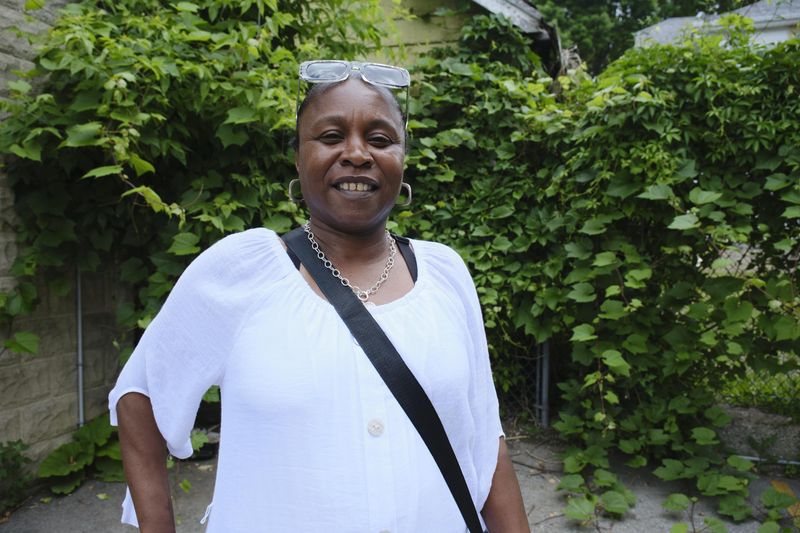
“I have nowhere to go,” said Kyesha Felts, 51, a Sankofa House resident recovering from alcoholism.
“Monica and Torre instilled in me the tools, and I’m taking those with me, but I’m still lost.”
According to Felts, many who use Sankofa’s programming remain sober for years.
“We need this,” she said.
Federal grant losses impact addiction treatment funding
The Milwaukee County Department of Health and Human Services’ Behavioral Health Services office has helped underinsured and low-income residents address substance use disorders for over 20 years, but the county’s budget shortfalls have changed this.
Sankofa House’s rehabilitation services are entirely funded by Milwaukee County, which is facing a $46 million budget gap for 2026, according to the adopted budget.
In past years, the department would combine tax dollars with federal grants to fund programs like Sankofa House.
Now, Behavioral Health Services is facing its own deficit of about $5 million, and roughly $1 million of that is for substance use disorder services alone, according to Jill Lintonen, marketing and communications director with the county Department of Health and Human Services.
There are a few major reasons why the funding gap is impacting addiction treatment services like Sankofa House.
First, the county is not legally required to fund substance abuse treatment.
To reconcile the substantial budget gap and meet legally required funding obligations, such as operating costs, the approved budget cut most of the tax dollars allocated for direct substance abuse treatment facilities, like Sankofa House, according to Lintonen.
Secondly, the federal Injection Drug Use Treatment Grant, which gave the county about $530,000 each year, ended in 2025 and will not be renewed, according to Lintonen.
Lastly, the county recently confirmed that the federal Substance Use Block Grant, another program aimed at preventing and treating substance use, can no longer be used to pay for recovery housing services.
Other grants are available to help cover some of the costs for county-supported recovery services, but many are restricted to specific demographics, including groups addicted to specific substances, according to Lintonen.
To receive the grant money in the past, Sankofa House partnered with Wisconsin Community Services, a local nonprofit that would enter into a “Fee for Service” contract with the county for the treatment center every four years. The allocation of those dollars was considered annually.
That contract was approved in late 2025 when county officials expected multiple federal grants to be renewed, but it was revoked in April after the department confirmed that those grants were unavailable, according to Lintonen.
Sankofa House was notified that its funding would be cut on May 19, about 90 days before the end of its normal funding cycle. Contractually, the county is required to give the treatment center 30 days’ notice for funding cuts.
“What we are doing now is we are putting people on the streets,” Johnson said.
Sankofa House is now looking for alternatives to give current residents more time to adjust and find housing.
One idea, according to Johnson, is to update Sankofa House’s designation from a recovery center to bridge housing, a temporary service for people who are significantly below the federal poverty line and have a history of substance abuse.
Johnson said representatives of the county said they could not grant the change in designation. According to Lintonen, the department is already grappling with high spending for inpatient placement and adult mental health residential services.
According to county data, fatal overdoses are declining, but deaths are still a concern to Johnson and Taylor-Linyard.
In 2025, there were about 387 fatal overdoses in Milwaukee County, and 293 of those were in the City of Milwaukee, according to Milwaukee County Office of Emergency Management overdose data.
“We were celebrating the decrease in overdoses; now we will see an increase …” Johnson said.
Recovery services available across the city
Milwaukee still offers a range of resources for those who would like to take the first step toward recovery. City clinics are available, and the addresses can be found here.
Additional resources can be found below.
Everett Eaton covers Harambee for the Journal Sentinel’s Neighborhood Dispatch. Contact: eeaton@usatodayco.com.
Neighborhood Dispatch reporting is supported by Bader Philanthropies, Zilber Foundation, Journal Foundation, Northwestern Mutual Foundation, Greater Milwaukee Foundation, and reader contributions to the Journal Sentinel Community-Funded Journalism Project. Journal Sentinel editors maintain full editorial control over all content. To support this work, visit jsonline.com/support. Checks can be addressed to Local Media Foundation (memo: “JS Community Journalism”) and mailed to P.O. Box 85015, Chicago, IL 60689
The JS Community-Funded Journalism Project is administered by Local Media Foundation, tax ID #36-4427750, a Section 501(c)(3) charitable trust affiliated with Local Media Association, and EnMotive, a subsidiary of USA TODAY Co.
This article originally appeared on Milwaukee Journal Sentinel: County funding deficit threatens Sankofa House addiction recovery program
Reporting by Everett Eaton, Milwaukee Journal Sentinel / Milwaukee Journal Sentinel
USA TODAY Network via Reuters Connect
By Everett Eaton, Milwaukee Journal Sentinel | USA TODAY Network