

Editor’s note: This is the first installment of a two-part series.
OPLIN — Some questions you just can’t anticipate.

“Hey, you want to nuke somebody?”
It was Atlas Missile Museum of Texas board member Scott Voss doing the asking. It took me a second to sort the question in my head.
“Sure. Can I pick my town?” I laughed. I started thinking about this one speed trap way up north back in the 90s. Even though I was getting passed on the left and the right, I’m sure it was my out-of-state plates that got me pulled over. Hmm …
Nah. Life’s too short for grudges, even when you can make them glow in the dark.
Fast and dirty
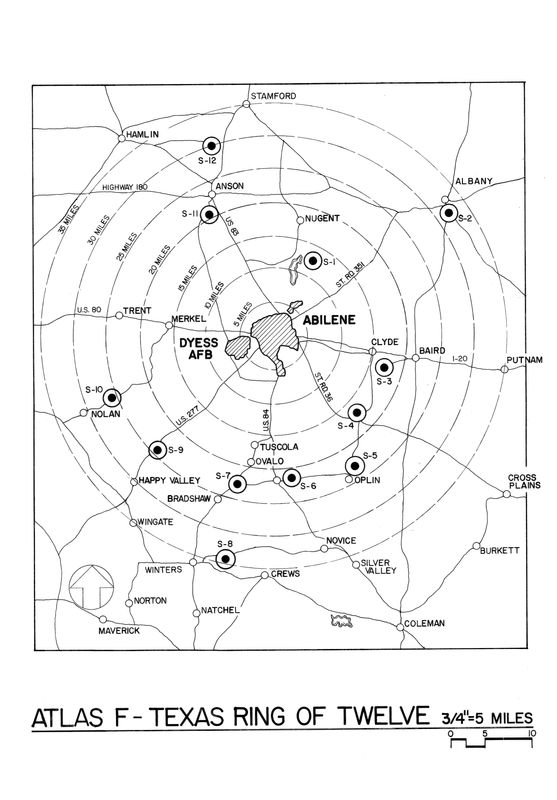
In the early 1960s, bombers weren’t the only long-range weapons controlled by Dyess Air Force Base. For a brief period, Dyess was home to the 578th Strategic Missile Squadron which commanded a ring of 12 underground Atlas missile silos surrounding Abilene.
Construction began in June 1960 at a breakneck pace and finished just in time two years later for the Cuban Missile Crisis. The Atlas, a one-and-a-half stage rocket, was the United States’ first Intercontinental Ballistic Missile system.
Bruce Townsley is the owner of the silo off FM Road 604. In 1997, he bought Site 5, as it was known back in 1962, as a remodeling project.
“One of the important things to know is these things were built quick with off-the-shelf parts. There was nothing new that went into this,” Townsley said.
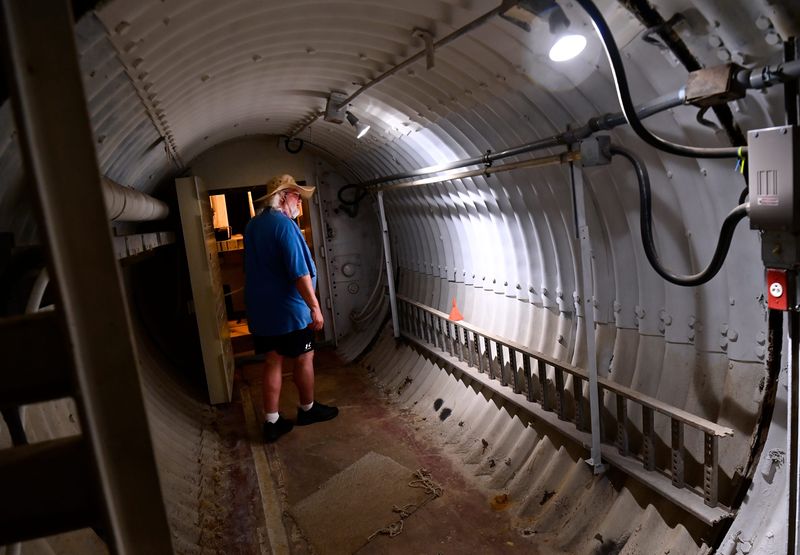
The short steel-lined tunnel connecting the Launch Command Center to the silo illustrated the get-it-done-yesterday ethos of the era in which it was built.
“If you go to a Titan Missile Museum, it’s real different. It’s all polished steel plate, and the cable trays are hydraulically suspended. People spend some big bucks on it,” Townsley said. “Not here. The tunnel you’re in is a culvert. It’s a corrugated quarter-inch steel culvert, but it’s still a freaking culvert.
“These were just built fast and dirty.”
Built and then disposed
Each silo was 185 feet deep and over 50 feet wide, filled by levels of steel grated flooring and the Missile Enclosure Area holding the rocket. Overhead, pneumatic rams would open twin 70-ton concrete doors and the entire gantry would lift out of the silo to launch the missile.
The underground Launch Command Center housed the control room and living quarters for the small crew. The entire facility was designed to withstand a nuclear strike — all of it balanced on massive springs that still allow the floor to jiggle if you and a friend wiggle the right way.
Like a lot of Cold War projects, the paint had barely dried on these Atlas silos before the government moved on and decommissioned them. By the time the last silo closed in March 1965, advances in solid fuel boosters had made liquid-fueled Atlases obsolete.
The missiles, their volatile fuel and any sensitive equipment were removed from silo compounds, which were eventually sold to the public. In succeeding years, the 12 silo complexes have seen a wide range of uses, from using a silo as a Scuba diving location, restoration into museums and energy efficient underground living spaces.
The ‘Lunch Control Center’
Since he bought it, Townsley has been converting his home into the nonprofit museum for the day when he won’t be around to care for it anymore.
It’s not the only Atlas missile silo that’s a museum in the area, of course. Larry Sanders’ Lawn Atlas Missile Base is about 12 miles away.
Even though both silos were identical at one time, there’s a big difference between the two missile bases. While Sanders Launch Control Center faithfully reproduces its look from the early 60s, you wouldn’t necessarily want to live there.
Townsley’s LCC on the other hand looks much more like a modern apartment. He jokes that sometimes he calls it his “Lunch Control Center.”
The biggest difference is in the silo itself where at Site 5 all of the steel platforms are still in place. By contrast, the blast door at Sanders’ silo opens to a forbidding wide-open hole. Sixty feet down it disappears into blackness, water and the remains of its own gantry.
‘Do you want to play a game?’
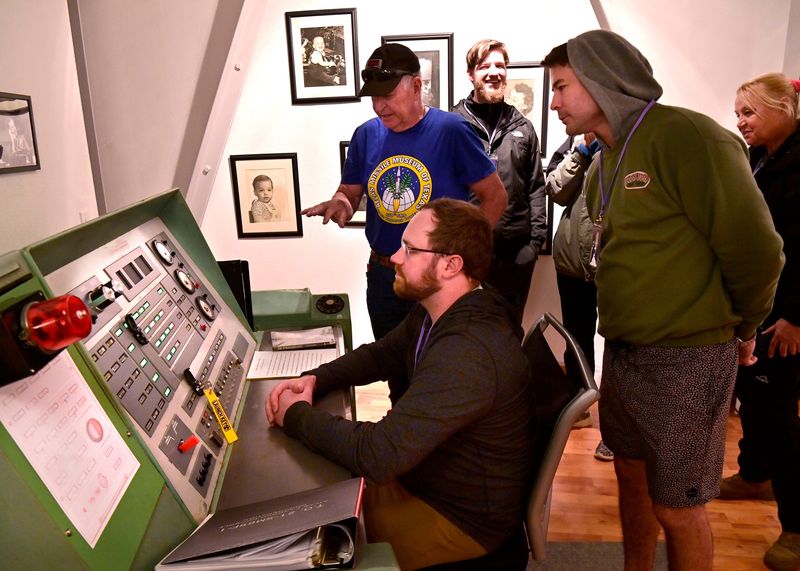
Voss and Townsley directed me to a console recreated by another board member. Straight out of a Cold War thriller, it’s a meticulously exact replica of the original fire control station for the missile — right down to the color-changing buttons, the commander’s vocal instructions and the rumbling sound at the end of the missile’s launch.
I found my mind returning to the Mathew Broderick movie “War Games” more than once.
“They did a stupendous job on this,” Townsley said. “They actually stopwatch-timed certain procedures to make sure they were operating correctly, and that the lights came on at the right time.”
It’s fun, but it’s a little unsettling too. Those men never had to fire their missile, and I’ll bet when they left, they were thankful another day had passed without having to push that button.
If you, on the other hand, would like to push that button — guilt-free, I might add, you can reach out to the museum through their Facebook page or website.
You’re unlikely to glow in the dark, but you could still have a blast.
This article originally appeared on Abilene Reporter-News: Want to nuke someone? You sorta can at missile silo museum | Exclusive
Reporting by Ronald W. Erdrich, Abilene Reporter-News / Abilene Reporter-News
USA TODAY Network via Reuters Connect

By Ronald W. Erdrich, Abilene Reporter-News | USA TODAY Network
