When Will Karoll was 18 years old, he moved from a suburb of Sydney, Australia’s second-largest city, to Melbourne, its largest. Over the next 18 months, he pulled kegs at a bar, cut meats at a butcher shop and sold wine — all ways of supporting himself while he pursued his real goal: to develop punting skills good enough to take him places.
Karoll was a month out of high school when he started training at Prokick Australia. That academy, since its founding in 2007, has exported scads of specialists into American football programs.

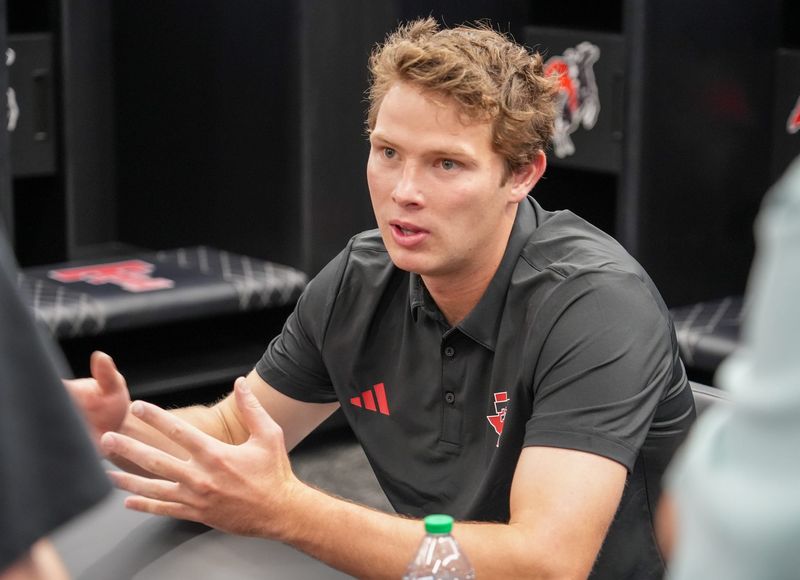
“There are smaller branches in other parts (of Australia), but it’s main base is Melbourne,” said Karoll, who joined the Texas Tech football team in January. “That’s where I moved and I had to work and live and make a living down there. We trained almost every day, so that was really cool. We got film and sent it over to coaches and just kind of hoped for the best. Their connections and their knowledge and expertise kind of speaks for them.”
Prokick Australia’s website says over the past two decades more than 400 of its Australian athletes have earned U.S. college scholarships and that six of 32 current NFL punters are Prokick alums. Its instructors all have played or coached in one or more of the NFL, CFL, Australian Football League or the NCAA.
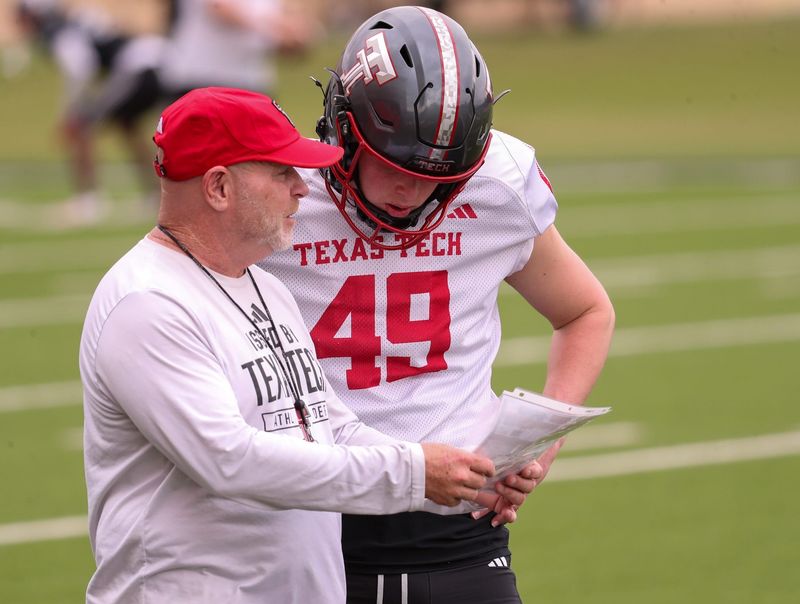
Karoll’s is another Prokick success story. In two years at Tulane and one at UCLA, all as the first-string punter, Karoll has posted a 43.4-yard career average and twice earned honorable mention all-conference recognition. He’ll be the Red Raiders’ third Australian punter of the past decade, following Dominic Panazzolo, who had the job in 2017 and 2018, and Jack Burgess, who had it the past two years.
The 6-foot-4, 215-pound senior doesn’t fit a prevalent Australian punter stereotype, though. No rollout, rugby-style punting from him.
“I roll out a little bit, but it’s not my strong suit,” he said. “The traditional style is what I like to do. It’s more just kind of what you’re good at, and then I also saw as a point of difference, most Australian kids can spiral really well, like traditional style, but I felt as though it was something I could really grow my game on, and it’s kind of helped me because everywhere I’ve been has been traditional style.
“We haven’t rolled out really at all, so I think it’s really important for my career development, because that’s obviously what they do in the NFL and that’s my end goal, but it’s also just something that I have a lot of fun with.”
During Karoll’s time with Prokick, he was in a training group of about 30. Everyone’s at a different stage in development. The invitation-only program has minimum requirements for distance and hang time, so the competition’s fierce.
“The talent-acquisition process they go through is pretty tough,” Karoll said, “and they’re always going to have people coming in who are really good. You’re competing against some guys who end up going and playing in the NFL and who are the best in college football. It’s pretty cool seeing the talent and then you come over here (to the U.S.) and these guys are playing at some of the biggest stages in the country.”
When Karoll wasn’t working at punting back home, he was, well, working. He had bills to pay and assorted jobs to make ends meet.
In a bar: “I was bartender and then I was, like, a keggy,” Karoll said, “so I basically had to go downstairs and I was moving the kegs around in this little Hobbit basement.”
In a butcher shop: “I’d do some basic cutting stuff and then selling meat,” he said. “So people would come into the shop, they’d look into the window and we’d have to get them what they want and sell them. It was a good learning experience.”
In a bottle shop, selling wine: “At home, the drinking age is 18,” Karoll said, “so you can get certified to sell alcohol at 18. You’ve got to go through a certificate process and all that. That was a very fun job, because you got to see a whole bunch of different clientele and people and it was little bit more relaxed than the others, a little bit less stressful and busy.”
Karoll said he had to grow up quickly, learned a lot about himself and the balance of sports/work/life experience “was pretty important to my development and who I am today.” It’s not lost on him that life’s different as an American major-college player in the era of revenue sharing and name, image and likeness opportunities.
“Once I got over here, it’s pretty easy,” he said. “Life’s pretty cushy, so it definitely made me change my perspective and it makes me appreciate things a little bit more.”
This article originally appeared on Lubbock Avalanche-Journal: Texas Tech football’s Aussie punter, Will Karoll, did it the hard way
Reporting by Don Williams, Lubbock Avalanche-Journal / Lubbock Avalanche-Journal
USA TODAY Network via Reuters Connect
By Don Williams, Lubbock Avalanche-Journal | USA TODAY Network