It’s 7:45 a.m. on a promising weather day at the Elephant Butte Irrigation District offices in Las Cruces.

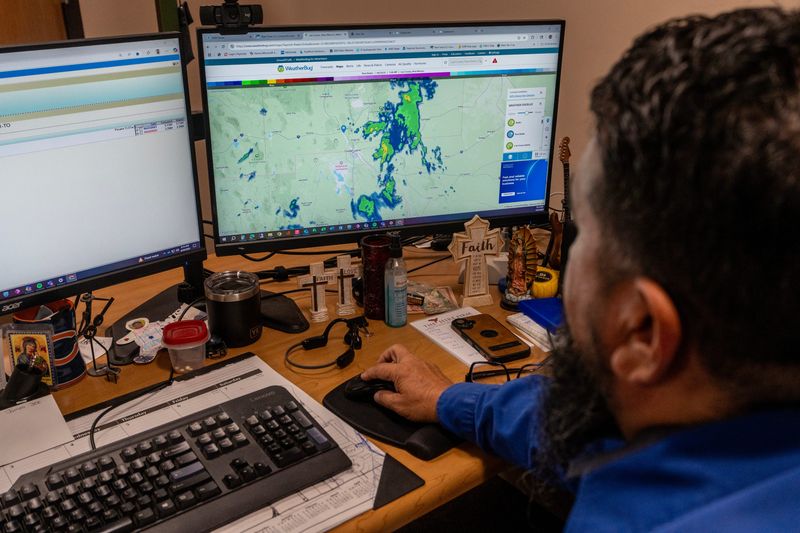
Water Master James Narvaez has already been at his office since 4:30 a.m., monitoring an approaching weather system.
Gray clouds, a typical visual indicator of upcoming rain, dominate the sky and humidity replaces what’s been bone-dry, dusty desert air.
“It’s a day of opportunity,” Narvaez said. “It could help us maybe to extend the (irrigation) season.”
Narvaez explains that if a storm produces heavy rainfall, the runoff could be captured and diverted into the Rio Grande, which flows through the valley’s rich agriculture fields and pecan tree farms.
The El Paso Times spent the day with Narvaez to get an idea of how the arrival of the monsoon season could contribute to the region’s water supply used for agriculture. A good monsoon season could extend the irrigation season for New Mexico, Texas and Mexico.
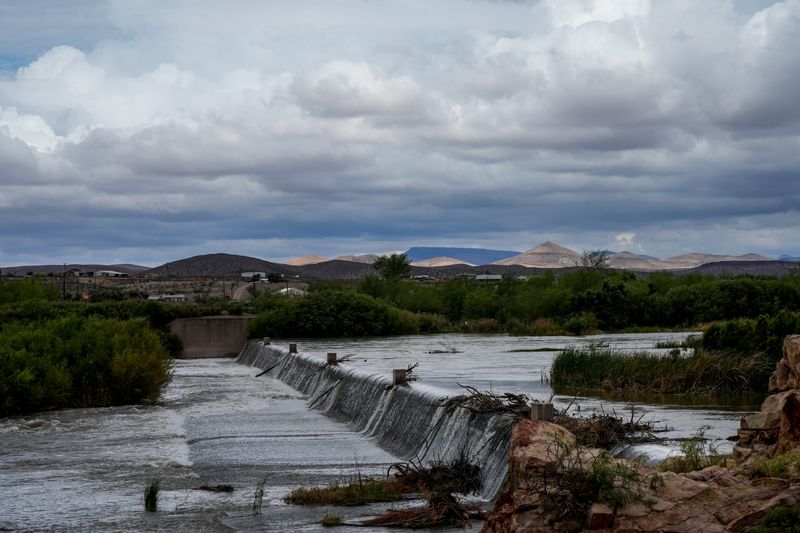
Water begins to flow in the Rio Grande on May 30 during the first day of the 2025 water allotment for New Mexico, Texas and Mexico.
As thunder rumbles over the Doña Ana Mountains, Narvaez heads out towards the Leasburg Diversion Dam north of Las Cruces.
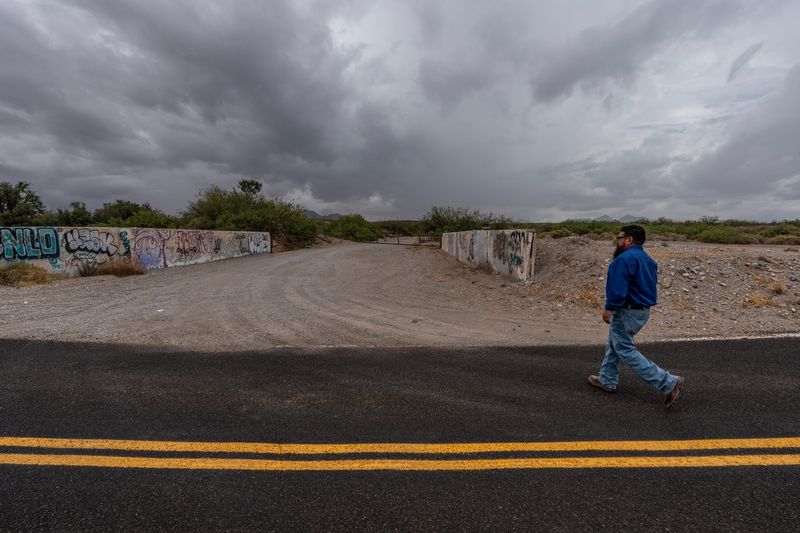
Narvaez looks to the east, seeing heavy rainfall.
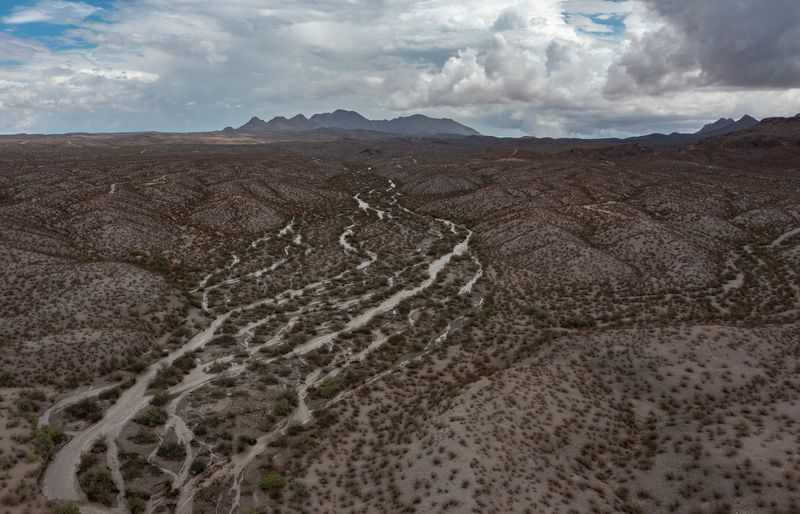
“That water might arrive in 40 minutes,” he said, explaining a network of arroyos carved in the sandy soil by fast-moving water lead to Leasburg’s main canal.
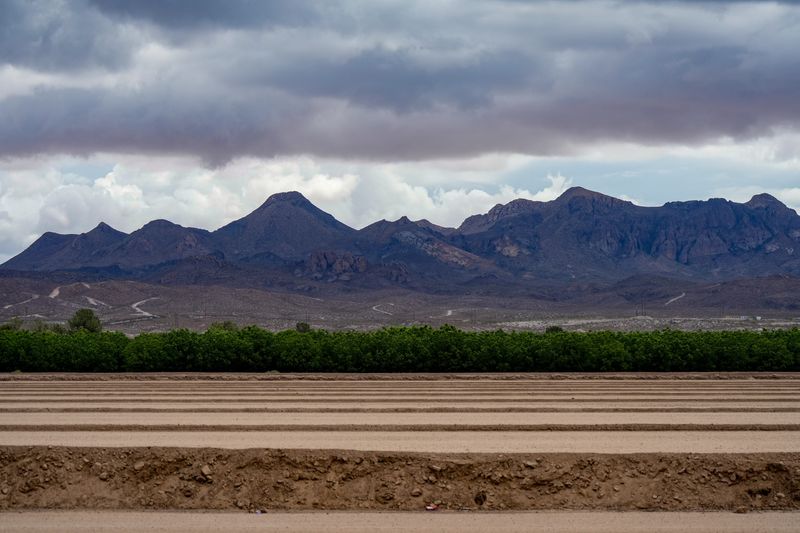
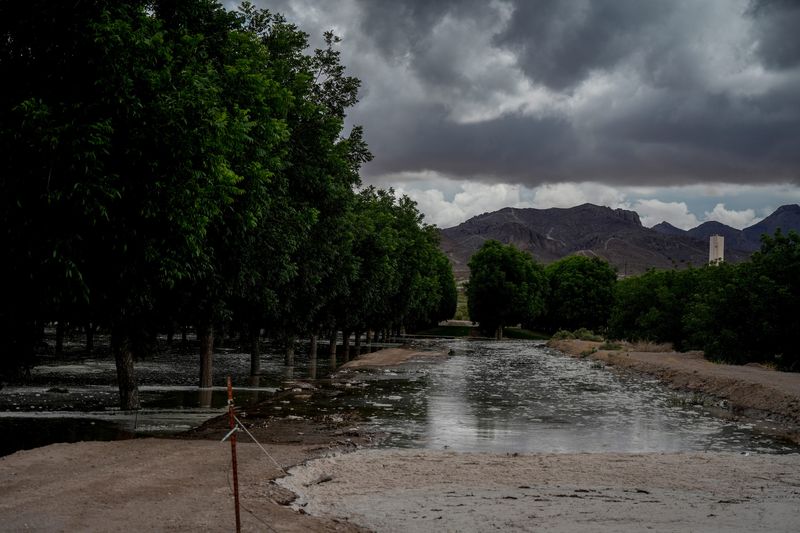
At that moment, Narvaez gets a call from one of his ditch riders — the operation staff who manage the allocation of Rio Grande water. The employee explains runoff from the storm arrived in less than 20 minutes and is overflowing into a pecan orchard, threatening the property.
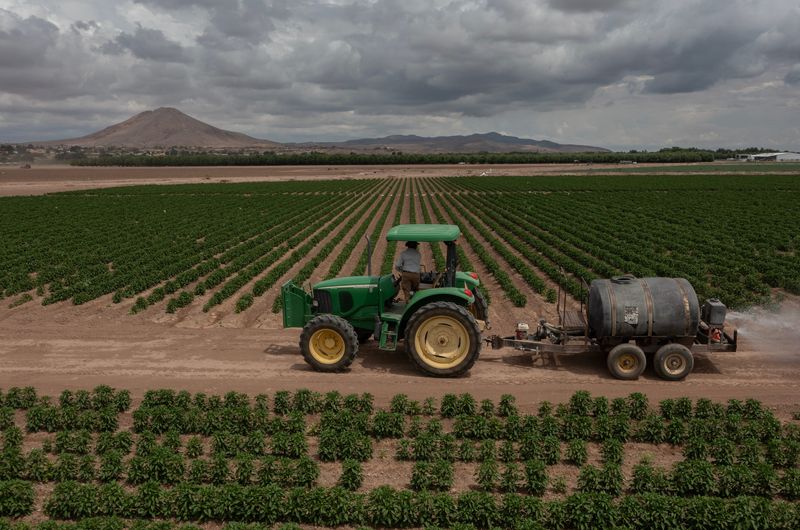
Had the area been planted with green chile — the most important crop in New Mexico — it would have been a total loss because of flooding.
Fortunately for the property owner, the irrigation district’s maintenance team was able to use two Backhoe heavy machines to redirect the runoff so it continued in the drain canal.
Narvaez expresses relief knowing the precious water won’t go to waste.
The late-June storm does provide “a day of opportunity.”
A couple of days after the storm, Narvaez confirms the captured runoff was beneficial. The extra water allowed the water master to reduce the release of Rio Grande water at the Caballo Dam. The storm also allows farmers to cutback on their well water usage.
Narvaez explains: “In other words, the numbers that we (are) actually (used) to were 2,600 (CFS) for release, and we cut back to 2,100. There is a saving of 500 (CFS) for about a 48-hour period, so that benefits us.”
That could extend the 2025 Rio Grande irrigation period an extra “day, maybe even two,” he said.
This article originally appeared on El Paso Times: “A day of opportunity”: How an early monsoon storm helped the Rio Grande irrigation season
Reporting by Omar Ornelas, El Paso Times / El Paso Times
USA TODAY Network via Reuters Connect