There are three ways to look at what’s happening in the WNBA: Competitive cannibalism, negative exposure marketing and societal mirroring.
The first way to view the infighting, back-biting and race/transgender controversy running rampant is to conclude the WNBA is devouring itself in polarizing propaganda when it should be promoting an all-for-one agenda.

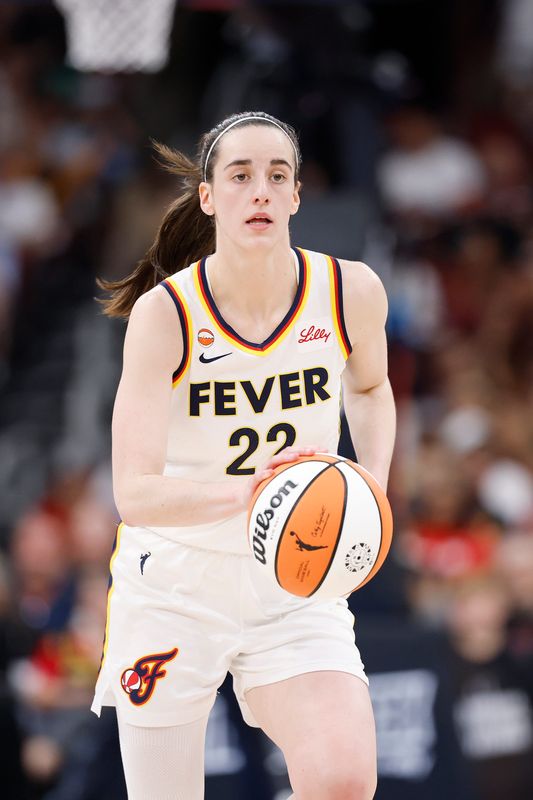
Women’s sports are increasing in popularity, and after decades of trying to become more relevant – i.e. taken more seriously – they finally have a window of opportunity. Certainly, Caitlin Clark has been a driving force in getting more eyeballs on the product, a positive that the league somehow has turned into a partial negative, but the bigger impact point is that women’s sports deliver more competitive excellence than ever.
I covered a Cleveland Rockers WNBA game in 1998 in which I witnessed, among other embarrassments, a baseline 3-pointer bang off the side of the backboard and a Phoenix guard bounce a pass off her teammate’s face. Quality basketball it was not. But those types of miscues don’t happen nearly as often in today’s WNBA.
Yet tensions within the league, both player to player and player to coach, along with clunky officiating, have distracted from the overall improved play. Basketball has taken a back seat to societal issues, including player social media posts calling out allegations of racism and white privilege.
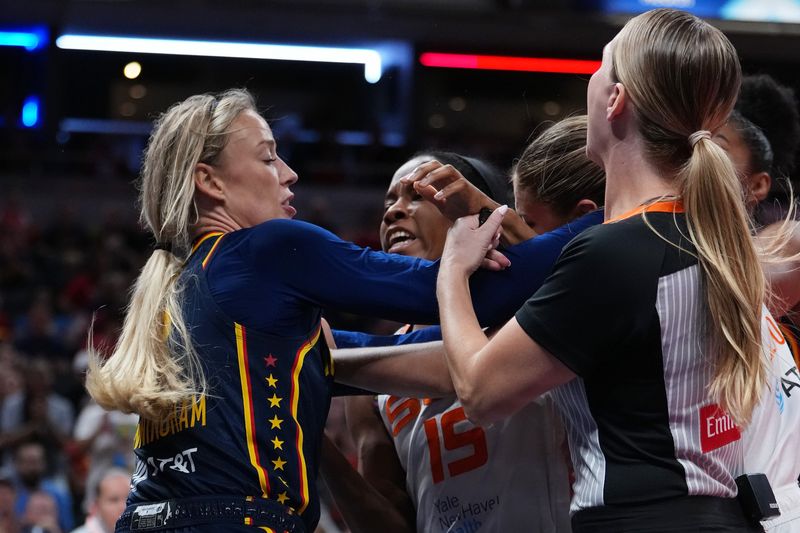
Just this week, Chicago Sky guard DiJonai Carrington created a firestorm after posting “WHITE PRIVILEGE” on her Threads account following her ejection for a hard foul on Indiana Fever guard Sophie Cunningham, who has become a lightning rod of controversy for some of her off-court comments and on-court, often in-your-face behavior.
Carrington, who is Black, insists her post was meant to address officiating “consistency across the board,” not a White player (Cunningham) receiving preferential treatment.
Regardless, the episode painted the WNBA as an “us vs. them” league more interested in social causes than in what’s happening on arena scoreboards.
And then there is the transgender debate. Should athletes born male and having transitioned to female be allowed to compete in women’s sports? Biology suggests not, but the WNBA is keeping its options open.
The league does not have a detailed transgender eligibility policy, which may be intentional but also smacks of negligence wrapped in naivete. Sometimes it’s possible to be so open-minded that your brain falls out.
The WNBA likely never imagined that the lack of clear and concrete criteria regarding transgender athletes would create a cultural circus in which former NBA players Royce White and Enes Kanter Freedom vow to enter the 2027 WNBA draft, arguing that under the league’s loose inclusionary approach, they should be eligible.
Maintaining he would be “unstoppable” in the WNBA, White said his intent is not to mock the league but make it take stock of its fuzzy guidelines.
“I’d like to know what the parameters are,” he said.
Cunningham also jumped into the cultural fray by making clear that she would not support transgender women playing in the league, telling ESPN in July, “I want to protect young girls in a locker room, or young girls in sport who shouldn’t have to go against biological men.”
The transgender athlete debate comes down to fair competition
I’ve heard every argument for and against allowing transgender women to play in the same league as biological females. The topic has been politicized, moralized and hijacked by online cretins who want nothing other than to stir the pot.
For me, it comes down to fair competition more than a right-to-play issue. I no more approve of a biological male playing in the WNBA than I did of Barry Bonds blasting home runs while slathered in steroids. Just because the baseball cleared the fence did not make it right. Just because someone opts for gender transition does not guarantee they get to leverage their physical advantages.
The second view to consider is that the league does not want to get out of its own way, knowing that controversy, especially involving culture and politics, attracts attention. And the WNBA can always use more attention. Maybe negative publicity is better than none?
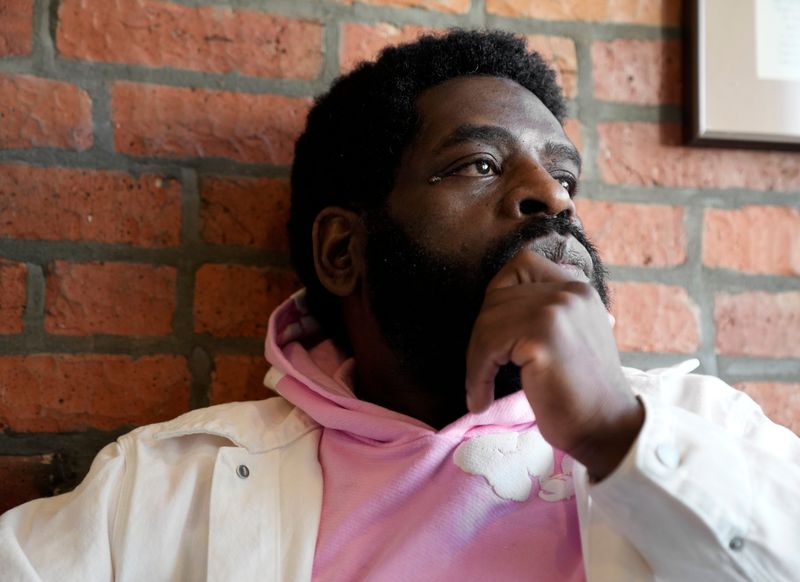
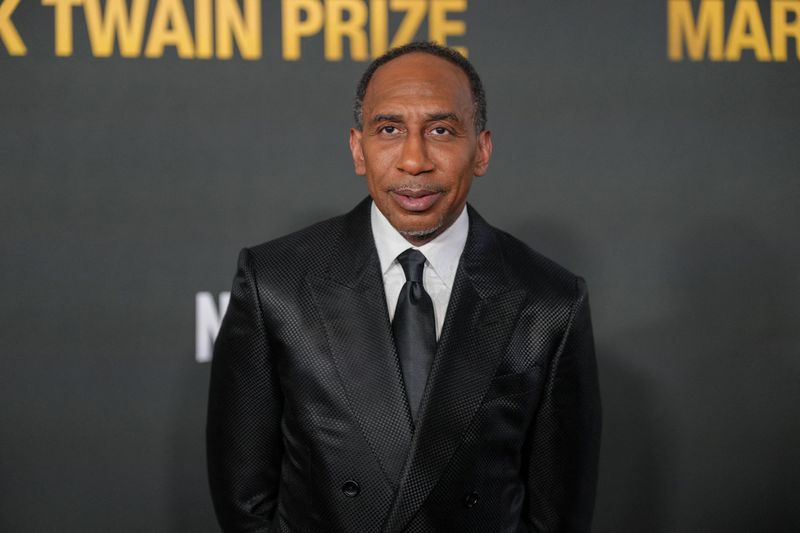
Whether as an ulterior motive or not, the WNBA is making news. And as divergent of voices as ESPN talking head Stephen A. Smith and Columbus-born essayist Hanif Abdurraqib have taken sides in the culture wars.
Abdurraqib, who often writes about basketball, posted on his Instagram account: “I no longer think it is hyperbolic to say that, in my lifetime, I don’t think I’ve ever seen one single player do more damage to a league – both in terms of public perception/understanding and also inner turmoil – than Sophie Cunningham has done to the WNBA. Has single-handedly played a massive role in altering the league and the way it is talked about and presented to the public.”
Smith mostly went the other way. After agreeing that hate has no place in any sports league, Screamin A. focused his social media comments on “competition.”
“For somebody to transition from male to female and for folks to act like it would be OK for them to participate in the WNBA is ridiculous,” Smith said.
Be honest. Have you paid more attention to the WNBA since the transgender and race debates have happened? I’m guessing yes. The question is whether the cultural chaos has made the league more or less interesting to watch.
Maybe the WNBA has it exactly right?
Finally, it is possible, perhaps even probable, that the cultural friction happening in the WNBA is a more realistic reflection of our splintered society than what other leagues allow to reach the surface. It could be that what is happening in the WNBA out in the open is happening behind closed doors in the NBA, NFL and other high-profile leagues. If so, the WNBA in a weird way deserves credit for engaging in the culture wars so that nothing is left unspoken.
Thoughtful communication and transparent dialog go a long way in giving peace a chance as we navigate our friend groups, co-workers, families, neighbors and yes, fellow sports fans.
To be clear, these three WNBA viewpoints are not mutually exclusive. Pieces of each shape our opinions. What I feel strongly about may irritate you. You may see the issues differently, even to the opposite. That’s OK. Let’s work together to reach a level of compromise, which need not be a dirty word. Let’s try teamwork for a change.
Sports columnist Rob Oller can be reached at roller@dispatch.com and on X.com at @rollerCD.
This article originally appeared on The Columbus Dispatch: WNBA enters culture wars with guns a blazin’ but shoots self in foot
Reporting by Rob Oller, Columbus Dispatch / The Columbus Dispatch
USA TODAY Network via Reuters Connect
By Rob Oller, Columbus Dispatch | USA TODAY Network