Frank Cooney heard the bottom line from the horse’s mouth.
Not long before Bill Walsh died, Cooney joined a few fellow Pro Football Hall of Fame voters in the home of the legendary 49ers coach.

From Cooney:
“Bill looked at me and said, ‘We all know I do not have long, but I will never rest in peace until Roger Craig is in the Hall of Fame.”
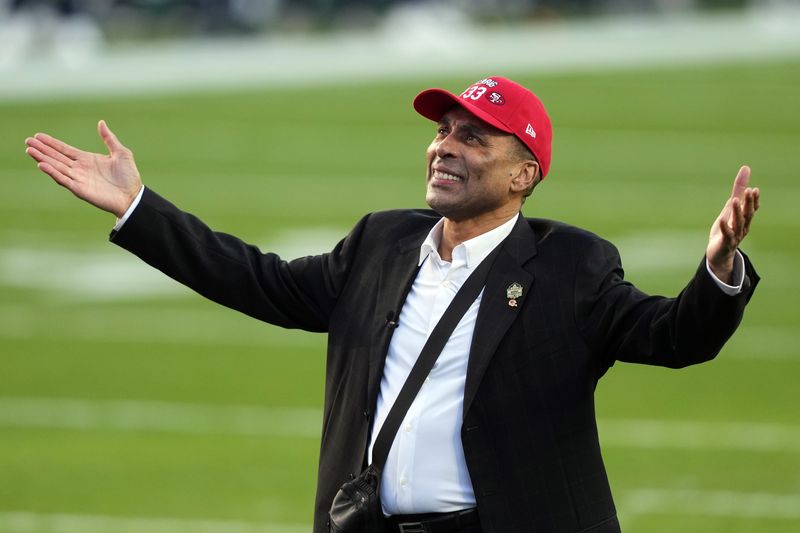
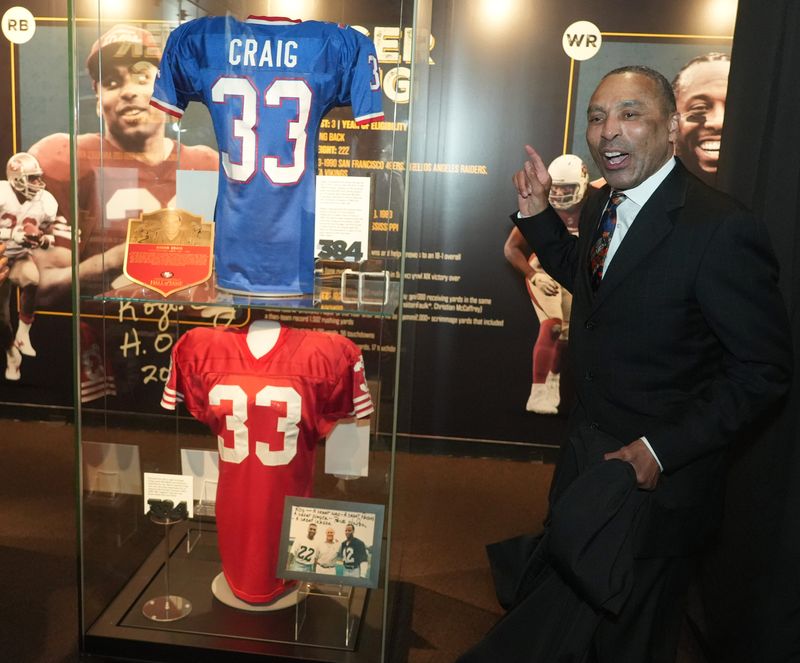
Why didn’t Craig make it to Canton until 2026, three-and-a-half decades after the last of his eight seasons with the 49ers dynasty?
Here’s a brief perspective on the man who finally made it.
Craig was one of eight siblings whose parents, Elijah and Ernestine, worked multiple jobs to support them. Older brother Curtis was a big star at Central High School in Davenport, Iowa, one of the “Quad Cities” on the Mississippi River.
Young Roger got tired of being asked if he’d be as good as Curtis. He had a tough go when he got his chance to answer.
As a Davenport Central sophomore, Roger was part of a state championship team, but he broke a leg early in his junior season. He dedicated his senior year to his dad, who was dying of lung cancer. In his final high school game, he ran for 353 yards in a playoff loss to Cedar Rapids.
Nebraska won college national college championships in 1970 and ’71, part of what lured Curtis to the Cornhuskers. Curtis was a senior wingback on the 1977 team whose big star was tailback I.M. Hipp.
Iowa head coach Bob Commings recruited Roger as he came through high school. Commings was fired as Craig was making his decision, which was always going to be Nebraska. During a trying freshman year in Lincoln, though, he wished he’d chosen Iowa.
Curtis talked him into staying, and Roger broke through as a sophomore. By the end of his junior year of 1981, he was a Heisman Trophy hopeful for 1982.
Coach Tom Osborne talked Roger into moving to fullback, with heavy blocking responsibilities in support of a flashy young tailback, Mike Rozier.
“It actually worked out well,” Craig said. “I got good experience blocking. Nebraska’s tailback didn’t block at all. He just ran.”
Craig helped the ‘82 Cornhuskers go 12-1. They could have been national champs had they kept a late 24-21 lead over Penn State. North Canton’s Todd Blackledge completed a fourth-and-11 pass for a Penn State first down with 1:18 left. A last-second score gave the Nittany Lions a 27-24 win.
Rozier won the Heisman the following year, when Craig was gone to the NFL.
The 1983 draft was famous for quarterbacks, with John Elway going No. 1 overall, Blackledge No. 7, Jim Kelly No. 14, Tony Eason No. 15, Ken O’Brien No. 24 and Dan Marino No. 27. The top-drafted running backs were Eric Dickerson No., 2, Curt Warner No. 3, Michael Haddix No. 8, James Jones No. 13 and Gary Anderson No. 20.
The 49ers had won the 1981 season’s Super Bowl but slid to 3-6 in strike-shortened 1982, partly because of a weakness at running back.
John McVay, a football lifer who played at Massillon and coached at Canton Central Catholic, planned the ’83 draft with Walsh. They projected the 6-foot, 220-pound Craig as just right for San Francisco’s West Coast offense.
Because of trades, the 49ers didn’t make their first pick until a serendipitous No. 49 overall.
At No. 41, the Browns took world-class sprinter Ron Brown, but he never reported because he was training for the 1984 Olympics. The 49ers landed Craig at 49. The pick turned to gold.
Rozier, the No. 2 overall pick of the 1984 draft, became a serviceable player for the Houston Oilers. Craig was so accomplished a runner, receiver, blocker and clutch playmaker that Walsh assumed he would make the Hall of Fame.
By 1987, Craig helped the 49ers win with big stats, often enough, and effective role playing, almost always. The ’87 Browns played Rozier’s Oilers and Craig’s 49ers in back-to-back games.
On Nov. 22, Rozier ran 11 times for 43 yards in a 40-7 Browns win. On Nov. 29, Browns QB Bernie Kosar, trailing the 49ers 21-17, got the ball to start the second half but stalled. Joe Montana launched a drive with a 14-yard completion to Craig, leading to a field goal. In the fourth quarter, Craig ran the ball to the Cleveland 27 for a first down. On the next play, his block helped give Montana time for a 29-yard TD pass to Jerry Rice.
“Montana was the conductor,” Craig said. “We were the musicians.”
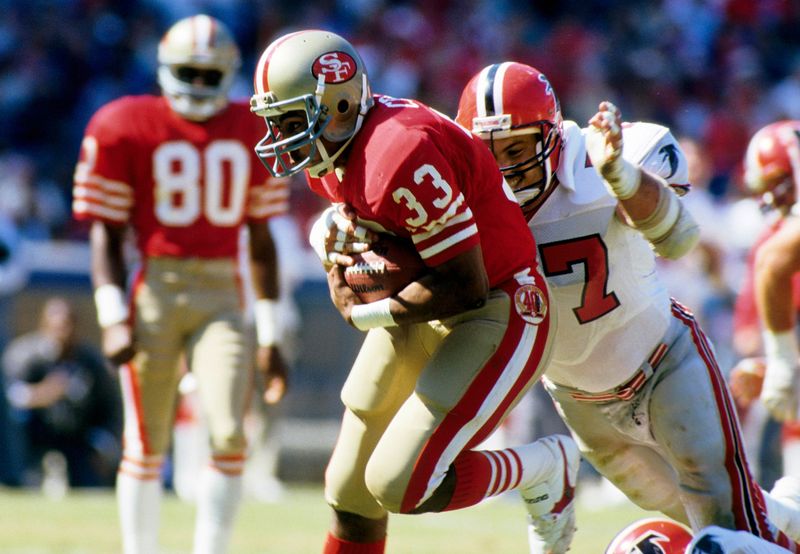
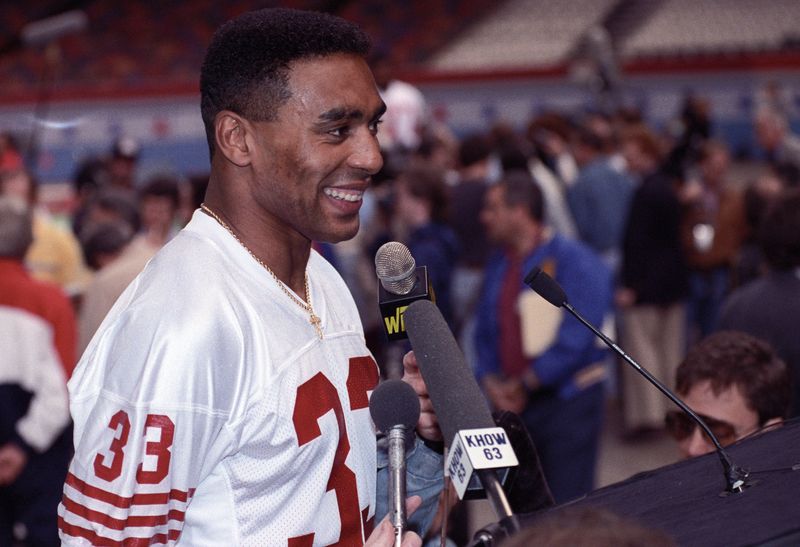
His first big pro splash capped his second season. Walsh’s 49ers faced Don Shula’s Dolphins in Super Bowl XIX, Montana vs. Marino. Craig’s touchdown catch provided a 14-10 lead. His TD run made it 28-10. His second scoring reception put the final at 38-16.
In 1985, Craig became the first NFL player to surpass 1,000 rushing yards and 1,000 receiving yards in the same season. Only Marshall Faulk (1999) and Christian McCaffrey (2019) have done it since.
Craig’s second Super Bowl capped the 1988 season. The 49ers trailed Cincinnati 16-13 when they took over on their own 7 with three minutes left.
“Joe saw that we were uptight,” Craig recalled. “He looked over to the stands and said, ‘Hey, isn’t that John Candy?’ We all laughed. We went down the field. The guys who were really stressed were the Bengals.”
Craig rattled off an 8-yard catch, a 4-yard smash on third-and-2, a 13-yard catch, and finally 8-yard catch to the 10-yard line.
The 49ers scored with 34 seconds left for a 20-16 win.
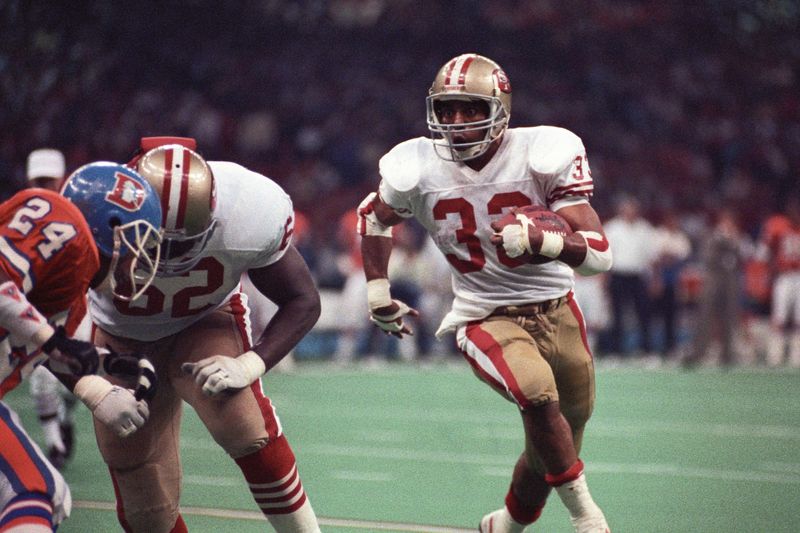
They were back in the Super Bowl a year later, against Denver. Montana vs. Elway was no contest. Craig ran for 18 yards on the first snap of a 55-10 blowout.
He helped the 1990 team to a 14-2 finish. In the playoffs, the 49ers trailed Washington in the second quarter before Craig opened a series with a 14-yard catch that led to a touchdown. He launched the next series with a 30-yard catch that set up another TD in a 28-10 win.
In the NFC Championship Game at Candlestick Park, San Francisco led the Giants 13-12, had the ball, and rode the veteran.
Craig carried three times within four plays, advancing to the New York 40. On his next carry, defensive tackle Erik Howard punched the ball out, straight to linebacker Lawrence Taylor, with 2:36 left. The Giants drove to a last-second, 42-yard field goal by Matt Bahr.
What Craig calls the “low point” of his football life was his last game as a 49er.
He spent a year with the Raiders and two years with the Vikings. The “Craig of old” reappeared on occasion.
In 1992 at Chicago, Jim Harbaugh quarterbacked the Bears to a late 20-14 lead. The Vikings turned the game over to Craig. Rich Gannon threw him a 23-yard completion. Craig ran four times, including the game-winning score.
He was 33 when he played for the 1993 Vikings. He returned to San Francisco in August 1994 to “retire as a 49er.”
Craig’s 13,100 rushing-receiving yards rank 49th all-time, just ahead of McCaffrey (12,979). Other interesting names in that neighborhood include O.J. Simpson (13,378), Corey Dillon (13,154), Herschel Walker (13,084), Travis Kelce (13,018) and Earnest Byner (12,866).
Craig didn’t strike some voters as an obvious Hall of Famer — obviously, based on his wait — but somewhere Bill Walsh is smiling.
Reach Steve at steve.doerschuk@cantonrep.com
The Canton Repository sports department can be contacted via email at sports@cantonrep.com.
This article originally appeared on The Repository: Legendary coach always knew Roger Craig was a Hall of Famer. Here’s why
Reporting by Steve Doerschuk, Canton Repository / The Repository
USA TODAY Network via Reuters Connect
By Steve Doerschuk, Canton Repository | USA TODAY Network