Facing uncertainty over 2026 funding from Franklin County, the Community Shelter Board is moving to cut about 43% of Franklin County’s yearround adult shelter capacity while continuing to ask the county for additional funding.
More people will be living on the streets and services to residents experiencing homelessness meant to get them back on their feet will be cut, shelter board partner agencies told The Dispatch. The Community Shelter Board, a nonprofit that has coordinated Franklin County’s response to homelessness for four decades, is focusing on preserving shelter for families with children, domestic violence survivors and periods of extreme weather during the winter. The cuts come as the homelessness in the county is rising, including the number of people living outside.

The three-member Franklin County Board of Commissioners will not vote on more funding for the shelter board until at least September. The shelter board’s fiscal year begins July 1. While awaiting a decision about funding, the shelter board amended its fiscal year 2027 budget for agency partner grants to $50 million, down $8.8 million from the year before.
The shortfall stems largely from county funding the shelter board had asked for and anticipated receiving. County officials say last year’s additional funding was a one-time investment and should not have been presumed in this year’s budget. Shelter board leaders said the county never gave a clear decision on funding. They pointed out that the board’s 21 trustees, four of whom are appointed by the county, including Deputy County Administrator Joy Bivens, voted in May on the 2027 budget and knew what the board was planning for.
Shelter board spokesperson Níel Jurist said a significant reduction in Franklin County’s adult shelter capacity is being made and this underscores the importance of timely funding decisions to maintain a stable homelessness response system.
“We remain hopeful that additional funding will become available so we can restore high-priority services and continue building a homelessness response system that helps more people move from crisis to stable housing,” Jurist said.
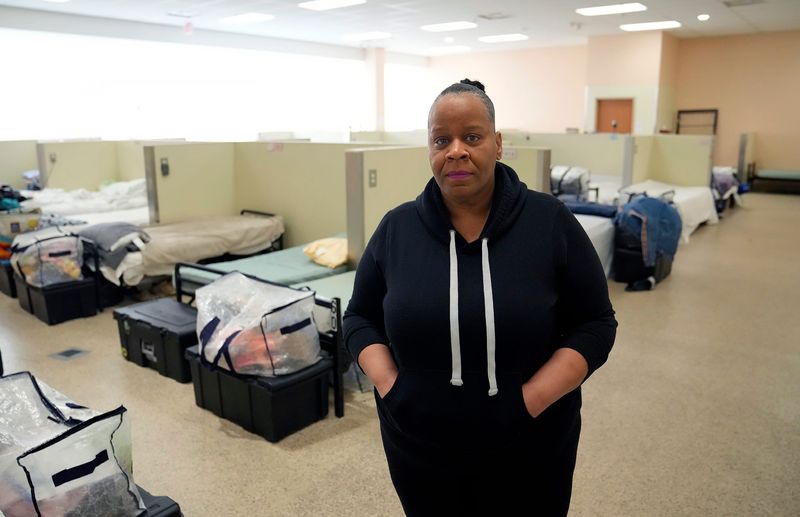
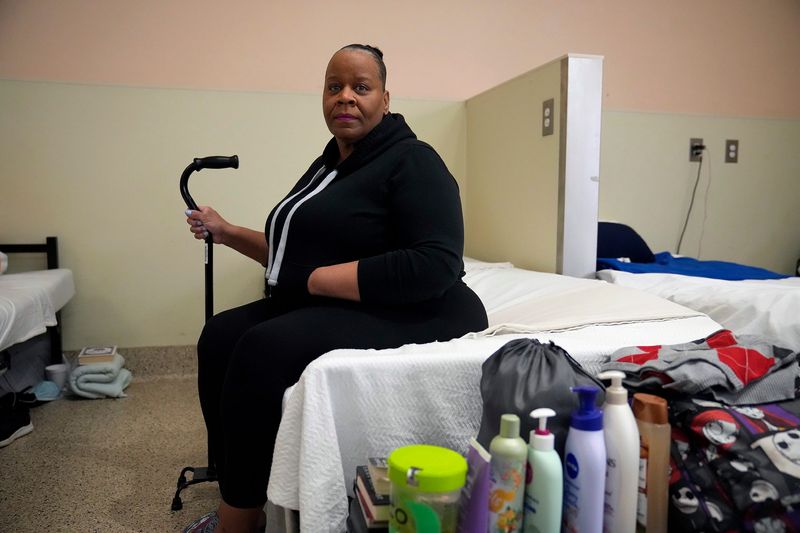
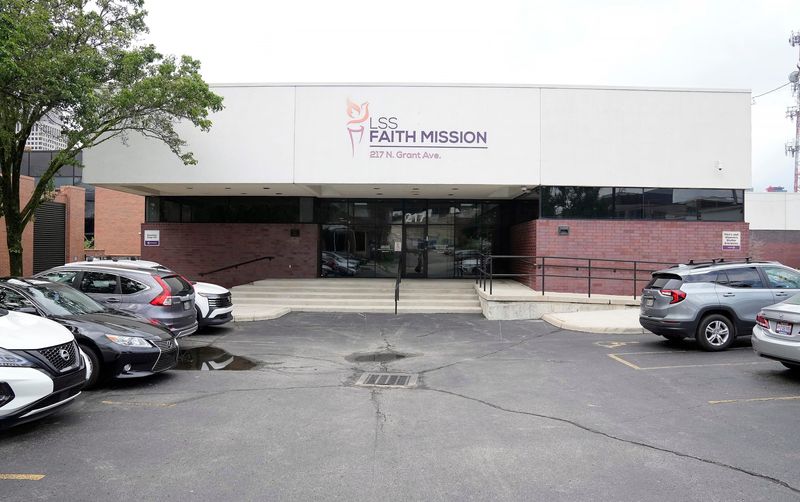
Planned cuts could affect local residents like Kristie Dawson, 54, who is living at Lutheran Social Services Faith Mission, one of the city’s largest adult shelters Downtown. Dawson, an early childcare provider in Columbus for 25 years, was working 12-hour days but living paycheck to paycheck when she had a medical emergency earlier this year. She was hospitalized for a month and lost her job and apartment.
“It was devastating,” Dawson said. “Shelter is very important for people that have no one to go to, nowhere to go.”
The county gave the shelter board $11.5 million last fiscal year and the shelter board asked for $14.5 million this fiscal year, including some federal pass through funding. Last year, when county commissioners voted on $5 million in one-time funding for the shelter system, Commissioner John O’Grady called it a “band-aid” approach and stressed the need for a permanent funding solution.
County Administrator Kenneth Wilson said the county never promised an exact amount this year beyond the $6.2 million in real estate conveyance fees it already awarded in 2026. He also said the county needs to move away from the “warehousing” shelter model of funding large, communal shelters and focus more upstream on permanent supportive housing and other affordable housing investments.
“To [Community Shelter Board CEO] Shannon Isom’s credit, they want to move away from the shelter model, but we still have the shelters like the Van Buren shelter down in the Franklinton area in operation, and they’re part of the system. We need that to be less of our focus.”
Shelter board leaders rejected any characterization that their system is simply warehousing people, saying the description overlooks the work of dozens of nonprofit providers and hundreds of professionals who help thousands of individuals and families each year move from homelessness to stable housing. At Faith Mission, for example, Dawson meets with a caseworker every week to try to find employment and permanent housing as she recovers from her medical emergency and tries to get a diagnosis for her symptoms.
Isom agrees with county leaders that a sustainable funding solution is needed and wants the region to work toward one. She also said the county budget process for 2026 started last August and at any time, the county could have communicated.
Isom said she’s been CEO of the shelter board for more than three years and made reforms elected leaders asked for.
“And I still can’t convince the largest stakeholders that it is not us against them, but it is a we against the problem,” Isom said.
Columbus leaders react to Community Shelter Board cuts
Funding for the shelter board from the city of Columbus, federal government and donations is up. State funding, which is a small part of the board’s budget, is down.
Columbus, Franklin County and local governments across the country are facing tight budgets right now. Wilson said the county budget is facing federal cuts, such as pending changes to the federal Supplemental Nutrition Assistance Program that could cost the county more than $7 million next year.
The shelter board historically asks Columbus and Franklin County for about the same amount. It asked Columbus for $14.3 million this year, and the Columbus City Council put $13.8 million into the budget, more than doubling Mayor Andrew Ginther’s initial proposal.
City Council President Shannon Hardin called on the county to step up despite challenges.
“It’s devastating to learn that CSB will be forced to reduce shelter beds by over 40%, when our shelters are already over-capacity,” Hardin said in written statement. “It should be obvious that now more than ever, CSB and the people it serves need our support. When Columbus City Council amended the Mayor’s budget to add $7.2 M more earlier this year, we did that despite our own fiscal challenges, because it was a priority. We believed others would follow suit to step up to meet the growing need. They still can.”
Hardin said it’s also clear that year-to-year grants from the city, county and donors is an outdated model for funding the shelter system.
Ginther told The Dispatch in a statement that the city will continue investing in emergency response, homelessness prevention and long-term housing solutions.
“This issue requires us to do both — meet the urgent needs of today while addressing the housing challenges that drive homelessness tomorrow.”
Franklin County making other investments in housing
The Community Shelter Board is the U.S. Department of Housing and Urban Development’s designated Unified Funding Agency for Franklin County. Wilson pointed to a 2024 study of Columbus and Franklin County that found the unified funding model is working but said the system needs to evolve.
“For too long we were overinvested in communal, large shelters,” Wilson said. “We needed to be much more focused and moving away from that model toward permanent supportive housing.”
The shelter board has lobbied the city and county for increased investment so the shelter system can implement new upstream strategies to prevent homelessness.
In the housing space, the county is expanding its investments in affordable housing projects like the redevelopment of the Sawyer Towers site by Nuveen Real Estate, which has secured $19 million from the county.
In June, the commissioners gave a $1.5 million grant to former Ohio State football player Maurice Clarett to renovate an old hotel property on the North Side to provide temporary housing to seniors and pregnant people facing homelessness.
“The county is taking a holistic view of everything we’re doing in the housing space,” Wilson said.
On July 28, the commissioners voted to approve a new housing action plan, which aims to support renter stability, expand home ownership and create homes that residents can afford.
Elizabeth Brown, CEO of YWCA Columbus, which oversees the county’s largest family shelter, said she supports upstream investment by the city and county but the shelter system is like the emergency room of the housing system.
“Upstream thinking also requires long-term planning,” Brown said. “I would hope that as our local governments position themselves more and more for upstream investment, they keep their eye on the immediate needs of the emergency room as well.”
Columbus area shelters brace for impact
Jennifer Fralic, executive director of Lutheran Social Services Faith Mission said everyone’s going to feel it when the shelter capacity shrinks. Faith Mission has about 250 beds, and every night it’s full, she said.
“You’re going to see more visible street homelessness, more of the things a lot of people never see but it will have a strain on emergency rooms, first responders, businesses.”
The YMCA of Central Ohio, which operates the Van Buren shelter, the county’s largest adult-only shelter, said in an emailed statement:
“Emergency shelter remains an essential part of our community’s homelessness response system, particularly at a time when the need for safe shelter and housing support continues to be significant. Any stay in shelter should be as brief as possible, with people moving quickly into safe, stable housing. … Our dedicated employees work every day to help individuals and families in crisis move toward greater stability, even as the shortage of deeply affordable housing makes that path increasingly difficult.”
Dawson told The Dispatch funding the shelters is important for people who have nowhere else to go now.
“I don’t feel like they should cut any funding,” Dawson said. “If anything, they should give more.”
Government and politics reporter Jordan Laird can be reached at jlaird@dispatch.com. Follow her on X, Instagram and Bluesky at @LairdWrites.
This article originally appeared on The Columbus Dispatch: Franklin County’s Community Shelter Board cutting capacity amid funding uncertainty
Reporting by Jordan Laird, Columbus Dispatch / The Columbus Dispatch
USA TODAY Network via Reuters Connect
By Jordan Laird, Columbus Dispatch | USA TODAY Network